
Availability Isn’t Value: Why the NBA’s 65-Game Rule Misses the Point
By Aaron Propst | 5 May 2026
Instead of simply addressing one of its problems, the NBA went and created another one.
THE PROBLEM
A problem had been building across the National Basketball Association in recent years, one that slowly shifted the outlook of the regular season. Night after night, fans would circle matchups on the calendar, only to find that the league’s brightest stars were not on the floor. Instead, they were sitting out under the growing trend of load management, a strategy teams embraced to preserve health for the postseason. Players like Joel Embiid, the 2022–23 MVP, and Kawhi Leonard, two-time Finals MVP, became closely tied to this new reality, where dominance no longer guarantees consistent availability.
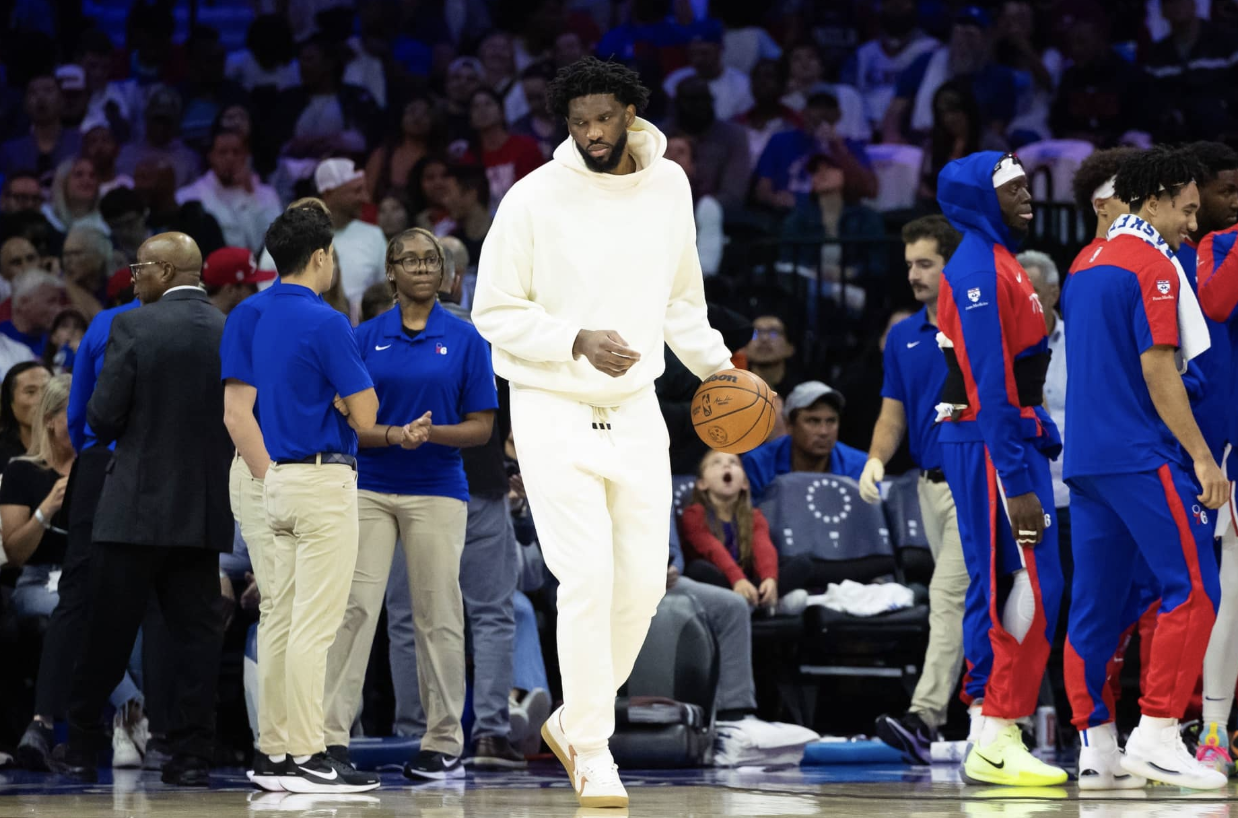
Joel Embiid sitting out of a regular-season game during the 2024-2025 season. (Bill Streicher-Imagn Images)
The regular season began to lose its edge, its sense of urgency fading as teams operated with a long-term lens, confident that their place in the playoff picture would still be there. What was once an 82-game grind started to feel more like a slow build toward April, with marquee matchups stripped of their meaning. For the fans, the frustration grew: they were watching a version of the game that felt incomplete as the product on the court was without the headlining stars that they came to see.
“It shouldn’t be needed, first and foremost,” Michael Jordan said in response to load management.
“I never wanted to miss a game because it was an opportunity to prove… the fans are there to watch me play. I want to impress that guy way up top who worked to buy a ticket.”
THE RESPONSE
In response, the National Basketball Association introduced a sweeping and highly structured solution: a strict 65-game minimum for eligibility for its most prestigious awards, including MVP, Defensive Player of the Year, Most Improved Player, and All-NBA and All-Defensive teams.
This rule was designed with specific thresholds in mind. For a game to count, a player must log at least 20 minutes, ensuring that brief appearances do not qualify. The league also built in limited flexibility, allowing up to only two games in which a player logs between 15 and 19 minutes to still count toward the required game total. Therefore, a player can miss no more than 17 games over the course of the season to remain fully eligible for any of the recognitions.
There is also a narrowly defined injury exception: if a player suffers a season-ending injury but has already appeared in at least 85% of their team’s games, they can still qualify with as few as 62 to 64 games played. However, outside of that scenario, the threshold is firm, leaving little room for context or nuance.
The league’s intent was direct and deliberate. By tying awards and accolades to availability, the NBA aimed to discourage load management, encourage its biggest stars to return to regular season action, and restore meaning to each game on the schedule.
“I’m not ready to say we got it exactly right, but I think it is working,” said Adam Silver, NBA Commissioner. “The number of games that players have participated in is up this season, and injuries are actually down.”
The rule represents an attempt to quantify commitment. It places a premium on being present, consistently taking the court, and meeting a clearly defined standard across the length of the season. But doing so also reduces eligibility to a rigid numbers game, where falling just short of the threshold–regardless of performance, role, or overall influence–results in disqualification.
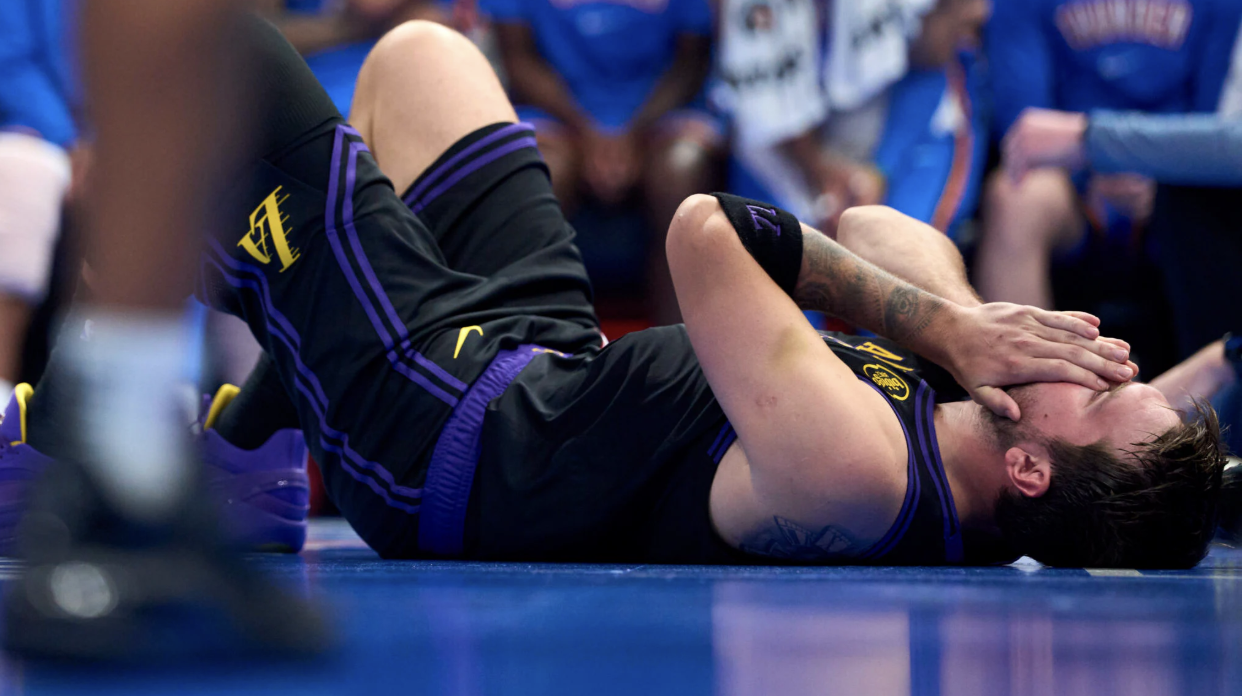
Luka Doncic on the court in pain, suffering a hamstring injury against the Thunder in the 77th game of the season. (National Basketball Association)
Since its implementation, the rule has reshaped award outcomes in a way that feels disconnected from performance. Recent seasons, including 2023-24 and 2025-26, have seen deserving stars left off ballots entirely after falling short of the threshold, while less impactful players have been elevated simply for meeting the minimum game requirement. The conversation has shifted from who was best to who was eligible, exposing a flaw in how the league measures value and opening the door for a better solution.
MY PROPOSITION
A better solution would be to replace the 65-game minimum requirement with a minutes-played threshold. Games played can be misleading because every appearance is treated almost the same, even when the workload is completely different. A player who plays 20 minutes in all 82 games finishes with 1,640 total minutes. But a superstar playing 40 minutes a night would match that total in just 41 games, or half the season.
Instead of putting so much value into whether a player reached the 65-game mark, the NBA should measure how much time that player actually spent impacting the on-court performance of their team. Not only would a minutes-based threshold preserve the importance of availability, but it would also introduce fairness; furthermore, it would still require consistent participation throughout the season while accounting for players who miss time due to legitimate injuries. It would also eliminate the need for arbitrary rules such as the 20-minute cutoff or the allowance of two 15–19 minute games, because every minute would count the same. Lastly, there would be no incentive to “game” the system by checking in just long enough to qualify for a game played.
“I think that’s a good way to put it,” Victor Wembanyama said. “Because a guy that plays 50 games at 35 minutes a game, that’s 1,750 minutes. And if a guy plays 75 games at 20 minutes, that’s 1,500. It’s a good view, in my opinion, to not have a strict limit like that. Maybe something like 75% of the games would be more logical… around 62 games. There are interesting questions with it, but we’ll see how it turns out.”
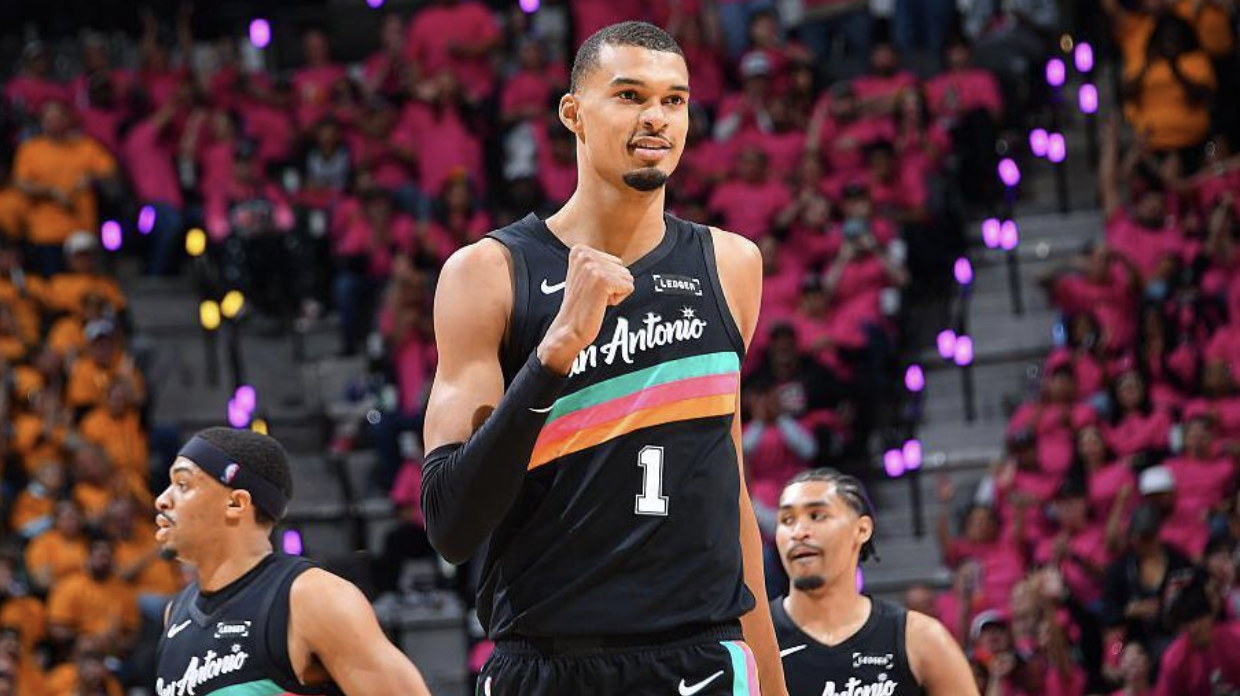
Wembanyama celebrating during a victory over the Trail Blazers in the first round of the playoffs. (BBC)
This approach would also meaningfully alter player behavior throughout the season.. Under the current rule, once a player hits 65 games, there is little incentive to continue playing, especially if a playoff seed is already secured. Similarly, players on eliminated teams often shut things down late in the season. A minute threshold would push these trends in the opposite direction.
Players chasing awards would need to keep logging minutes, encouraging them to stay on the floor down the stretch. Whether a team is locked into a playoff seed or out of contention, individual incentives would align with continued participation, helping maintain the competitiveness and relevance of late-season games.
At the same time, the threshold should be set at a level that does not force players to risk their health. A mark around 1,800 minutes would strike that balance. It is high enough to ensure that award winners were consistently present and impactful, but low enough that these same players would not feel pressured to rush back from injury just to qualify.
To put that into perspective, a player appearing in 65 games would only need to average about 27.7 minutes per game to reach 1,600 minutes, meaning the threshold is attainable without demanding excessive workload while still rewarding impactful play on the court.
Ultimately, this system would better reflect how player value is actually viewed in the NBA. Superstars are defined by the amount they carry when they are on the court, not just how often they appear. A minutes-based rule would reward real contribution, discourage empty appearances, and restore credibility to the league’s awards.
The 2025–26 season offered a clear look at how the rule operates in practice, particularly through the cases of Luka Doncic, Anthony Edwards, and Victor Wembanyama.
Doncic finished with 64 qualifying games, just one short of the threshold, but was ultimately granted eligibility through an appeal citing “extraordinary circumstances.” Despite falling short of the games-played requirement, he logged 2,291 total minutes, a mark that clearly reflects a full, high-impact season.
Edwards, on the other hand, was not granted the same outcome. He fell below the 65-game mark, lost his appeal, and was ruled ineligible, even though he totaled 2,135 minutes on the court.
Meanwhile, Wembanyama carefully navigated injury concerns to remain above the threshold, finishing eligible while recording only 1,868 minutes.
When viewed with a minutes-based perspective, the inconsistencies become clear. Doncic and Edwards both played well above any reasonable minutes threshold, yet one required an appeal to qualify while the other was excluded entirely. Wembanyama, despite dealing with injuries, remained eligible largely because he cleared the cutoff, not because of a fundamentally different level of contribution.
All three players logged significant time on the floor and played major roles for their teams, yet their award eligibility was determined by a rigid games-played rule rather than actual workload. A minutes-based system would have treated each player’s season with far more consistency, evaluating them based on how much they truly impacted the games instead of whether they crossed an arbitrary line.
The fact that Luka Doncic even had to appeal his eligibility after ranking fourth in minutes per game is telling. It underscores how the current system fails to capture what truly defines a superstar. Doncic was on the floor for nearly every critical possession, carrying one of the heaviest workloads in the league and consistently dictating the outcome of games when he played.
Yet despite that level of responsibility and impact, Doncic’s season was nearly dismissed over a technicality. A player trusted to handle that much of the game cannot reasonably be labeled as unavailable. Instead, his case exposes a deeper flaw: the rule overlooks how much a player actually plays in favor of how often they appear, ignoring the very thing that makes stars valuable in the first place.
The NBA wanted to restore value to its regular season games. It wanted to ensure that the fans who paid to watch these stars play actually got to see them in action. But value cannot be reduced to a cutoff. It cannot be captured by a single number that draws a hard line between eligible and invisible. The game has never worked that way. It lives in the minutes, in the workload, in the responsibility stars carry every time they step on the court and dictate how a game unfolds.
A player’s season is not defined by how many times their name appears in the box score, but by how much of the game runs through them when they are there. It is in the 40-minute nights, the stretches where every possession flows through one player, the burden of creating, defending, and closing. Those are the moments that shape a season, not the ones where a player checks in just long enough to meet a requirement. When the league chooses to prioritize appearances over impact, it risks flattening those differences and overlooking what actually separates the best from the rest.
The drawbacks are already showing. Award races are being reshaped not by performance, but by eligibility. Conversations are shifting away from who left their mark on the season and toward who simply qualified to be part of it. Players who carried teams and delivered elite production are left out entirely, while others move up by default. Over time, this changes the meaning of the awards themselves. They stop being a reflection of productivity and talent and become a reflection of who cleared the threshold.
There is a better way forward, one that still values availability but measures it with greater honesty. A minutes-based system would not erase the importance of showing up. It would refine it. It would recognize the difference between being available and being responsible for the outcome of the game itself. It would align the league’s awards with the way the sport is actually played, where time on the court is what creates value, not just appearances in the standings.
If the NBA continues to measure presence instead of impact, it risks redefining its own standards without fully realizing it. Because at some point, the question stops being who had the best season. It becomes whether the system is even capable of recognizing it anymore.
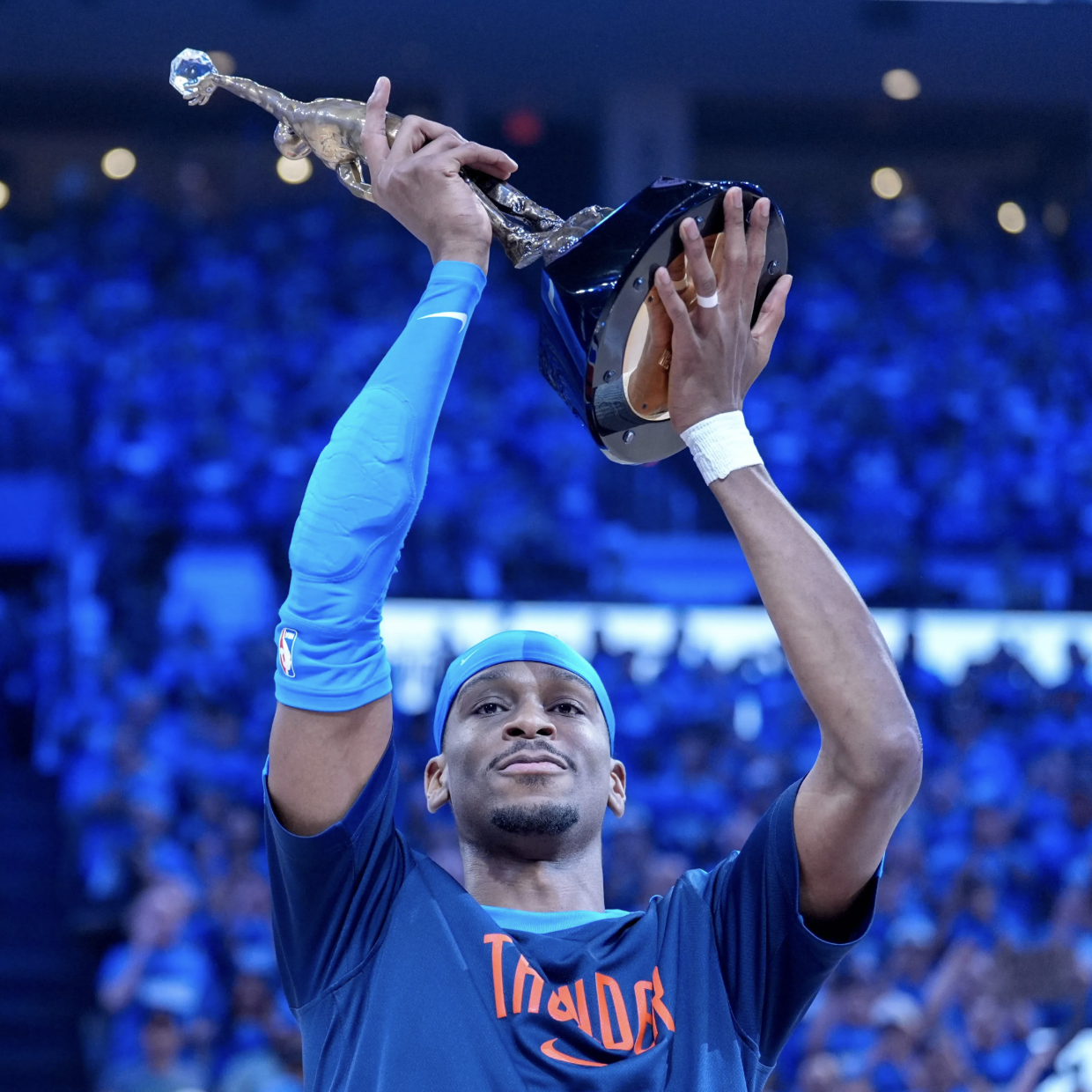
Back-to-back Most Valuable Player Shai Gilgeous-Alexander hoisting trophy in front of the home crowd. (The Oklahoman)
