
Close, But Not Quite: The Weight of Being UCLA’s Best
By Bianca Peralta | 18 May 2026
As the NCAA men's volleyball regional final concluded, the roars inside Pauley Pavilion were deafening. But this time, they weren't coming from the home crowd.
In what may go down as one of the biggest upsets in recent collegiate sports history, the visiting UC Irvine Anteater fans erupted as their players stormed the court after surviving the five-set thriller. Meanwhile, the Bruin faithful simply stood in awe. They were frozen in disbelief as just a few moments earlier, they had already begun celebrating what looked to be the match-clinching point for UCLA. This much-anticipated victory would have sent the Bruins closer to a fourth straight national championship appearance, a path that everyone believed was already set in stone for them.
But in a matter of minutes, that path completely vanished for the blue and gold. With UCLA leading 15-12 in the fifth set, UC Irvine's Andreas Brinck appeared to hit a ball wide, seemingly ending the match and beginning the Bruins’ celebration. But after the Anteaters challenged the call, officials ruled that the attack had touched senior middle blocker Cameron Thorne's block before landing out of bounds. The officials overturned the point and trimmed UCLA's lead down to 14-13, sending the Bruins back in formation to continue the game. After being given more life, the momentum flipped in favor of the Anteaters, who were quick to capitalize on this chance. They went on a 3-0 run to slam the door on the nation's top-ranked team and secure their first win over UCLA in eight years.
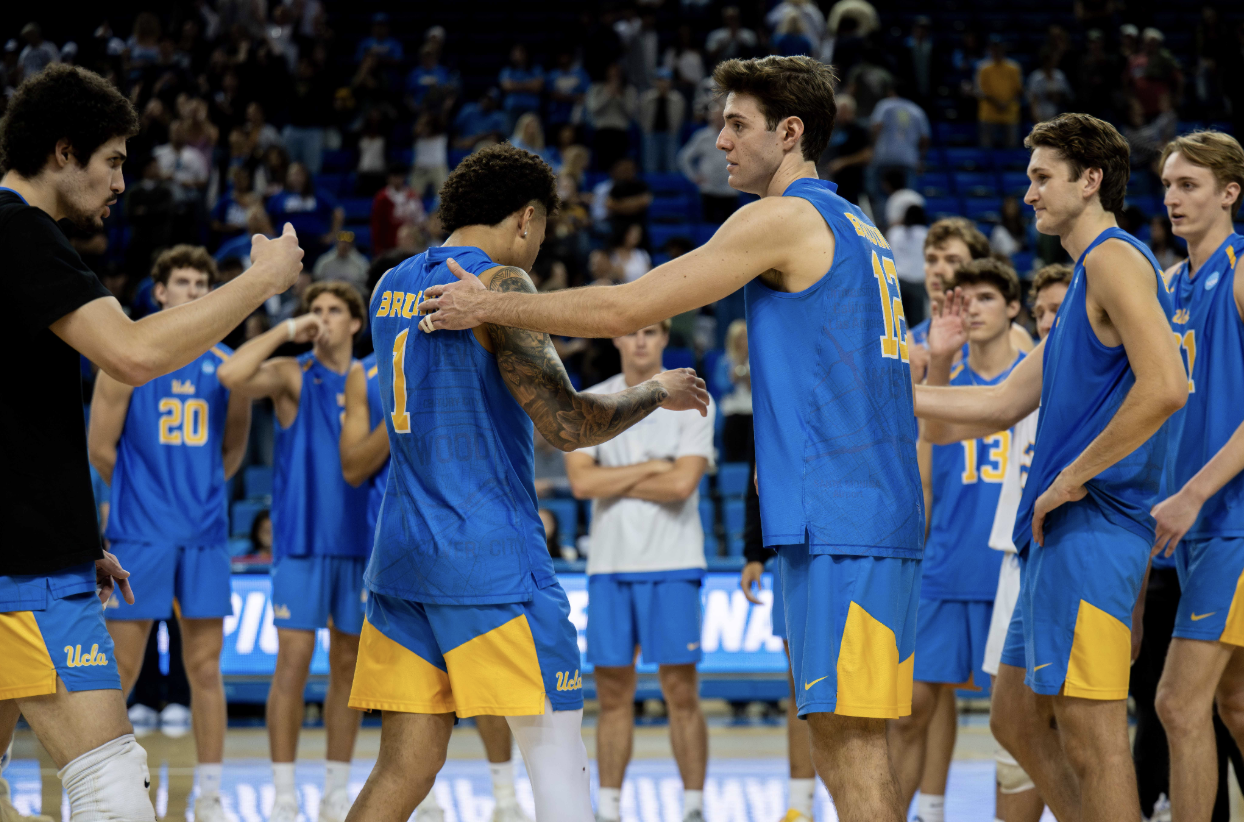
UCLA men’s volleyball players huddle together in the 2026 NCAA Los Angeles Regional Finals. (Ruby Galbraith / Daily Bruin staff)
This controversial ending quickly became the headline of the night, with the shock spreading beyond Westwood and into the volleyball community. Many were quick to discuss UCLA’s season in such a capsule, only highlighting this game and the chaos that surrounded its finale. But reducing an entire season to a single replay review and a challenge call overlooks just how dominant the Bruins had been for nearly four months.
UCLA opened the year with a program record of 20 straight wins and went on to spend nearly the entire season as the unanimous No. 1 team in the country. With most of the victories coming in sweeps and even defeating top-ranked teams such as Long Beach State and Hawai’i, the Bruins looked poised to secure their third national championship in four seasons. Instead, the season that once seemed destined to end with the Bruins lifting another trophy will now famously be remembered for the controversial call that ended it.
And in many ways, the ending felt strangely familiar to Westwood. Throughout UCLA’s athletic history, teams carrying the No. 1 ranking and the weight of championship expectations have repeatedly seen their commanding seasons unravel before reaching the finish line. From football and basketball to baseball and volleyball, some of the Bruins' most talented rosters have been remembered less for their record-breaking achievements and more for how these efforts have amounted to nothing.
The Quarter That Erased Everything
Perhaps no UCLA team better illustrates the heartbreak of falling short of championship expectations than the 1998 football team.
The ‘98 Bruins boasted a 20-game win streak entering the final stretch of the regular season and were just one victory away from punching their ticket to the national championship game. In the inaugural year of the Bowl Championship Series (BCS), a format that took only the top two teams in the country to play in a single, winner-take-all title game, UCLA looked to be in a pristine spot. Led by senior quarterback Cade McNown, the Bruins had climbed all the way to the No. 3 rank and were on track to play against No. 1 Tennessee for the national title. All that stood between them and that chance was an unranked Miami Hurricanes team to close out the regular season.
For much of the contest, the Bruins appeared ready to complete their mission. McNown had his best performance yet, throwing for 513 yards and five touchdowns, and allowed UCLA to build a 38-21 second-half lead that felt, in large part, deserved. Then just as quickly as the lead grew, it started to chip away. In the following 15 minutes, Miami stormed back and won 49-45, ending UCLA's unbeaten season and shattering their title dreams in the span of a single quarter.
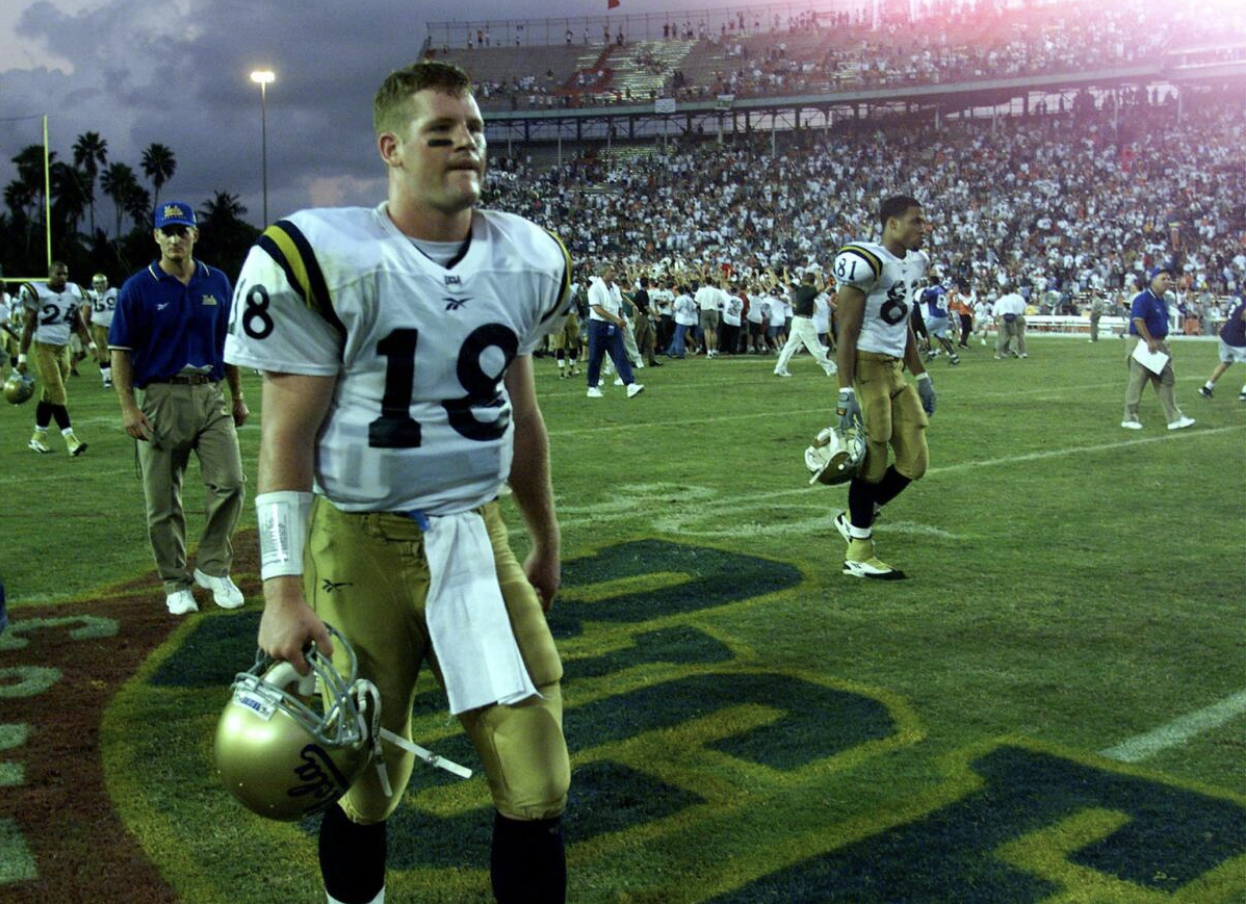
UCLA quarterback Cade McNown walks off the field after a 49–45 loss to Miami at the Orange Bowl in 1998. (Gina Ferazzi / Los Angeles Times)
The season itself, though, was far from a failure. The Bruins brought home the Pac-10 title and made it to the Rose Bowl, while McNown was recognized for his star quality and was named a Heisman Trophy finalist. On paper, it was a historic year. But when people actually think back on the 1998 UCLA Bruins, those accomplishments simply come up as an afterthought. What lingers more is the team’s heartbreaking collapse. It's the feeling of being so sure of reaching something bigger, just to have it slip away as it seemed within reach.
One Shot Was All It Took.
The emotional swings surrounding UCLA's top-ranked teams have also been recently felt.
The men's basketball team entered the 2023 NCAA tournament carrying Final Four expectations behind one of the most experienced rosters in the country. Led by senior forward Jaime Jaquez Jr. and senior guard Tyger Campbell, the Bruins had spent much of the season near the top of the national rankings and looked more than ready for a return to the sport's biggest stage. And, for long stretches, they looked capable of doing exactly that.
Against Gonzaga in the Sweet 16, UCLA built a 13-point second-half lead before nagging injuries and offensive struggles crept in, giving the Bulldogs a window to get back into the game. Then came the madness and chaos that have always defined March. After being outclassed for most of the second half, the Bruins erased a late 10-point deficit of their own and briefly reclaimed the lead when freshman guard Amari Bailey drilled a go-ahead three-pointer with 14 seconds left on the game clock.
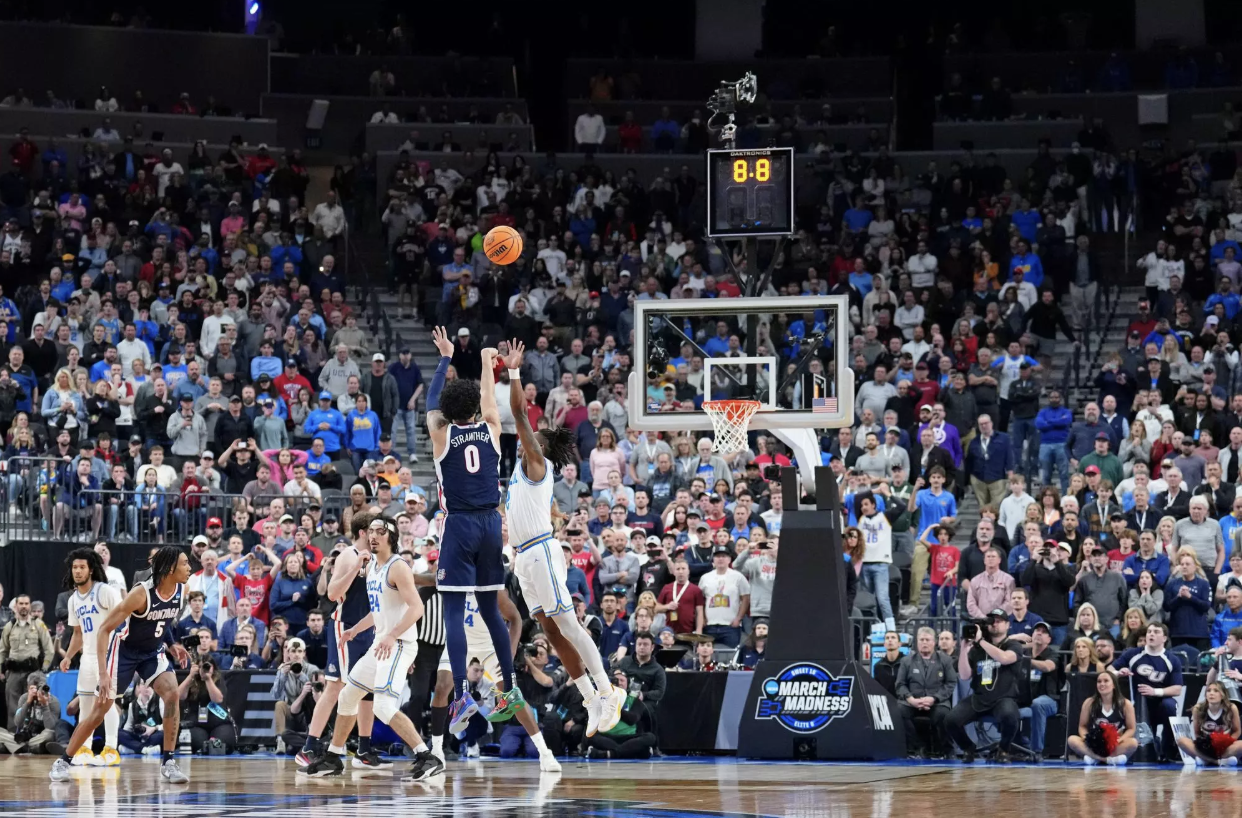
Gonzaga guard Julian Strawther scores the winning basket on a three-pointer in the final seconds of a 79-76 victory over UCLA in the Sweet 16. (Robert Gauthier / Los Angeles Times)
Just moments later, Gonzaga's Julian Strawther answered with a 32-footer that sent the entire T-Mobile Arena into pandemonium and ended UCLA's season in just a single shot. Inside the locker room afterward, players reportedly sat in silence and stared blankly as their season, and arguably their best chance at a championship, slipped right through their fingertips. The Bruins had won 31 games. They had battled injuries and stayed resilient through all of it. But for most people, the season begins and ends with Strawther's shot.
The Night Omaha Slipped Away
UCLA Baseball also experienced its own version of postseason heartbreak shortly after having one of the greatest seasons in program history.
Fresh off a College World Series finals appearance in 2010, the Bruins entered the 2011 campaign carrying enormous expectations, fielding a roster headlined by future MLB stars Gerrit Cole and Trevor Bauer. UCLA spent the year ranked atop the national polls, won the Pac-10 championship outright, and earned the right to host an NCAA regional at Jackie Robinson Stadium. For a program of that caliber, anything short of Omaha will feel like a disappointment.
Indeed, it did. After dropping their regional opener to fourth-seeded San Francisco, the Bruins battled back through the elimination bracket to reach the regional finals against UC Irvine. However, their efforts ultimately fell short as the Anteaters rallied for two runs in the ninth inning, erasing UCLA’s 3-2 lead and ending their season on a walk-off RBI single down the right-field line.
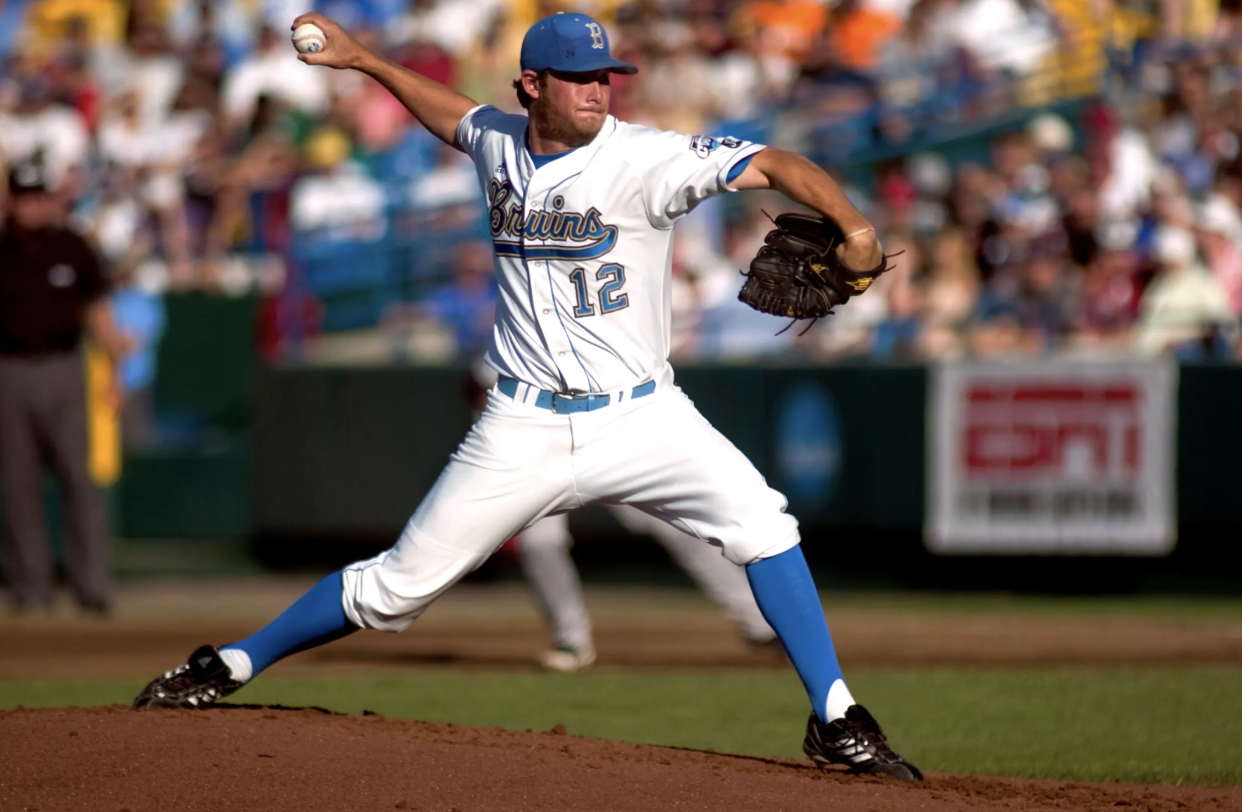
UCLA right-hander Gerrit Cole delivers a pitch during the Bruins’ 2010 College World Series appearance in Omaha, Nebraska. (Daily Bruin)
The defeat stung even harder given what was at stake. With Cole and Bauer, both juniors, heading to the 2011 MLB Draft, the Bruins had hoped to build on their Omaha breakthrough before saying goodbye to one of the best pitching staffs they had ever seen. The team posted a 2.44 ERA, the program's lowest mark in decades. Perhaps, on a different night, in a different inning, that's the number people remember. But for this certain game, it's that walk-off single down the right-field line at Jackie Robinson Stadium that most are reminded of.
The Burden of Getting There
What makes these stories striking is that they rarely stem from a lack of effort or poor coaching.
If anything, it’s the opposite. They reflect how difficult sustaining dominance has become in modern college athletics. Coaches like baseball’s John Savage, men’s volleyball’s John Speraw, and basketball’s Mick Cronin have consistently elevated UCLA into national contention across their respective sports. But striving to be No. 1 also creates a different kind of challenge, one rooted less in building rosters and more in managing pressure, urgency, and adaptability once expectations reach their highest point.
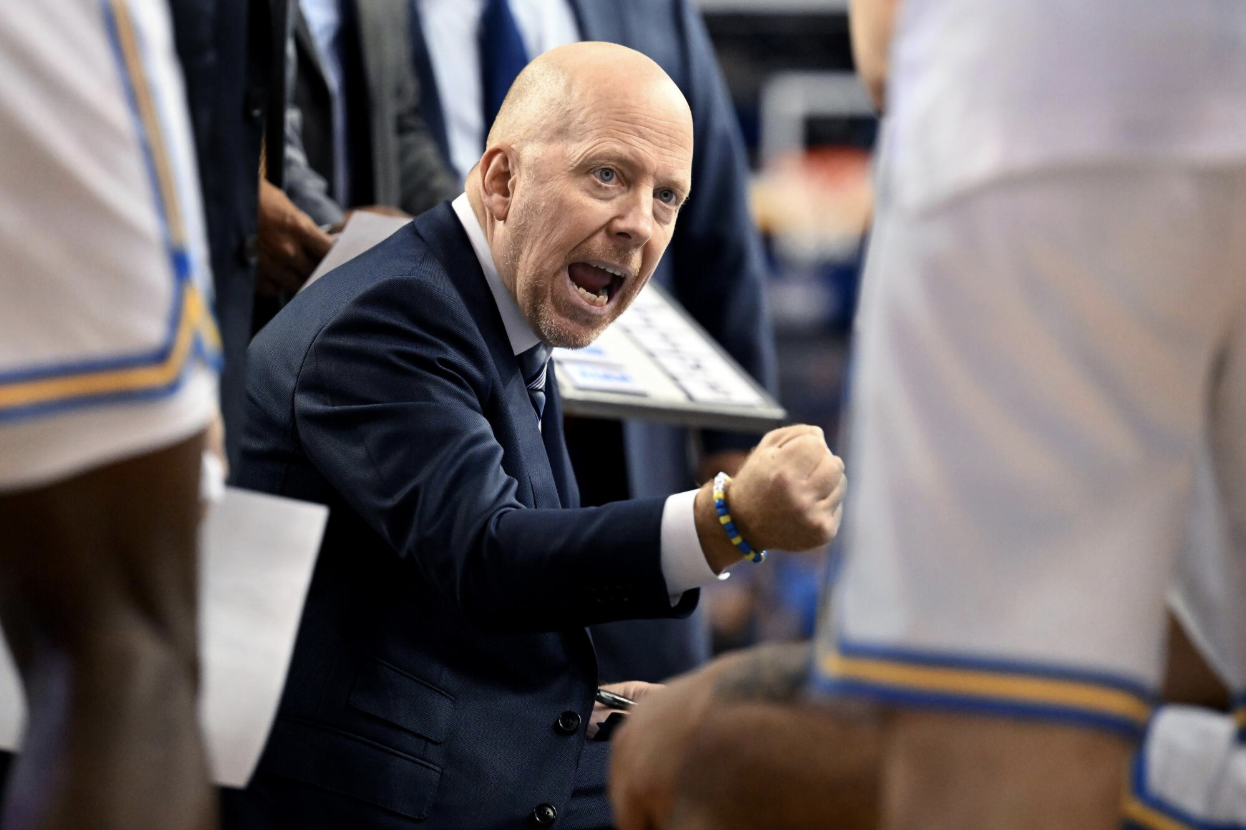
UCLA coach Mick Cronin instructs his players during a win over Lafayette at Pauley Pavilion on Nov. 10, 2023. (Wally Skalij / Los Angeles Times)
Carrying the top ranking at UCLA carries more weight than it does at other universities. Opponents highlight matchups against the Bruins as an opportunity to send a statement to the nation, and postseason formats offer little margin for error once momentum shifts. A single injury, a cold shooting stretch, a questionable call, or one poorly timed inning. Any of these can unravel months of preparation and excellence in a matter of minutes.
With the current landscape of college sports, that pressure has intensified even more. Transfer portal movement, NIL opportunities, and expanding parity have made dynasties increasingly rare, even for historically successful programs. Regular-season dominance may still earn a No. 1 ranking, but surviving the postseason now requires something different. It demands a tolerance for chaos that no regular season can fully prepare a team for.
The Next Team In the Spotlight
That challenge now falls on another UCLA team.
For the entirety of the 2025-2026 season, UCLA Baseball has comfortably claimed the first overall spot in the national rankings, putting together one of the best regular seasons in program history. The Bruins captured the Big Ten regular-season title outright in their second season as part of the conference, set a new program record with 47 regular-season wins, and earned national attention in a sport historically dominated by Southeastern Conference powerhouses.
At times, they have looked like the most complete team in the country. Headlined by junior shortstop Roch Cholowsky, a projected top MLB draft pick, the Bruins have combined elite pitching depth with timely hitting and defensive consistency throughout the season.
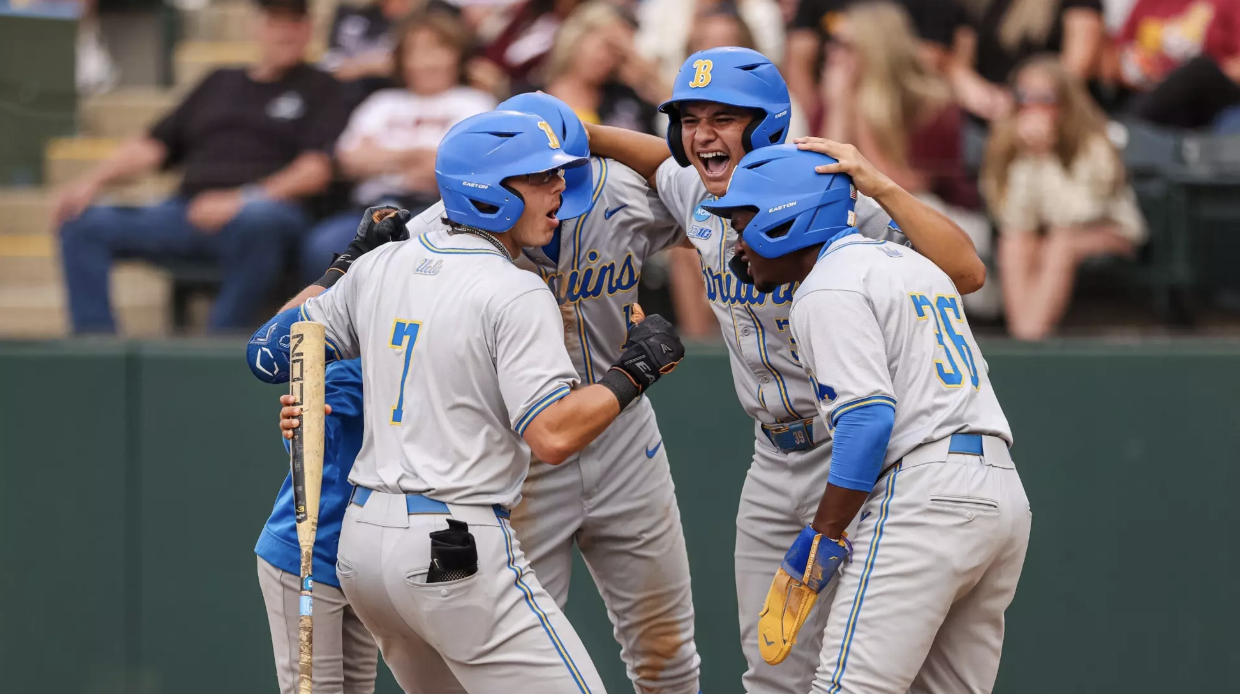
UCLA Baseball players cheer in a circle. (Mac Brown)
Yet amid the season-long success, recent weeks have offered a quiet reminder of how quickly things can shift. Late-season losses to No. 13 Oregon and unranked Washington didn't derail anything in terms of postseason opportunities for the Bruins, but they didn't go unnoticed either. They were the kind of results that linger in the back of your mind as tougher games lie ahead.
The Bruins enter the Big Ten tournament as the conference's top seed, with the NCAA postseason soon to follow. As they take on this challenge with the seemingly insurmountable pressure of being the No. 1 team in the nation, the expectations go beyond simply returning to Omaha.
UCLA has already proven it can dominate the regular season and break records. Across sports and across time, they have done that better than almost any other school. But the 1998 football team, the 2023 men’s basketball squad, and the 2011 baseball roster all had more in common than championship-caliber talent. Each came painfully close to the standard set before them, but none fully crossed the finish line. Now, the question is whether the 2026 baseball team can be the one that does. When people look back on this season, will they remember another collapse or the year UCLA was finally able to meet championship expectations?
