
LaLiga, Bundesliga, Premier League and… MLS??
By Chloe Agas | 20 November, 2025
The MLS already garnered a larger audience with Lionel Messi.
But it seems like that was just the beginning.
Last week, Major League Soccer announced that it would switch its schedule around to align itself with the rest of the international soccer leagues.
The MLS was created to capitalize on soccer’s popularity when the United States won a bid to host the FIFA World Cup in 1994. Since then, the MLS has welcomed decorated players such as David Beckham, Thierry Henry, Jordi Alba, Sergi Busquets, Luis Suarez, Heung-min Son – and of course – Messi.
The calendar currently runs from February to November, which is shorter than those of other international soccer leagues. LaLiga, for example, runs from mid-August until late May.
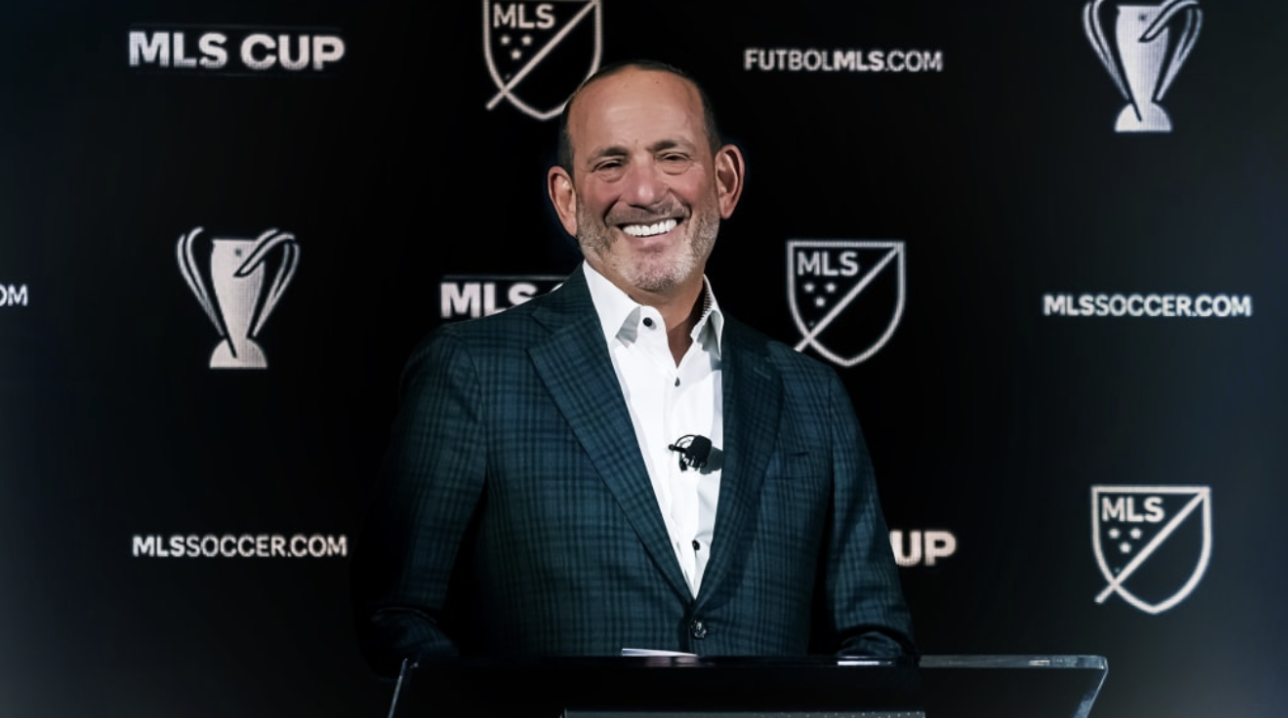
MLS commissioner Don Garber stands at the podium. Garber is in his 26th year as the league's commissioner. (Source: MLS)
MLS commissioner Don Garber said in a recent news release that the calendar shift marks a new era for the North American-based league. (Sources: ESPN)
“The calendar shift is one of the most important decisions in our history,” Garber said. “Aligning our schedule with the world’s top leagues will strengthen our clubs’ global competitiveness, create better opportunities in the transfer market, and ensure our Audi MLS Cup Playoffs take center stage without interruption.”
It's also safe to say that this calendar shift is also a business opportunity.
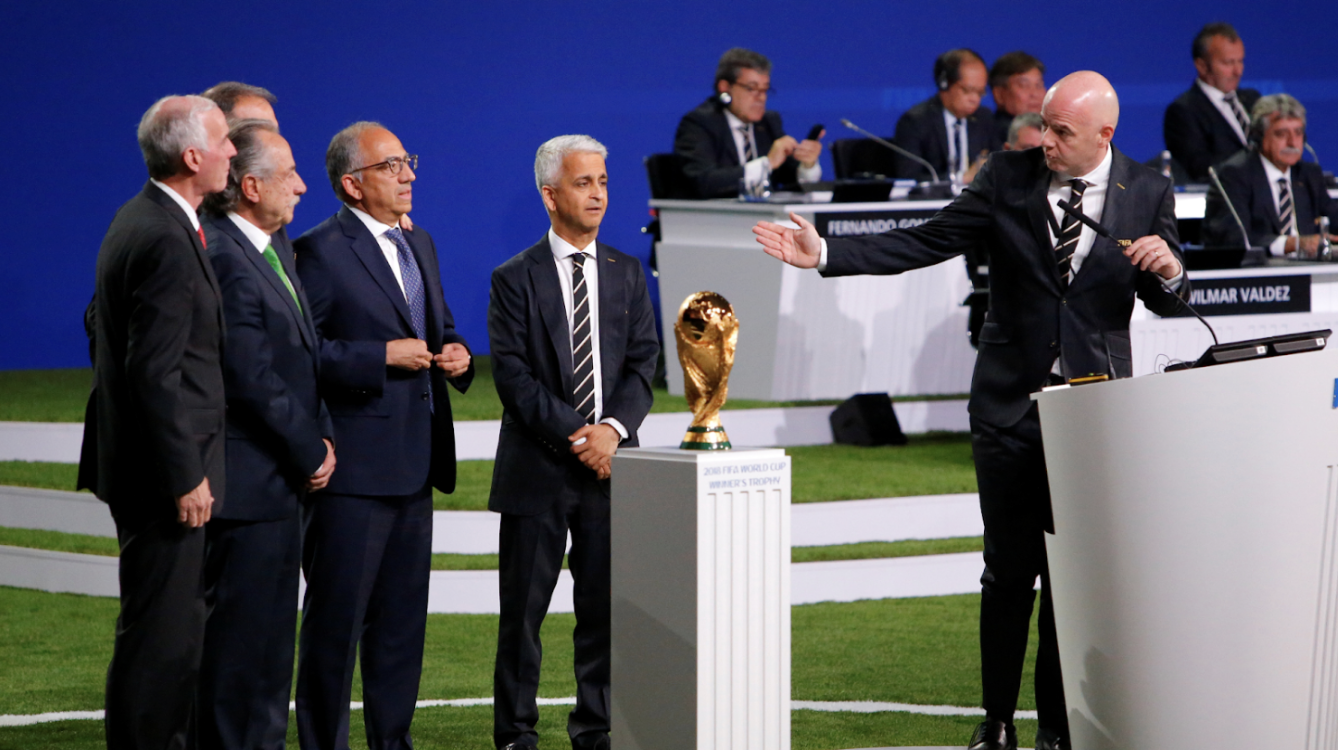
Representatives from the United States, Mexico, and Canada gathered as votes came in to select the next host of the 2026 FIFA World Cup during the 68th FIFA Congress. (Source: TPR)
The MLS’ new calendar will coincide with the international transfer market, which takes place in the summer versus the current MLS primary transfer window occurring during the winter. The shift also takes place just a few months prior to the beginning of the 2026 FIFA World Cup, spanning across three countries – Canada, Mexico, and the United States.
MLS will run a trial season from February to May at the beginning of 2027. According to MLS Executive Vice President of Sporting and Competition Nelson Rodriguez, there will be less matches occurring but the season will run with a full playoff and MLS Cup Championship.
As someone who has been an avid fan of the sport since middle school, I’ve always been intrigued by how much the MLS stood out in terms of scheduling, the teams, and just overall logistics versus international leagues. In my opinion, soccer (don’t worry, I call it football personally), is less known in the United States than let's say the National Football League, Major League Baseball, and the National Basketball Association.
In my eyes, the MLS calendar used to stand out in the cold.
Unlike every other soccer league globally, MLS ran on a spring-to-fall schedule. While leagues in Europe were in preseason, signing free agents from the transfer portal and new players, MLS would be in the midst of its season. When European leagues were closing out, MLS was just getting started. The disconnect from other leagues globally made the MLS a conspicuous outlier in the soccer calendar.
But now, with the league’s new scheduling model, it has a chance to rewrite the script and take center stage globally. Here are my takeaways from this breakthrough.
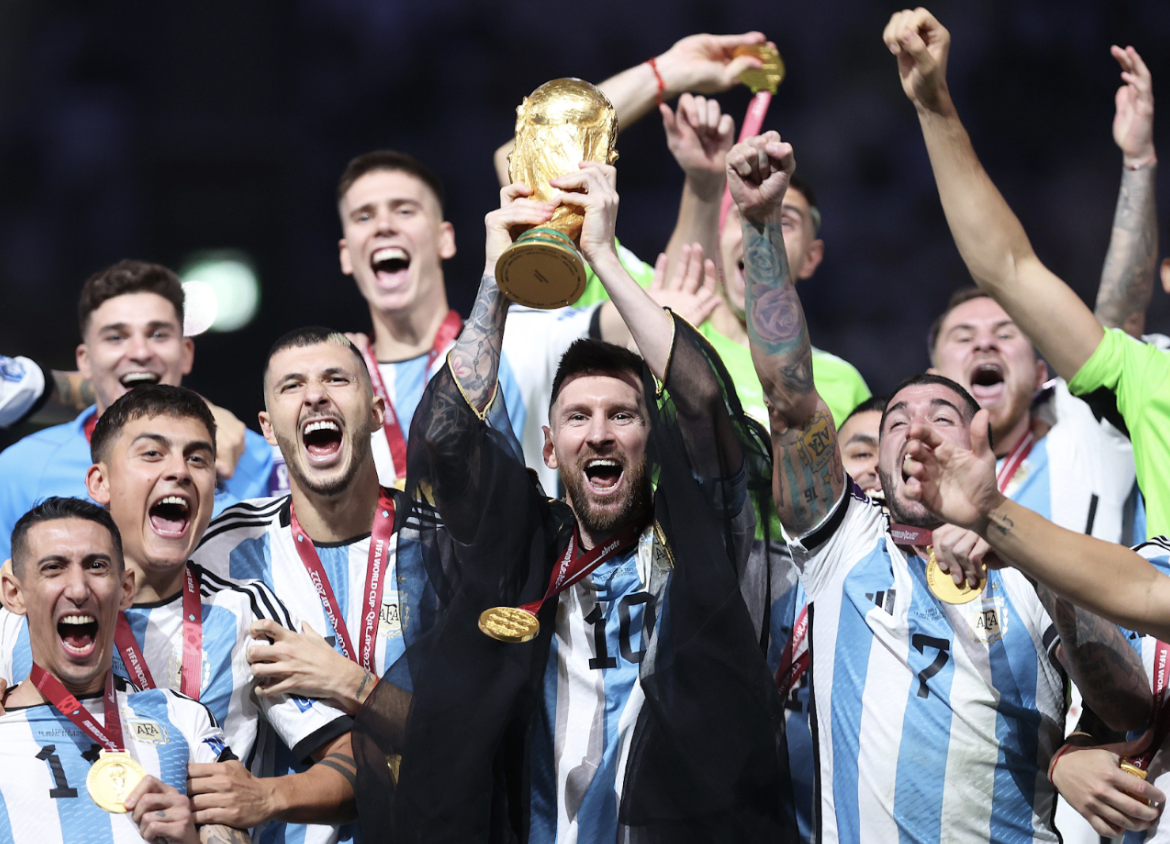
Lionel Messi celebrates with the Argentine National team following a victory in the final round of the 2022 FIFA World Cup. (Source: The Philadelphia Inquirer)
The Desire for Global Reach
Let’s state the obvious. Garber said it himself: the calendar shift was intended to align with other leagues globally to bolster transfer-market opportunities, foster more competitiveness, and have the Audi MLS Cup Playoffs take place around the same time as other leagues host their title matches.
But also, I’d like to note that even before the shift occurred, the MLS managed to lure in Messi, who is arguably one of, if not the most decorated player to have set foot on the pitch. I’ve personally found myself to be more drawn to the MLS because I’ve been a fan of Messi since discovering FC Barcelona in middle school, and some fans may have similar sentiments.
Now, with the World Cup just around the corner, it is not a coincidence that how the MLS’ calendar is shifting perfectly aligns with utilizing the global event as a platform to polarize the popularity of soccer in the United States.
“By aligning with the International Match Calendar, MLS is positioning itself for a new era of both domestic and global growth at club level after next year’s game-changing FIFA World Cup.” said FIFA President Gianni Infantino. (Source: ESPN)
And he’s got a point. This shift would put the MLS on the same wavelength as the rest of the other leagues globally. For a league once out of sync, this new calendar alignment opens opportunities for the MLS to gain more international visibility and improve the preseason period through new signings and transfers.
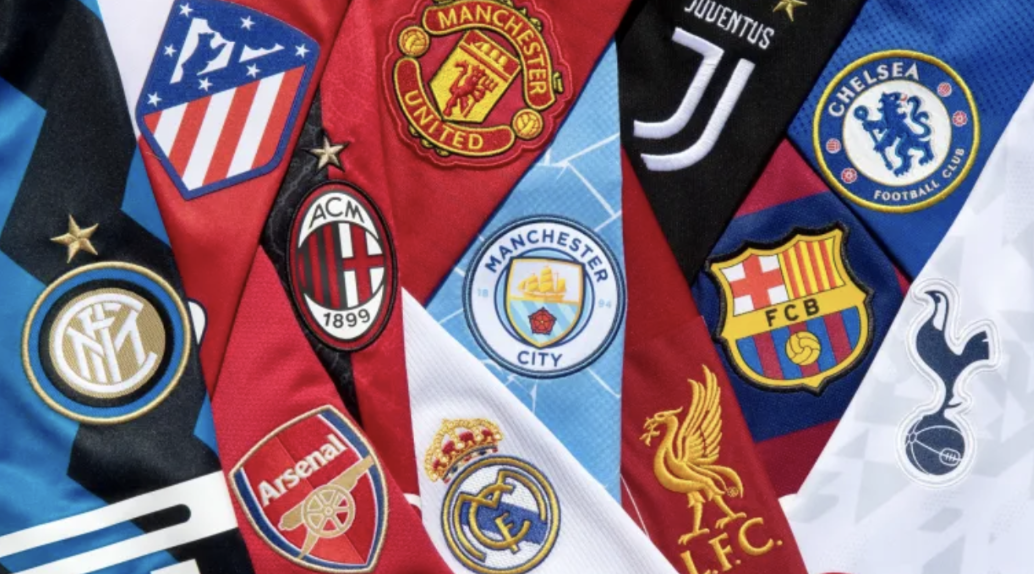
These are a few teams that participate in the transfer portal, mostly in the summer. Notable teams included in the photo include FC Barcelona, Real Madrid, Chelsea Football Club, and Arsenal. (Source: The Sporting News)
Old Habits Die Hard
In every business deal, negotiations are always necessary.
And in this case, the league is still working on agreements with the MLS Players Association. According to sources close to ESPN, the disagreements lie within the unwillingness to commit to set dates for scheduling changes, and the length of the offseason. The MLS’ offseason will align with other international leagues, taking place from mid-December until early February.
The catch is that the length of the offseason can also alter the free agency period, as player movement becomes increasingly challenging to navigate. An extended break also means that free agents risk losing visibility and negotiating leverage. Without regular match exposure, players could enter the market with fewer opportunities to show off their form.
And the current winter transfer window doesn’t help.
While the MLS is still moving and signing players around, the rest of the world is mostly quiet. By the time the summer window opens, most clubs are reshaping their rosters while the MLS is playing catch-up.
A shift would enhance the league and give enough time before the regular season and cup tournaments commence. Furthermore, it also lessens conflict to the leagues’ international duty players, especially during the Summer.
This doesn’t come easy at all though. Contracts will need to be reworked and some will potentially be ripped up altogether. But internal logistics aren’t the only thing that the MLS should be worried about.
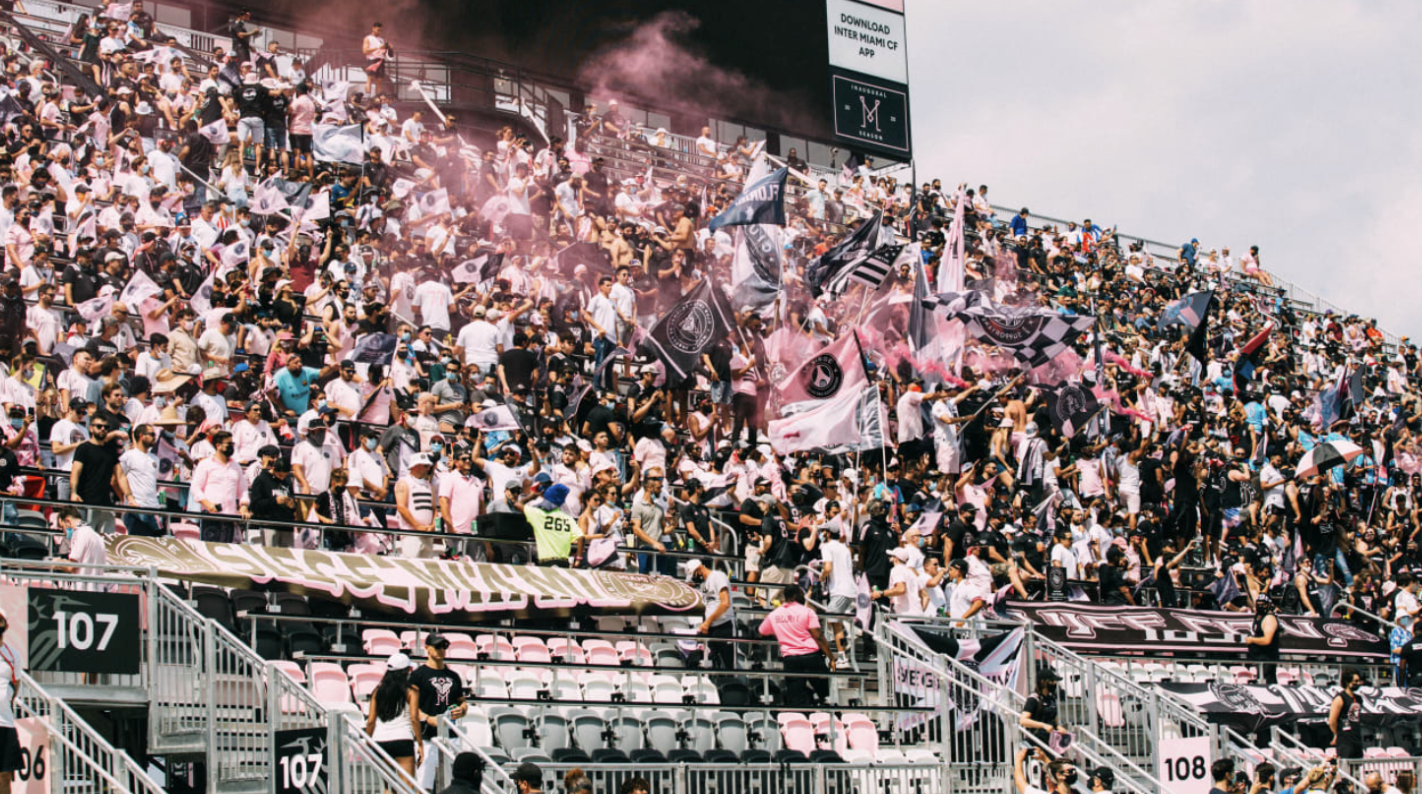
Fans take the stands at the Chase Stadium at an Inter Miami CF match. (Source: Inter Miami CF)
But what about the fan experience?
A soccer match is not complete without the fans in the stands.
This goes for any sport.
With the MLS playing in multiple stadiums across the United States, a calendar shift also brings forth environmental concerns that must be taken into account.
For example, midwest teams such as the Chicago Fire FC experience temperatures that reach below freezing levels as early as mid-November which can cause interruptions and health concerns. Furthermore, this also raises questions about fan attendance and if it will retain its current audience – even in the cold.
When we think about it though, and this applies to our everyday lives, that change does not come without adjustment. In this case, MLS and its fans will need to take in the changes step by step.
But soccer fans are actually the most loyal. Rain or shine, fans, including myself, will endure harsh conditions to see their favorite teams take the pitch.
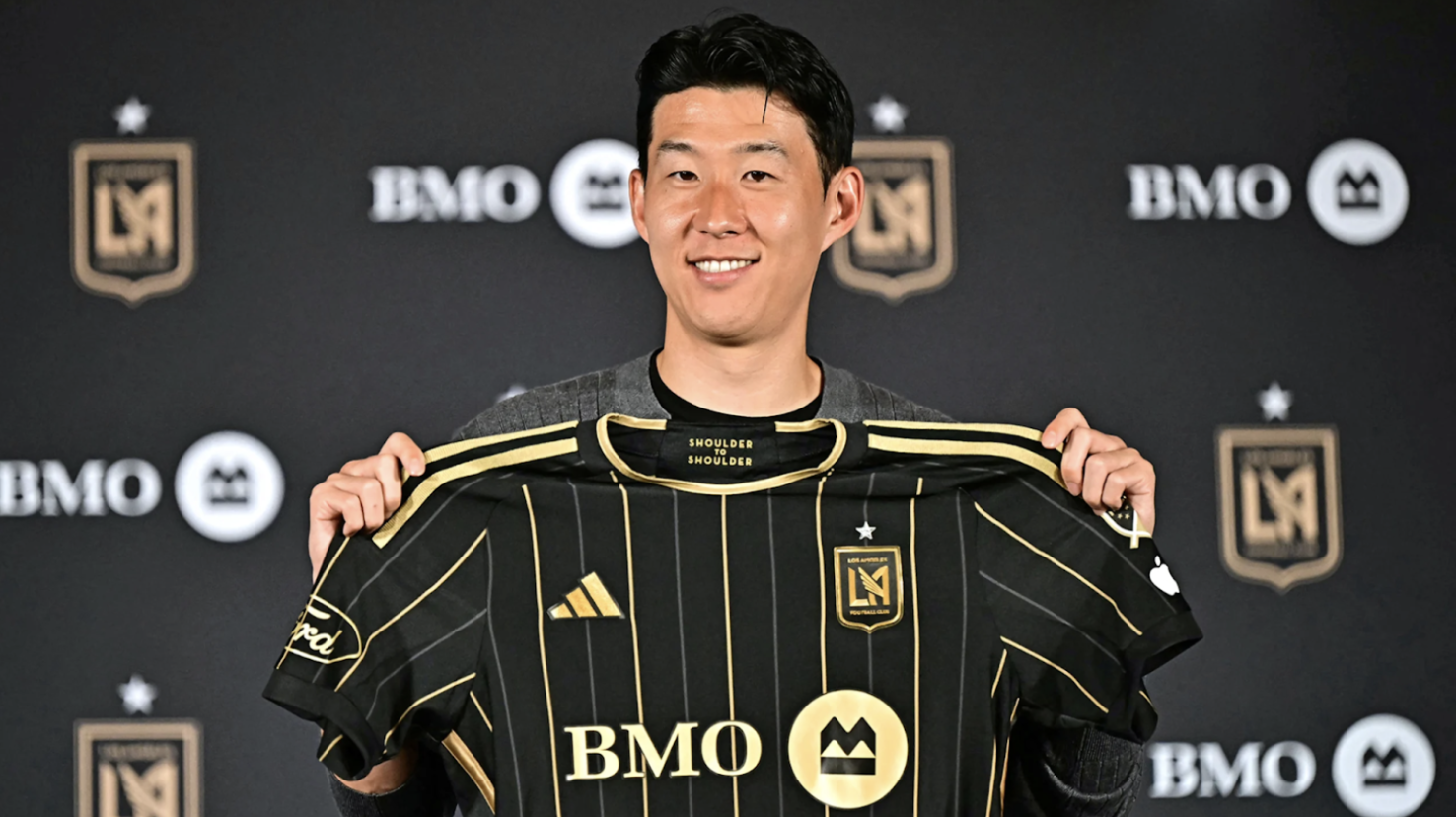
Son Heung-Min holds up an LAFC jersey. The ex-Tottenham Hotspur forward signed a contract in August with the Los Angeles based club for a reported $26.5 million. (Source: MLS)
Exposure vs Stability
When Heung-Min Son signed with the Los Angeles Football Club earlier this year, I was ecstatic.
But this rewarding exposure also comes with friction.
Soccer is not the only sport in North America. When MLS shifts its calendar, it’ll also stand out from the NFL, MLB, and NBA – the big three of North American sports. The MLS wanted to shift its calendar to give more exposure to the playoffs and the league's hallmark, the MLS Cup, and this move may be the right decision. But, there will still be conflicts with major sporting events here and there, bringing into question just how much viewership this move can potentially bring.
Furthermore, I’ve mentioned earlier about how impactful this move would be for the potential transfer window and international breaks. Yes, there is a risk of losing some of its most valuable players with exposure to a global market, but it can also present an opportunity to bring in more decorative players into the league.
But this shift is still a work in progress. This is only just the beginning.
So what happens now? There is no doubt that the MLS is capitalizing on opportunities to grow and bring more awareness onto an international platform. The shift is ambitious and carries risks, raising many concerns and requiring structural negotiations.
Here’s the catch: the MLS is moving from a predominantly domestic audience to a global one. The shift won’t magically change the league overnight, but it does signal an intent to evolve and compete against some of the best teams in the world. To me, this feels long overdue rather than ambitious, and could redefine soccer’s prevalence in North America. Either way, this may become one of the most significant business deals ever in sports – and we’re just getting started.
