
Here’s What You Need to Know About Barcelona’s New $1.5 Billion Stadium Set to Replace the Historic Camp Nou
By Kris Garo
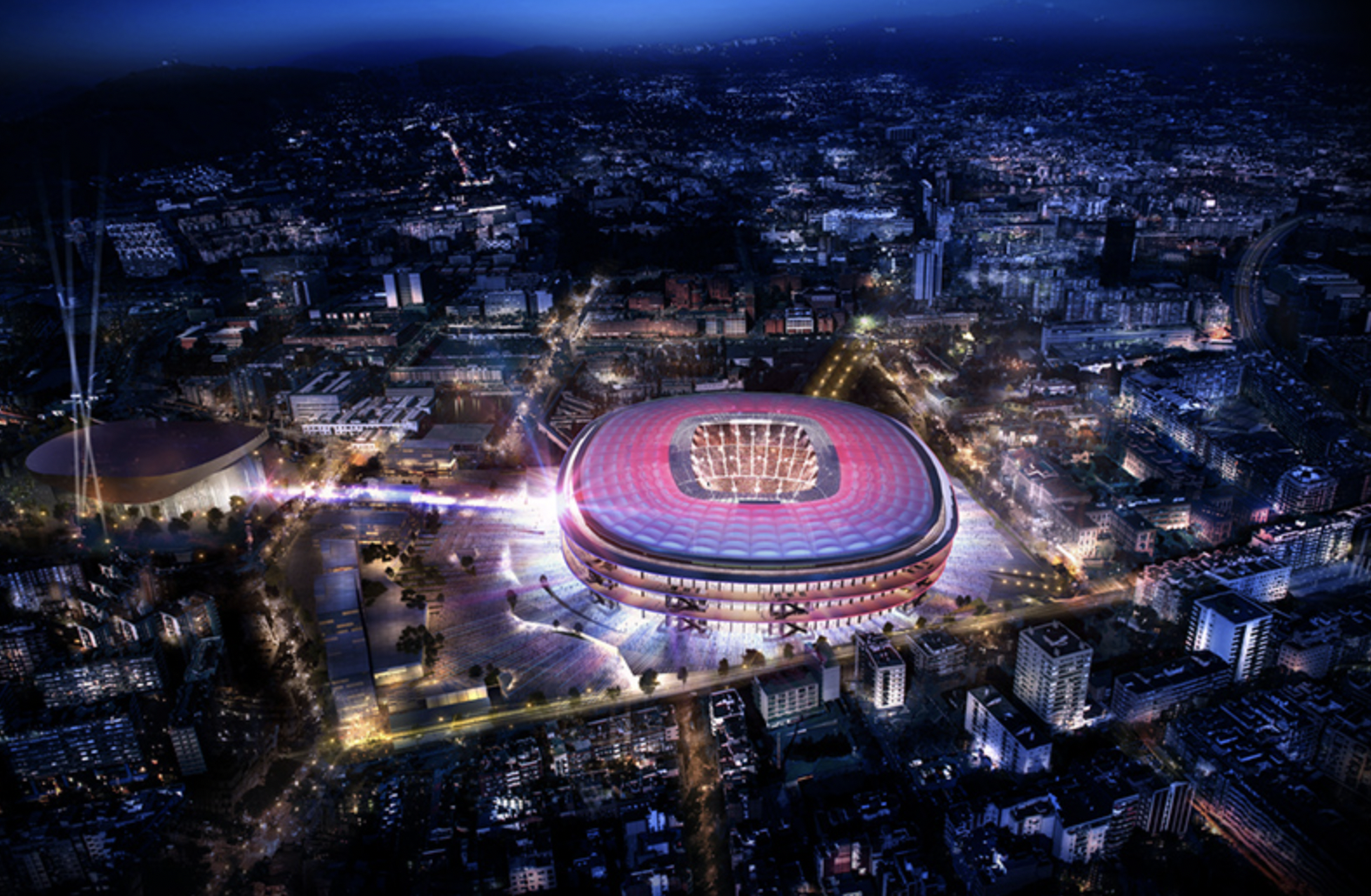
FC Barcelona is finally returning to Camp Nou after spending months away from the historic stadium that has defined the club since 1957. According to Euronews, with the approval of the Phase 1B occupancy licence, the venue can now partially reopen, welcoming more than 45,000 fans back inside. This milestone marks the first step in Barcelona’s larger transformation and ongoing construction of a completely rebuilt, $1.5 billion modern stadium that will replace the iconic Camp Nou as the club enters a new era.
(Architectural Digest)
According to Yahoo Sports, the scale of Barcelona’s new stadium project is enormous even by global football standards. Camp Nou already holds close to 100,000 spectators, making it Europe’s largest stadium and one of the biggest worldwide, but the rebuild will push capacity to about 105,000. That jump would place it among the top five largest stadiums on the planet, and for the first time, the entire structure will be covered by a modern roof.
The commercial impact of the new stadium is just as significant. Spotify secured the naming rights last year in a $310 million, four-year agreement, adding a major revenue stream as the club continues its broader transformation. The Espai Barça development is being described by Limak president Nihat Ozdemir as the most important modernization project in Catalonia since the 1992 Olympic Games. This further highlights both its cultural and economic weight. The timing also carries symbolic power: the renovation is scheduled to align with FC Barcelona’s 125th anniversary, giving the club a newly rebuilt home for a major historical milestone.
Barcelona’s Biggest Investment Yet
In financial terms, the numbers are massive. The renovation itself is priced at roughly $414 million, and projections estimate that once the project is fully operational, it could generate around $271 million annually through increased match-day revenue, hospitality, events, and commercial activity. The financing is structured through staggered loans that the club plans to repay over five, seven, nine, 20, and 24 years, with an initial grace period built in to ease the early financial pressure.
As Barcelona prepares for the full reopening of its future home, it is worth looking at some of the major upgrades and new features that will come with this renovation. These changes will reshape how players, staff, and fans will experience the stadium.
Safety
In terms of safety, the stadium now incorporates modern fire-prevention tools, including updated sprinkler and fire-suppression technology, as well as improved ventilation throughout the facility. New entrances have been added as well, each designed to meet the latest UEFA safety requirements. All of these upgrades must go through a thorough approval process before Barcelona can officially reopen its home ground to fans at full capacity.
A Stadium Designed for Modern Times
According to FC Barcelona’s official website, the new Camp Nou is being built around a clear idea: it will be a stadium adapted to modern times and to serve the people and fans that enter it. The entire design philosophy is based on creating a space that is open, spacious, protected by a cutting-edge roof, comfortable, fully accessible, and rooted in long-term sustainability.
Open
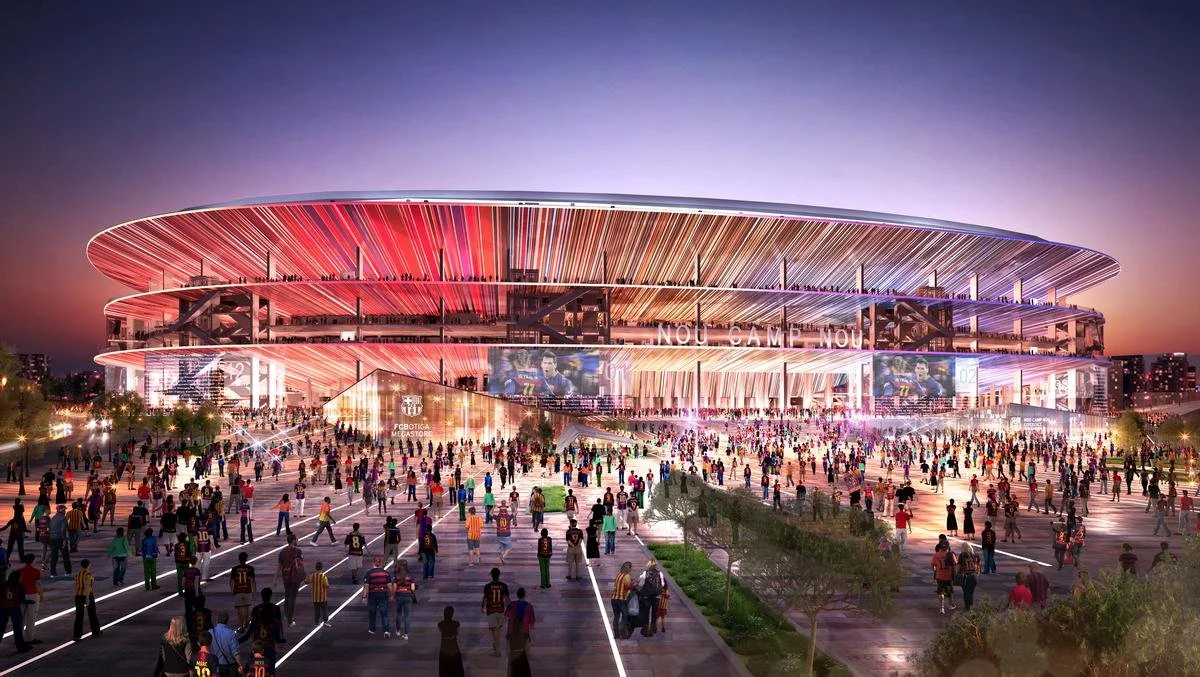
The stadium’s design centers on openness. Large cantilever structures create three wide concourse rings around the perimeter, where fans will find viewpoints, food areas, and social spaces. This layout forms an open façade that puts members and supporters at the heart of the experience. Natural Mediterranean light will filter through the roof and flow in through this open exterior, while strategically placed glass walls will shield fans from wind and rain without closing off the space.
(FC Barcelona)
Spacious
The new Camp Nou will include a high-rise atrium running around the entire stadium at street level, giving fans a grand, accessible entry point. Supporters can move easily to the first tier through vertical circulation hubs equipped with escalators, elevators, and stairways. These will all be framed within glass fronts on the ground level. Inside, movement on every floor is meant to be quick and intuitive, making it easier than ever to get around the stadium on match days.
Roof
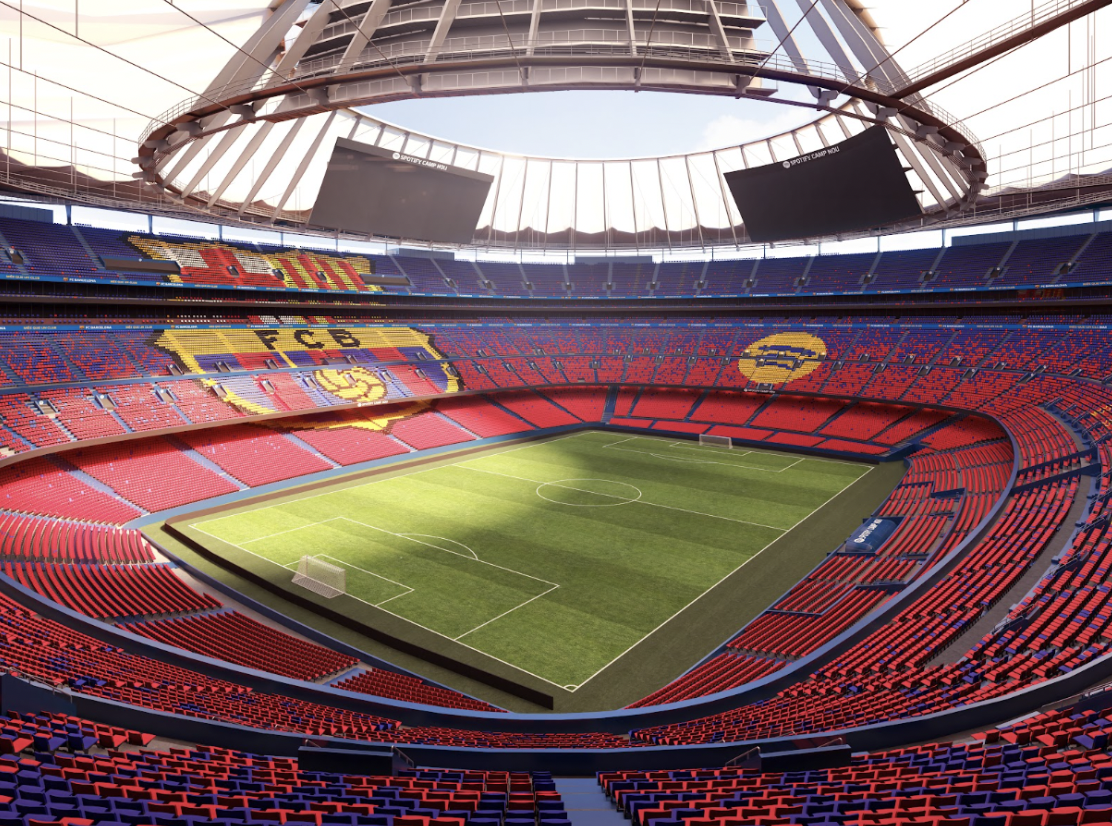
Since the capacity will expand to roughly 105,000 spectators, for the first time ever, the entire stadium will be fully covered. The new roof is designed to protect fans from rain and harsh sun conditions. It will also improve sightlines, and even enhance the noise inside the ground. Covering more than 47,000 m², the structure will use a combination of steel cables, ETFE, PTFE, and polycarbonate. It will also collect rainwater for irrigating the pitch and integrate solar energy systems to power the lighting needed for grass growth. Technology will also be embedded throughout the roof, including updated video boards, floodlighting, sound systems, and high-speed Wi-Fi, all while reducing noise pollution for the surrounding neighborhood.
(FC Barcelona)
Comfortable
Fan comfort is a major priority. The future stadium will feature more food and merchandise points, better general services, and dedicated Fan Zone areas. A family-friendly section is planned for the third tier, giving younger fans a more engaging match-day experience.
Accessibility
The redesigned Camp Nou will be far more accessible for everyone. Seating areas for fans with reduced mobility will be better placed and more evenly distributed across the stadium. Spectators with visual or hearing difficulties will have clearer signage and improved services. Also, new elevators, escalators, and upgraded terrace pathways will make circulation easier, while new, modern restrooms will be available throughout the venue.
Sustainability
The entire Espai Barça project follows a broad sustainability strategy that covers every facility connected to the club, from the new Camp Nou, to the Nou Palau Blaugrana, Campus Barça, and the training facilities at Sant Joan Despí, including the Johan Cruyff Stadium. The aim is for the future stadium and surrounding spaces to operate with reduced environmental impact, efficient energy use, and long-term ecological responsibility.
This massive investment will undoubtedly reshape the future of FC Barcelona, not only for the fans who fill the stands and the team who calls it home, but also for the beautiful city that surrounds it.
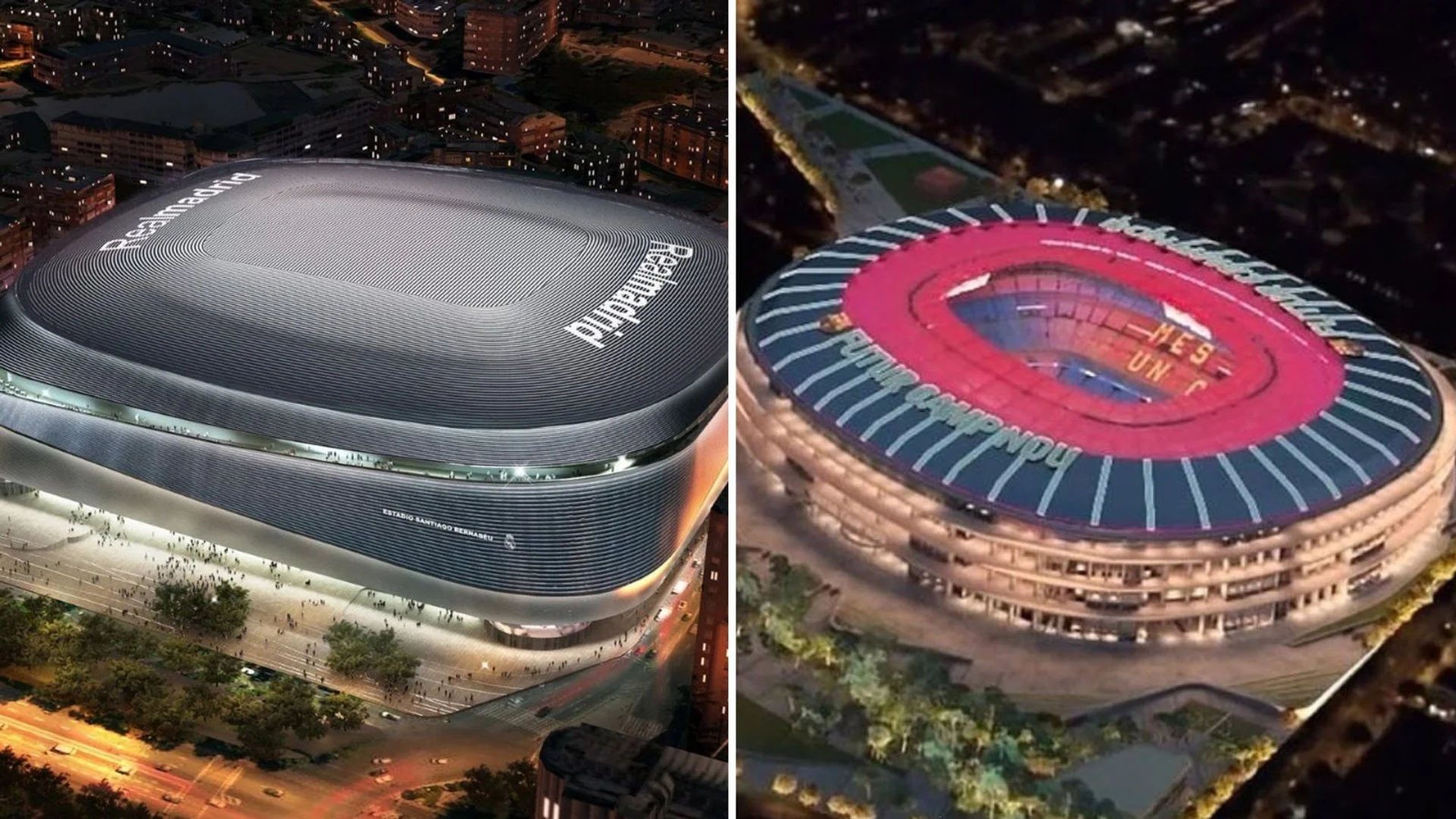
Still, the debate continues online. Fans and social media users are already comparing Barcelona’s project to Real Madrid’s newly revamped Santiago Bernabéu, arguing over which stadium will have the bigger impact and leave a more lasting legacy. Only time will tell which of Spain’s giants has made the boldest move, but one thing is clear: the future of football architecture is being written in Barcelona and Madrid.
(MARCA)
