
Locked In or Locked Out? What’s Going On With Major League Baseball?
By Chloe Agas | 18 February, 2026
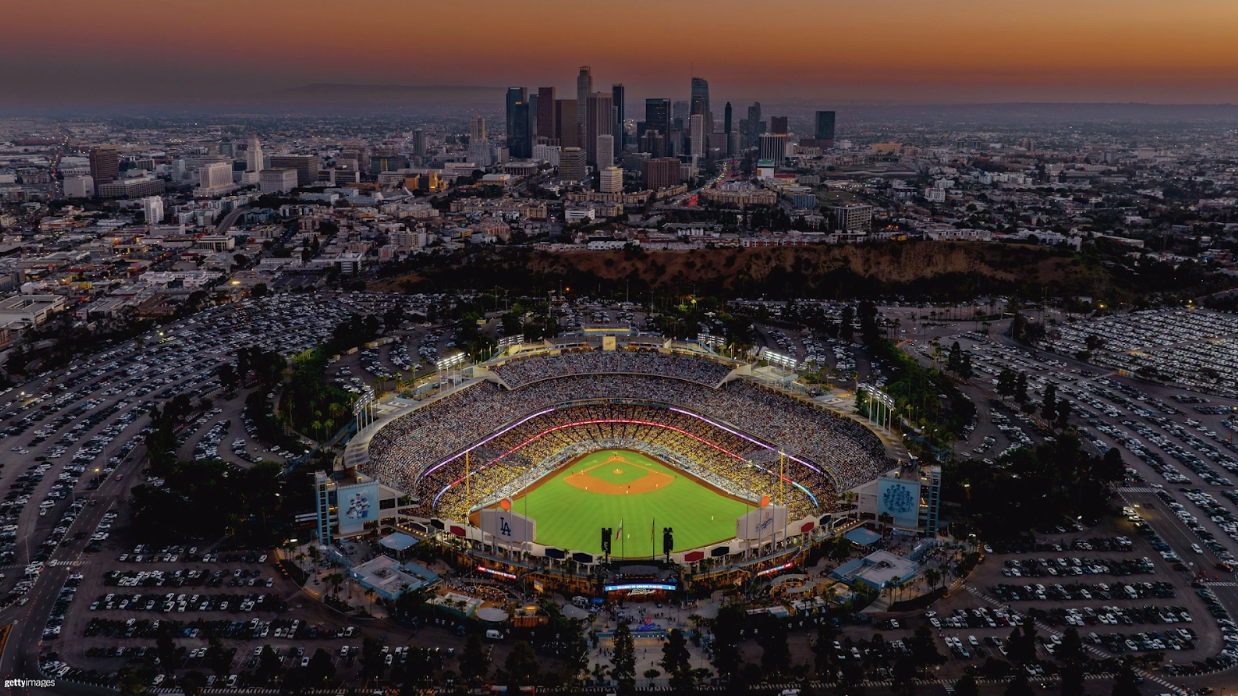
Overview shot of Dodger Stadium, home to the defending, back-to-back World Series Champions. (LA28)
In baseball, there are a total of four bases.
First. Second. Third. Home.
Each one is imprinted in the dirt, creating the blueprint that makes the game possible. You can’t round first if it isn’t there. You can’t score without touching home plate.
The structure is what makes up the game. Baseball is dependent on its foundations.
The same is true off the field.
Beyond the stadium lights and box scores, Major League Baseball rests on the lines that bind teams to their players.
In 2021, the collective bargaining agreement, more commonly referred to as the CBA, expired without a new agreement. This led to baseball coming to halt as a collective for the first time in 26 years. And as we approach the next expiration date at the end of the 2026 season, the possibility of the MLB’s 10th lockout looms over.
Just as baseball can’t be played without its bases, a season can’t take place without a collective deal.
In baseball, it’s simple: you score, advance, and return home. But you need to have a solid game plan beneath your feet.
And if the MLB Players Association negotiations can’t reach a solidified agreement, the question won’t be about opening day matchups or postseason projections. Instead, it will be regarding whether there is a season to play at all.
Before we can even think about preseason, before we can think about the first pitch, and before we can even think about October, there needs to be a base to stand on.
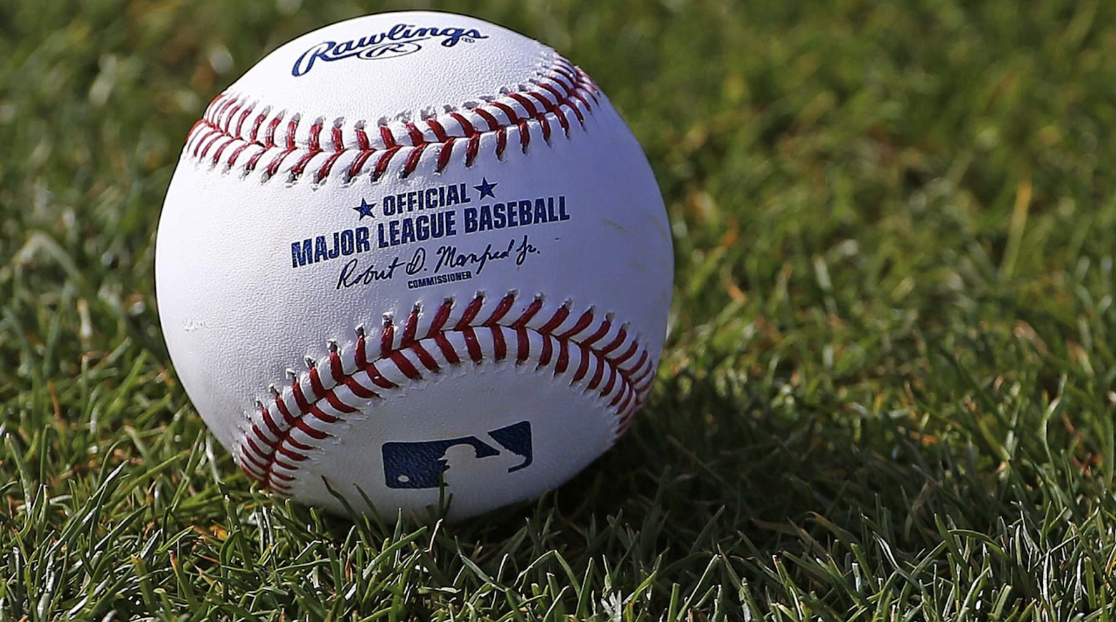
MLB Baseball. (MLB)
A Blast from the Past
A lockout is initiated when a collective bargaining agreement expires, which prevents players from using facilities, and all signings, trades, and contract negotiations freeze. MLB has experienced nine lockouts, with the first taking place in the 1970s.
The most recent lockout happened just five years ago, when players and owners were unable to come up with terms for a new CBA by the time the expiration date of the previous CBA came about. It seemed that the only way the owners could initiate an effort to put pressure on the union and bring them to an agreement was by locking out the players.
The lockout lasted for three months, causing spring training to come to a halt and delaying opening day until April. In March 2022, the new CBA was agreed upon, which included expanding the postseason field and allowing advertisements on uniforms.
But the damage wasn’t only measured in the 99 days that the lockout lasted.
Free agents remained unsigned with restricted activity during the offseason, minor leaguers were left in limbo and unable to put their talent on display for their respective franchises, and the fans who had purchased tickets for Spring Training had to get them refunded from the cancellation.
Although the agreement brought back the 2022 season on a delay, it also revealed the fragility of the foundation that MLB rests upon.
As the current CBA approaches its expiration date at the end of the 2026 season, new tensions arise over concerns about salary caps, competitive balance taxes, financial distributions, and revenue imbalance.
The numbers have grown, contracts have soared, and so has the division.
Now the question is, will the foundation hold?
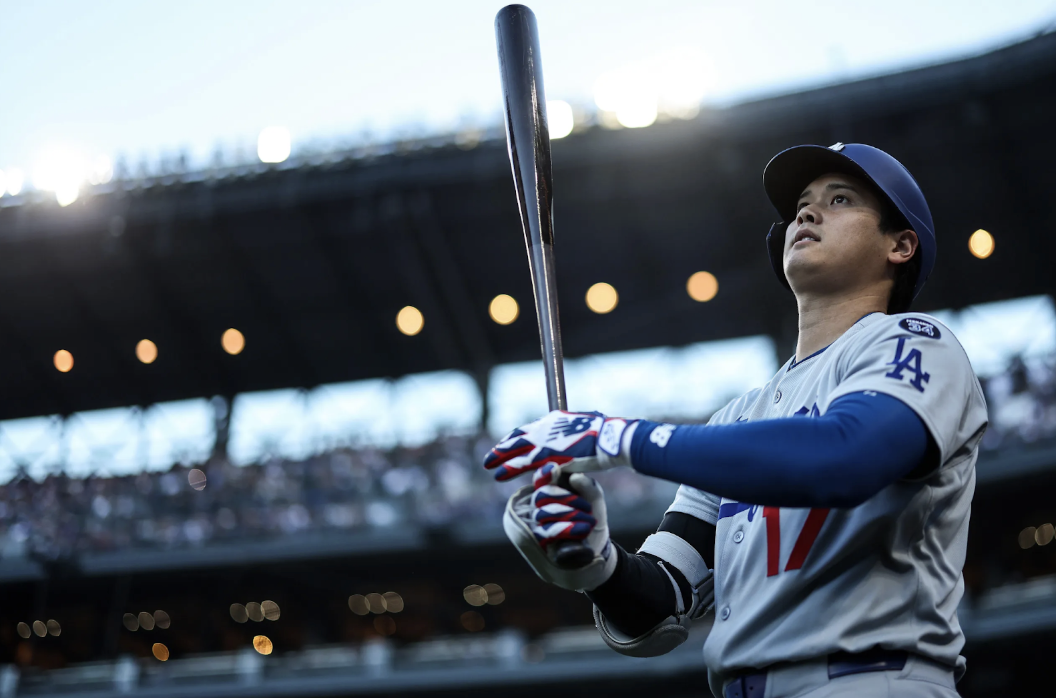
Shohei Ohtani, Los Angeles Dodgers’ superstar two-way player, controversially signed an incredibly lucrative deal in December 2023. (Steph Chambers/Getty)
So What’s At Stake?
As of now, both sides will need to begin laying out the issues at hand, and at its core is the numbers.
So what makes this potential lockout different from what was experienced five years ago?
The basis of economic disparity even being raised up as an issue stems from the collapse of the regional sports network television model, which led to several teams losing local media revenue.
But also, let’s get the facts straight: There are owners seeking a harder salary cap and curbing higher spending by teams such as the Los Angeles Dodgers.
One can argue that the current state of the salary cap and expenditures could “threaten” competitive balance in MLB. And in terms of competitive balance, without an argument or structural adjustment, the gap between higher-revenue and lower-revenue clubs will only continue to widen.
But the underlying problem is that a salary cap isn’t a possibility that player leadership considers. And that is where the foundation begins to crack.
Competitive balance is often cited as the focal point, but even if I’m sitting behind the screen, looking at the numbers and researching for hours on end, the reality is that it only gets more complex.
Baseball is only continuing to grow, and through various media deals and partnerships, the question is not only about earning money, but also about how that money is distributed and what controls the flow of revenue. And as spring training begins, both sides will be forced to make ends meet while balancing long-term stability.
Now let’s talk about the actual numbers.
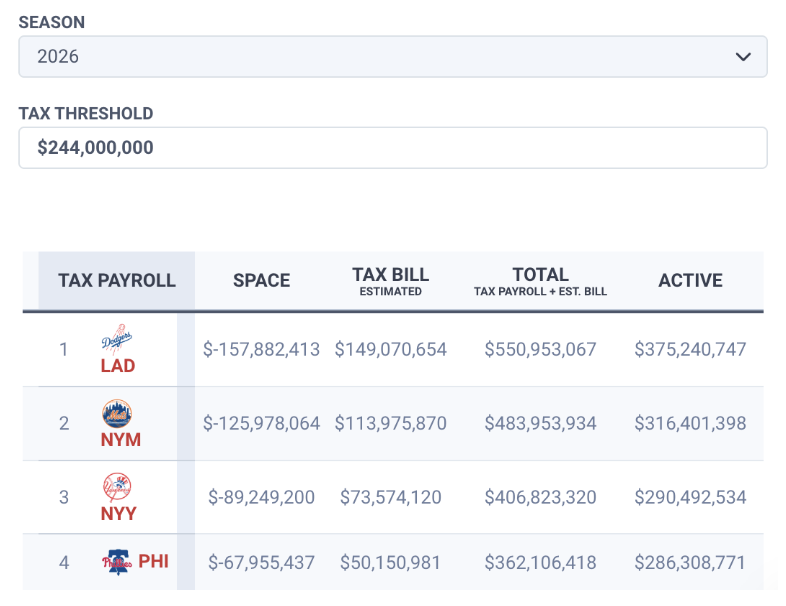
A table showing the top four MLB payrolls and projected tax penalties for the 2026 MLB season via Spotrac.
These numbers demonstrate why the issue surfaced and continues to resurface. For example, the tax threshold is approximately $244 million. As of this week, the Los Angeles Dodgers are over the tax threshold by $157 million. This is the imbalance that owners and fans are reacting to.
The Dodgers' estimated total payroll plus the tax bill is estimated to be around $550 million, which is more than double the threshold. Meanwhile, both the New York Mets and the New York Yankees have exceeded the $400 million threshold mark. Past the top four, the rest of the teams are below the $244 million threshold line.
Now what do these numbers really represent?
If you’re concerned about the long-term, this would come across as an imbalance, with rosters constructed on capital and purchasing power. There are a handful of teams that can outspend and build teams with hundreds of millions of dollars on the line, which underscores the need to account for cost controls and a salary cap.
But from another perspective, one could also argue that the numbers are figuratively different. The MLB currently does not have a mandated minimum or maximum cap for team payrolls. It currently operates under a “soft cap” through a competitive balance tax, intended to serve as a penalty for high-spending teams. The union argues that a salary cap would threaten the market, player compensation, and earnings.
With all of this in consideration, the argument isn’t just about the money, but rather about the principle.
Now the question is, should the sport impose stricter guardrails financially to address a higher level of parity? Or should it continue to allow open-market spending even if it widens the gap?
These are the questions that will shape the agreements that will be discussed in the next negotiation cycle – and the clock is ticking.
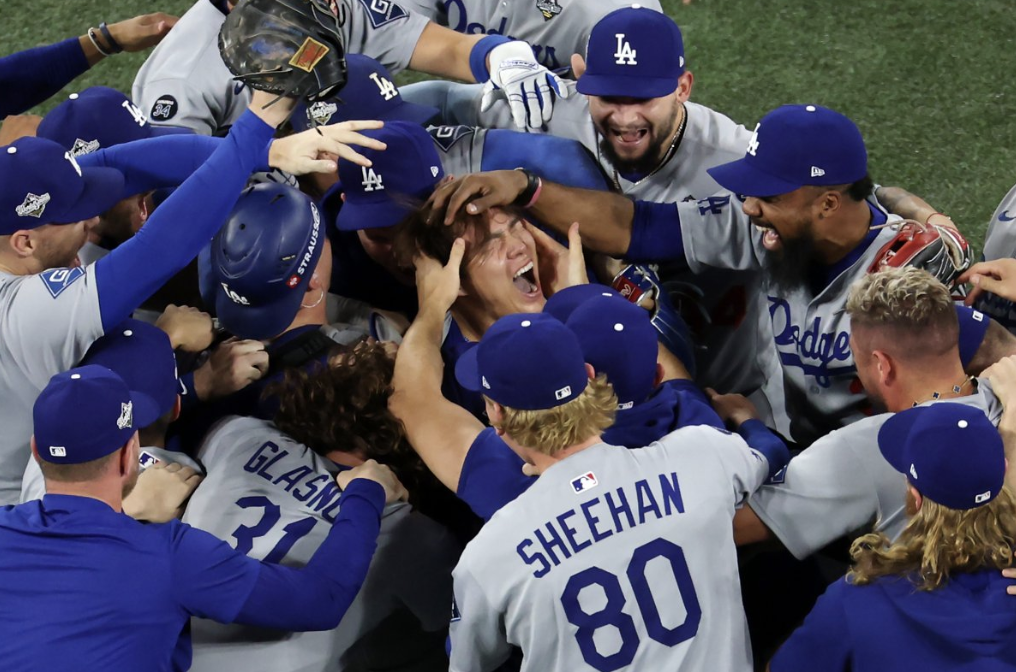
Dodgers pitcher Yoshinobu Yamamoto celebrates with the Los Angeles Dodgers following the 2025 World Series. (Los Angeles Dodgers)
Let’s Circle Back
I stated earlier that baseball is a sport that’s rooted in structure, one that sticks to its principles and foundations.
Yes, baseball is as predictable as it is unpredictable.
While the outcome of a single game can change in the matter of a single swing, over time, financial standing has shaped who has the resources to contend.
Before we can even think about what October looks like, before we can even see how trades and free agents perform, and before we can even see contenders during spring training, there needs to be an agreement.
In the end, there needs to be some sort of recognition, whether that would be a compromise, a negotiation, or just one where they can reach home plate in the end. And as we reach the expiration date, it is up to both sides to decide if they are willing to protect the foundation that it stands on.
