
The 2026 FIFA World Cup Is Less Than 4 Months Away – Here’s How the United States Is Preparing and What It Means for the Future of Soccer in America
By Kris Garo | 21 January, 2026
The last time the United States hosted the FIFA World Cup in 1994, more than 3.5 million spectators attended, which was a record at the time. That tournament became a turning point in American soccer history, and two years later, Major League Soccer was founded.
Now, with the 2026 FIFA World Cup set to begin this June across the United States, Mexico, and Canada, the country is preparing to host the largest tournament in soccer history. As clarified by FIFA, the expanded format will feature 48 teams and 104 matches, with the U.S. having 11 host cities. According to FIFA’s Socioeconomic Impact Analysis report, cited by Meetings Today, the tournament is projected to generate $17.2 billion in gross domestic product in the United States alone, and $40.9 billion globally. Therefore, these numbers showcase that the World Cup is not just a sporting event, but serves as an economic, infrastructure, and security operation at national scale.
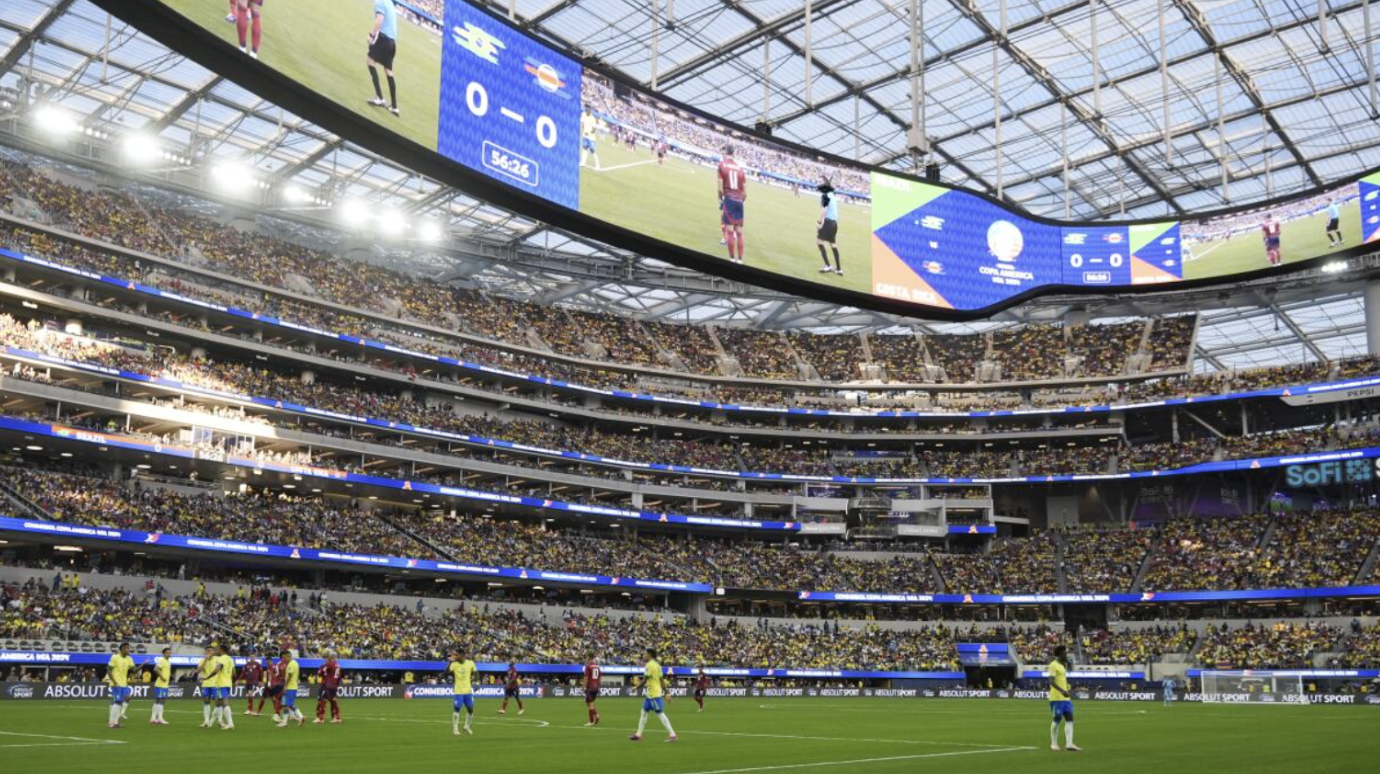
Fans pack SoFi Stadium during a Copa América match, offering a preview of the global stage Los Angeles will host in 2026. (Los Angeles Times)
One of the clearest examples of preparation can be seen in Dallas-Fort Worth. According to Meetings Today, the region expects between $1.5 and $2.1 billion in economic impact, making it the largest event in the area’s history. AT&T Stadium in Arlington will host nine matches, which is the most of any U.S. city.
Monica Paul, president of the North Texas FIFA World Cup Organizing Committee, told Meetings Today that the region’s connectivity was a major factor in its selection. She cited DFW International Airport, the presence of major airline headquarters, and the region’s ability to move teams, media, and fans efficiently across North America was the main reason many of the games were decided to be played in this area.
Turning to the West Coast, SoFi Stadium in Los Angeles is building on its extensive prior experience when it comes to hosting important concerts and sports games. According to Adolfo Romero, the vice president of programming and booking at SoFi Stadium, the venue has drawn on its experience hosting Super Bowl LVI and 11 international soccer matches. “These past events serve as a rich source of insights, allowing us to pinpoint areas for enhancement, such as optimizing wayfinding signage, accelerating concession service, refining traffic flow, streamlining operations and strategically positioning key facilities,” Romero told Meetings Today. The venue is improving everything from stadium navigation and crowd movement to concessions and event operations. The stadium is also installing a full-sized natural grass pitch, complete with irrigation systems and grow lights, in order to meet FIFA regulations.
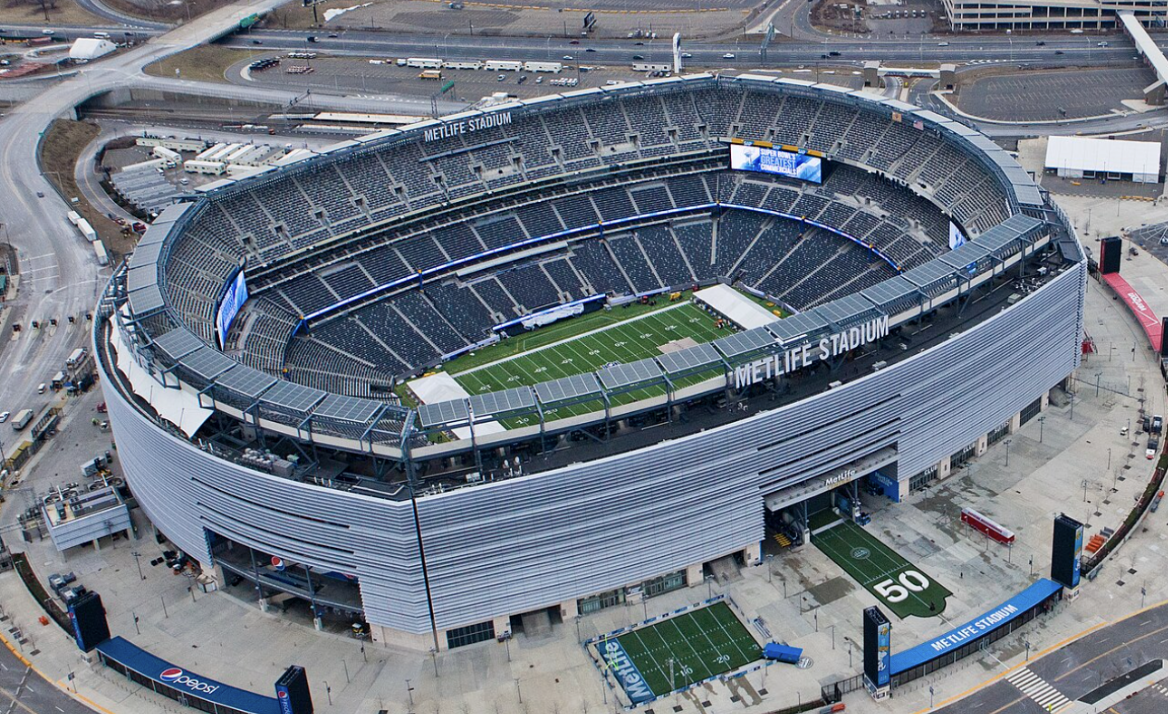
MetLife Stadium in East Rutherford, New Jersey, which seats approximately 82,500 spectators, is scheduled to host the 2026 FIFA World Cup Final. (Wikipedia)
Atlanta is also strongly preparing to host people from all across the world. According to The Athletic, the city expects to generate over $1 billion in revenue from hosting eight matches, including a semifinal. Mercedes-Benz Stadium was designed with international soccer in mind, including retractable seating that allows the venue to meet FIFA pitch dimensions without structural modification.
The Athletic also reported that the Atlanta City Council approved $120 million in revenue bonds for transportation and downtown infrastructure improvements, including street resurfacing and sidewalk repairs. Mayor Andre Dickens emphasized that these upgrades are permanent improvements intended to benefit Atlanta long after the World Cup concludes. “We are going to be ready,” Dickens said. “We plan to deliver an exciting yet safe and secure event for the fans and for the citizens of this region, for the players and for the staff, as well.”
Beyond stadium walls, host cities are activating entire districts. According to Meetings Today, Dallas will use the Kay Bailey Hutchison Convention Center as the International Broadcast Center and Fair Park for the FIFA World Cup Fan Festival. In Atlanta, the convention and entertainment district surrounding Mercedes-Benz Stadium, including Centennial Olympic Park and the Georgia World Congress Center, will serve as the central hub for activities and fan events.
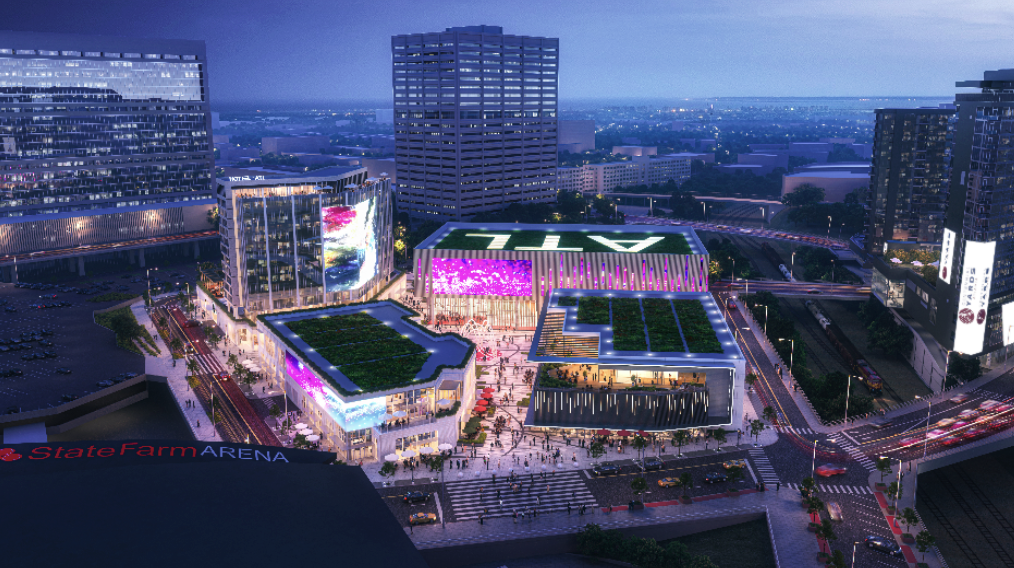
Rendering of Centennial Yards in downtown Atlanta, a mixed-use development near Mercedes-Benz Stadium set to play a central economic and social role during the 2026 FIFA World Cup. (Urbanize Atlanta)
This preparation, however, extends beyond just city governments. According to the U.S. Department of State, Secretary Noem and the White House Task Force announced over $1 billion in federal funding dedicated to securing the tournament. This is described as one of the largest safety commitments ever made for a single event. This includes $625 million through the FIFA World Cup Grant Program to support law enforcement training, cybersecurity, and emergency response, and $500 million through a counter–unmanned aircraft systems grant program aimed at combating unlawful drone activity.
The Department of Transportation is also working hand in hand with FIFA, host cities, airlines, Amtrak, rideshare companies, and public transit networks to make travel as efficient and accessible as possible. According to the Department of State, airports have upgraded screening lanes, introduced eGate identity verification, and begun testing one-stop security for international connections at major hubs. The FBI and Department of Homeland Security are also establishing an international police coordination center to enhance cross-border information sharing, while DHS is coordinating daily with host cities to protect stadiums, fan zones, and team base camps.
What stands out most in reviewing reporting from Meetings Today, The Athletic, and federal briefings is the scale and seriousness of the preparation. Cities are building on decades of experience hosting Super Bowls, Olympic Games, and international soccer tournaments. They are not scrambling to host a tournament, but are strategically positioning themselves for long-term economic and cultural impact. Some of these infrastructure upgrades, security coordination, and transportation modernization reflect something bigger than event logistics. Therefore, the World Cup is not being treated as a temporary event, but as a serious national moment that needs extensive care and serious safety protocols.
In my view, the most significant impact may not be measured solely in revenue or attendance, but in perception. If the United States successfully executes the largest World Cup in history, it strengthens its position not just as a host nation, but as a serious player in the global soccer economy. When host nations have successfully executed major tournaments, whether Brazil during the 2014 World Cup or France during the 2016 UEFA European Championship, the global visibility and smooth organization have served as powerful public perception moments, reinforcing each country’s reputation on the world stage. That could influence everything from future international tournaments and media rights negotiations to youth participation and private investment in the sport.
The 1994 World Cup helped launch MLS and reshape the American soccer landscape. With $17.2 billion in projected domestic GDP impact and unprecedented coordination between local and federal agencies, the 2026 tournament may once again mark a transformative chapter for the business of soccer in the United States.
