
Evening the Odds?: The NBA's Tanking Problem
By Lucas Mendez | 20 April, 2026
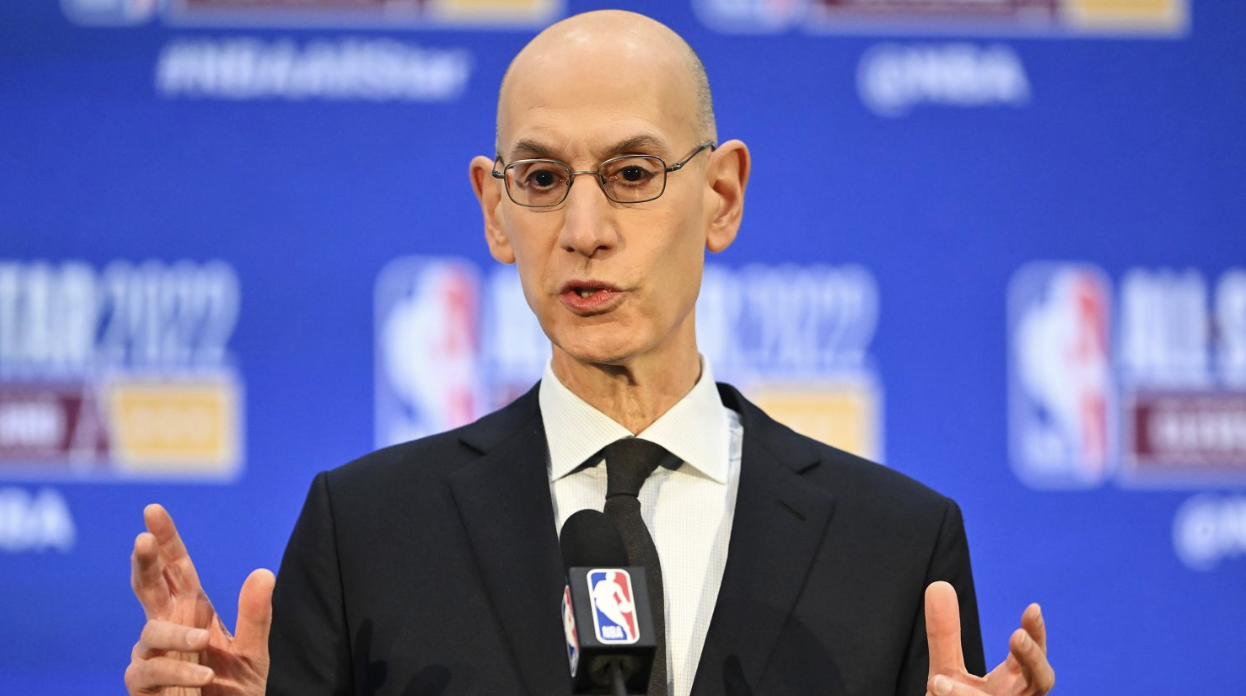
NBA Commissioner Adam Silver speaks during a press conference at the 2022 NBA All-Star Weekend at Rocket Mortgage Fieldhouse in Cleveland, Ohio. (Jason Miller/Getty Images)
Let’s go back to 1984: it was the first season in the NBA where a team intentionally lost basketball games with the upcoming draft in mind. This was also the year Michael Jordan and Hakeem Olajuwon came out of the draft, and the league implemented the lottery system to promote honest competition. What does this tell us? That tanking, to some capacity, has been part of the league’s ecosystem for over forty seasons. And for some reason, whatever happened in this current league year was enough for Adam Silver and his team to step in.
That’s right. Once again, the NBA and its commissioner, Adam Silver, are attempting to counter the ongoing issue of tanking in the league. This marks the second time the Silver administration has attempted to curb tanking to balance out the regular season. The first reform came when they adjusted the draft lottery odds, flattening them to ensure that the “bottom” three teams each have a 14% chance of winning the lottery. And this actually helped a little bit: before this change, the worst team in the league had only a one-in-four chance of securing the first overall pick. With these flattened odds, we have seen more parity with the teams at the top of the draft boards each offseason. Most recently, teams like the San Antonio Spurs, Atlanta Hawks, and Dallas Mavericks jumped into these top spots thanks to this new format. This feels like a more common occurrence than it was ten years ago, when it was still not guaranteed that a given franchise would receive the first overall pick, and teams weren’t making these dramatic jumps into the top four. The exception would be the Chicago Bulls, with a 1.3% chance, snagging the 1st overall pick to select Derrick Rose out of Memphis in 2008. Still, this change didn’t eliminate tanking. It just reshaped it, and they’re trying to do so again.
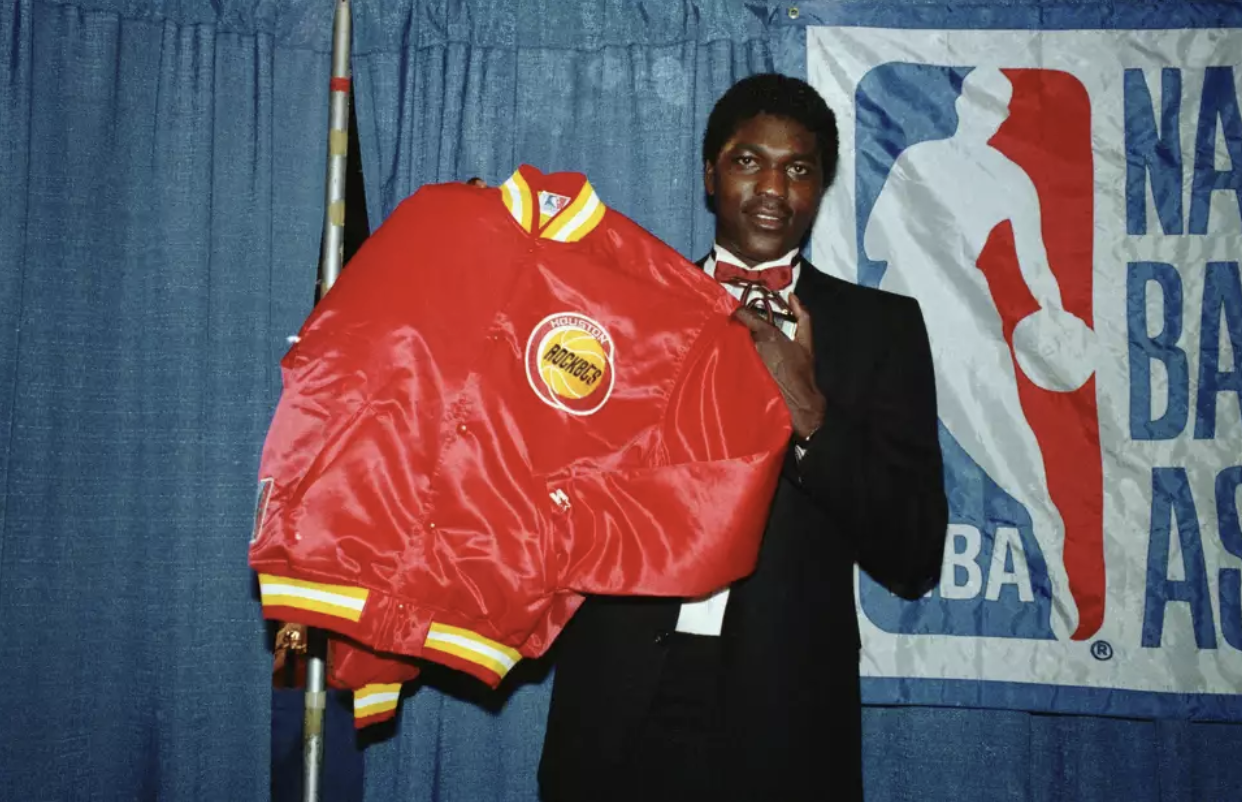
Hakeem Olajuwon, the reason the lottery exists, displays his new team jacket after being selected with 1st overall pick by the Houston Rockets in 1984. (Bettmann/Getty Images)
Shams Charania, a well-known NBA journalist and reporter, presented various considerations for future anti-tanking concepts that were discussed during a meeting between the league’s Competition Committee in late January. My thoughts are italicized:
First round picks can be protected only in the top-4 or top-14+ slots
This would only make trading these picks more common and would not eliminate tanking.
The lottery odds freeze at the trade deadline or a later date
What’s stopping a good team from tanking the first half of the season and then making a playoff push after the deadline?
No longer allowing a team to pick in the top-4 in consecutive years and/or after consecutive bottom-3 finishes
This doesn’t account for weaker draft classes and would only pigeonhole a team that had a top-4 pick in such a class.
Teams can’t pick in the top-4 the year after making the conference finals
This one feels oddly targeted at the Indiana Pacers, who are without Tyrese Haliburton this season due to injury. What does this even accomplish?
The lottery odds are allocated based on two-year records
There is a small positive here: by combining two records, teams cannot get away with tanking a single season. Bad teams are usually bad for a long time, so a team like the Wizards or Nets would still get their deserved pick.
The lottery is extended to include all play-in teams
Adam Silver absolutely cannot incorporate this rule. A team can go 41-41, make the play-in tournament, and still get a lottery pick. What gives? Sure, it might incentivize teams to be competitive towards the end of the season and not have to tank to avoid the play-in, but how does it level the playing field?
Go back to 2020, when the Miami Heat went from the play-in to the NBA Finals. They would have been playing in the finals and also had draft lottery odds.
Flatten the odds for all lottery teams
This is the one where, if the sole goal is to counteract tanking, this is the way. The only tanking that will take place will come from those teams forever stuck in the play-in and are trying to get their 2% share of the pot.
The only problem is that some teams certainly need a top pick. Can you imagine your team being so bad, with no avenue to sign or trade for star players, and for three years in a row, you’re picking outside the top-10? That’s pull your hair out bad.
And then, less than a month ago, the NBA proposed three comprehensive anti-tanking concepts to its Board of Governors, with adjustments expected to be made to each before a final decision is made in May:
18 teams in the draft lottery (seeds 7-15 in each conference) – flattened odds, with bottom 10 teams having an 8% chance, the remaining 20% odds distributed in decreasing order for 11 through 18, and a lottery drawing for all 18 picks.
22 teams in the lottery using a 2-year record (seeds 7-15, plus the four playoff first round exits in both conferences). Lottery teams would reach a minimum win total floor in each season, such as 25 wins. If a team falls short of the floor, it gets slotted to meet the floor. The top 4 are drawn as part of the lottery, as is currently.
18 teams in a "5 by 5" lottery – bottom 5 teams have equal odds for the top pick, with the lottery formed for picks 1-5. Bottom 5 teams have a floor at 10; those that fall out of the top 5 get sorted in a separate drawing.
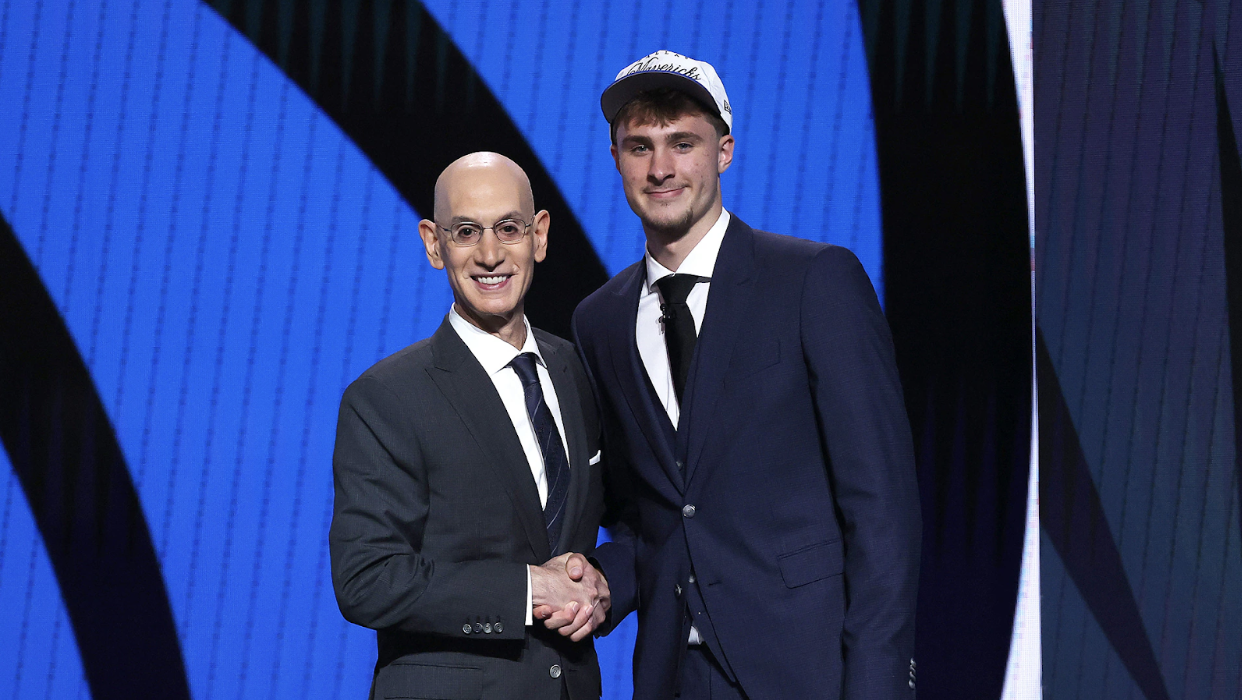
Adam Silver and Cooper Flagg shake hands after Flagg is selected with the 1st overall pick by the Dallas Mavericks in the 2025 NBA Draft. (NBA)
After seeing these proposals, I find it incredibly difficult not to be concerned about the possible direction the league is heading in. No matter what they do, and no matter how big or small the changes will be, it will fundamentally shift the way teams build and the way rookies transition to the league. This is a scary thought because of the risk of getting things wrong. If they get it wrong, it could just shift the NBA for a decade before more changes are needed. Are the cons for whatever change the NBA makes minuscule enough that it doesn’t take away from the actual goal of these changes?
I, for one, wouldn’t mind if the NBA trashed all of these ideas. It’s going to sound insane, but might they go back to 2013 and look at Zach Lowe’s hypothetical solution to this whole mess? It might sound far-fetched, but some players mentioned the idea during the league’s All-Star break, so the proposition is definitely floating around the inner circles. Lowe proposed eliminating the draft lottery and replacing it with a system in which each of the thirty teams would pick in a specific first-round slot once every thirty years. So, let’s say the Brooklyn Nets get the first overall pick this year. The next time they would have the first overall pick would be thirty years in the future. They might have the seventh or ninth pick the following year, but eventually they’ll pick in all thirty possible slots (or thirty-two if the proposed expansion is passed), and then get another chance at a higher pick once the order resets. The practice of protected and unprotected picks would also disappear. The primary objective of this proposal would be to disincentivize losing and fielding a bad team intentionally. While I think this does a good job of counteracting tanking, which is the ultimate goal, there are some foreseen consequences. If there’s a team that has a fanbase where it seems there’s no light at the end of the tunnel, there’s only a fictional hope that some player may fall in their lap. But, if this team is poorly run, has a terrible owner, and the next time they possess a top-ten pick is not for another seven years, how can one trust their team to do the smart thing? So really, where does the league go with its clear desire to get rid of tanking?
If you were to ask the average NBA player, I’m more than certain that they’d be against the idea of tanking. I mean, why wouldn’t they be? These guys are ultra-competitive players who get paid to compete and win these games. They don’t want to lose. They play in front of fans who pay to watch their team compete and win these games. Even the tanking teams we have in today’s landscape are composed of players who don’t want to step out on the court and purposely lose games. But at the end of the day, it’s the higher-ups who have a final say in the direction their team is heading, and I’m sure these same players understand it while never wanting to be a part of it.
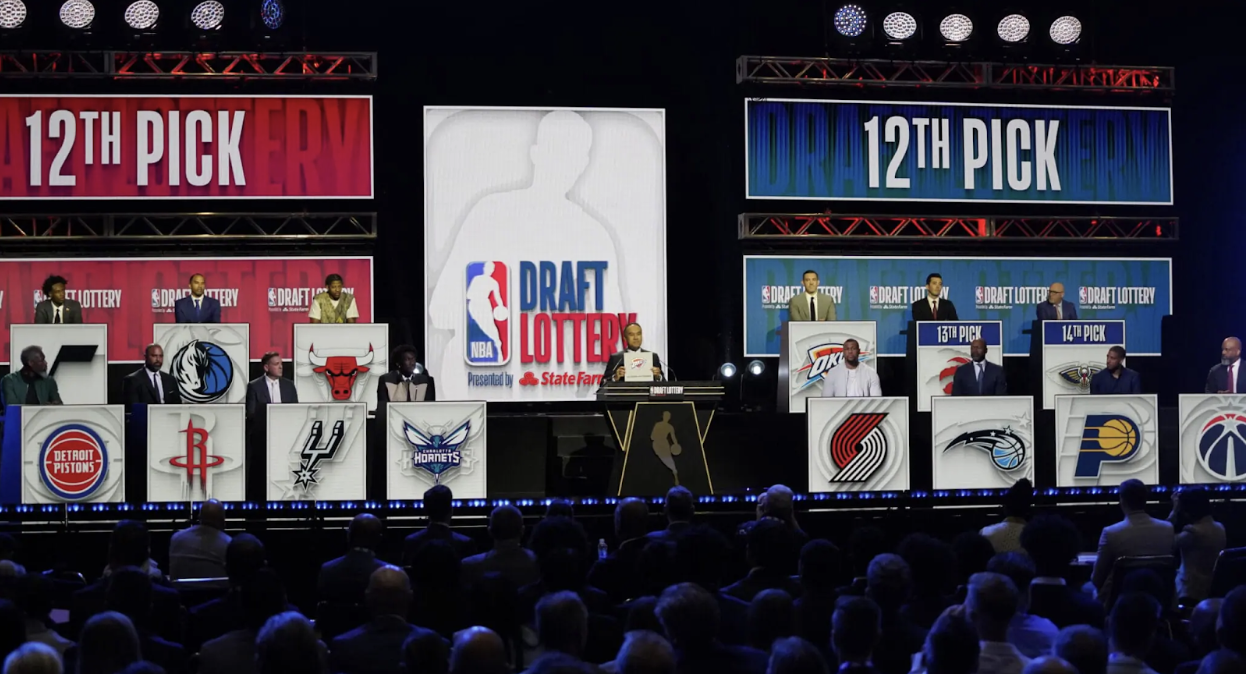
Mark Tatum, NBA Deputy Commissioner, announces the 12th pick in the 2024 NBA draft during the draft lottery in Brooklyn. (David Banks/USA Today)
Traditionally, I will say that I’m a pro-tank guy. While completely understanding the other side of the argument, I still think it is an effective approach to rebuilding a team while prioritizing player development and disregarding the idea of contending. It definitely feels like certain teams have been perpetually tanking forever, and because they can’t hit on their draft picks, their team is stuck in the bottom-feeder territory for a long, long time. But, I could also just point my finger at the team’s poor front office decisions, can’t I? I mean, the classic example is to look at how two tanking seasons worked out for the Oklahoma City Thunder. Once labeled the “black eye” of the NBA during their rebuild, they went on to win last year’s championship and currently hold sixteen first-round picks over the next ten years. Their front office is clearly doing something right. Nonetheless, I think tanking can be important for some of the smaller market teams that do not have the luxury of potentially going out there and signing some of the headlining free agents. And if they choose to trade for one on an expiring contract, nothing is stopping that player from leaving during free agency. The best way a small market team can construct its roster is by drafting a player whom they can keep on their team for seven to eight years before he hits restricted free agency. And having seen the A.J. Dybantsa, Keaton Wagler, and Caleb Wilson tape, I would want my team to tank for one season too!
Maybe Adam Silver should take care of the gambling scandals and rampant fraud instead of focusing on something that has existed for over forty years. Has it crossed Silver’s mind that the current state of tanking might be a product of the fact that there’s a “generational” draft coming up? Because any anti-tanking rule that hurts actual bad teams just ruins the point of the actual draft. And maybe tanking isn’t nearly as big a problem as teams being perpetually bad due to a poorly operated front office (once again, look at what the Thunder accomplished). Nonetheless, if any of the above concepts are passed, it will completely alter the way teams approach the draft and team building, and the league can’t afford to get this wrong.
