
Prediction Markets: Introducing Sports Betting on a National Scale
By Noah Massey | 28 May 2026

Polymarket and Kalshi have emerged as the two largest prediction markets in the United States, with the two platforms controlling more than 70% of the regulated market. (Kalshi)
Background:
While it was considered morally onerous for generations, gambling has taken the sports world by storm since its legalization beyond the confines of America’s vice capital: Nevada.
The Supreme Court ruled that the Professional and Amateur Sports Protection Act was unconstitutional in the 2018 case Murphy v. National Collegiate Athletic Association. The issue has been left to individual states to decide whether to allow sportsbooks – online or in-person – to operate within their borders.
Since then, 33 states have legalized sports betting. However, the recent creation of prediction markets and their rapid proliferation as an available online hub for gambling has essentially legalized the practice in all 50 states – practically removing the regulatory power from state governments.
Although prediction markets feature a variety of event contracts, more than 80% of trading volume comes from wagering on sporting events.
On May 18th, Governor Tim Walz of Minnesota signed a bill to ban prediction markets in the state and impose criminal penalties on anyone who operates or advertises one, making it the most recent effort to try to limit the ability of prediction markets to operate in a state.
Now, the Trump administration is suing Minnesota, contending that prediction markets are part of the federal domain and therefore can only be regulated by the federal government, which has done little to curb access or enact regulations similar to those placed upon traditional sportsbooks.
Beyond regulatory inaction, professional leagues have begun to seize the opportunity to establish partnerships with prediction markets, including Major League Baseball, Major League Soccer, and the National Hockey League, among others.
MLB has partnered with Polymarket, dubbing the company the “exclusive Prediction Market Exchange partner” of the league. (Finance Magnates)
In the case of the MLB deal, the prediction market Polymarket will gain exclusive access to logos and official data, while the MLB will provide brand exposure for the company during league events.
Ramifications:
It is simply impossible to avoid gambling when interacting with any kind of sports media nowadays. Gambling companies own networks, run constant ads, and have deals with sports media of all shapes and sizes – from ESPN to small YouTubers. And with prediction markets effectively safeguarded by the federal government as a legal exchange, there will officially be no place in the United States where sports gambling can be prohibited.
Since the creation of professional sports, gambling has inevitably woven itself into countless stories and controversies over the years, even back when it was an illegal backroom activity fueled by shady bookies and was looked down upon as a detrimental activity for the health of society by most. While the widespread nature of sports gambling inevitably rose with the creation of the internet, it is difficult to fathom how drastically the activity has transformed professional sports into what it is today since the widespread legalization.
Prediction markets are the latest fad in the modern race to dominate the insatiable appetites of Americans – largely young men – for risk. At first, there were the daily fantasy games, which took advantage of a provision in the Unlawful Internet Gambling Enforcement Act of 2006. Then came Pick ‘Em games, which were allowed under the same regulations but featured actual player prop bets. Then came the widespread adoption of gambling following the Supreme Court ruling in 2018, as gambling companies pushed for the widespread legalization of sports betting.
And now, it’s prediction markets. This product has circumvented the rules so drastically that the markets are officially regulated by the Commodities Futures Trading Commission. The CFTC was initially created to oversee and regulate future markets for physical products such as gold and farm products, not event contracts whose entire value is based on the outcome of sports and are resolved with a simple “Yes” or “No”.
Besides the consumer-to-consumer nature of the market used to determine contract prices, prediction markets otherwise function in a practically identical manner to traditional sports betting. Customers buy contracts reliant upon a certain outcome from other customers for a price between 1 and 99 cents, which the platforms can convert into traditional gambling odds if users prefer.
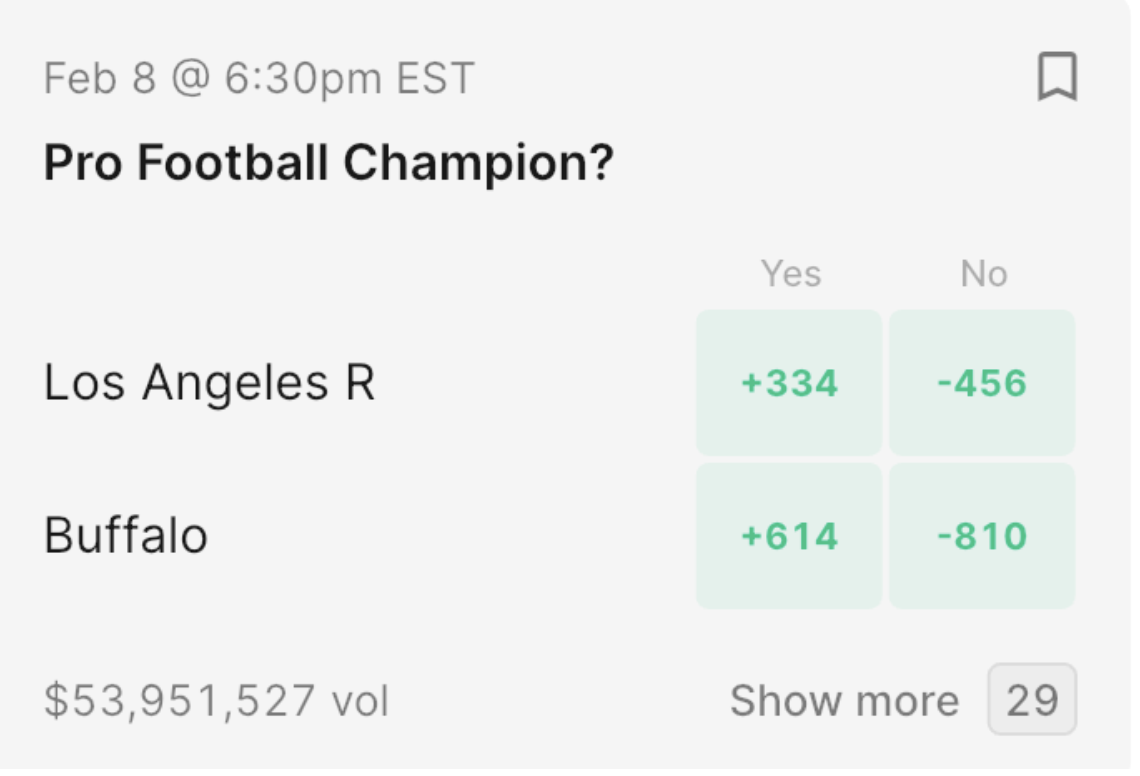
A screenshot from Kalshi displaying the market in the form of traditional betting odds for the 2026 Super Bowl. (RotoGrinders)
The prediction markets serve only as the middlemen of the transactions, taking a small fee from each contract purchased. This means that they take no actual risk and face no consequences if their customers are taken advantage of – whether by insider trading or by professional gamblers who have better information than the general public.
While largely concentrated in non-sports markets, the ability of some traders to take advantage of others has already been evidenced, with Yahoo! Finance reporting that the top .1% of accounts on the platforms reap 67% of the profits and that losers outnumber winners 2.9:1 on Kalshi – the No. 2 prediction market according to market share.
Needless to say, the outlook is bleak. There will be no way for states to limit prediction markets if Minnesota’s ban is struck down by the federal government, leaving the door open for the general public to risk their money on unregulated markets that are even less fair than traditional sportsbooks.
Beyond this, the willingness of top leagues to embrace these platforms despite their questionable legal standing and their well-known problems is just another example of the money-grabbing nature that has come to dominate professional sports. Regardless of its ethics, the mindset of “money is money” when it comes to sponsorships has become increasingly obvious, even if sports companies will encourage more of their fans to engage with the practice and, more than likely, lose money.
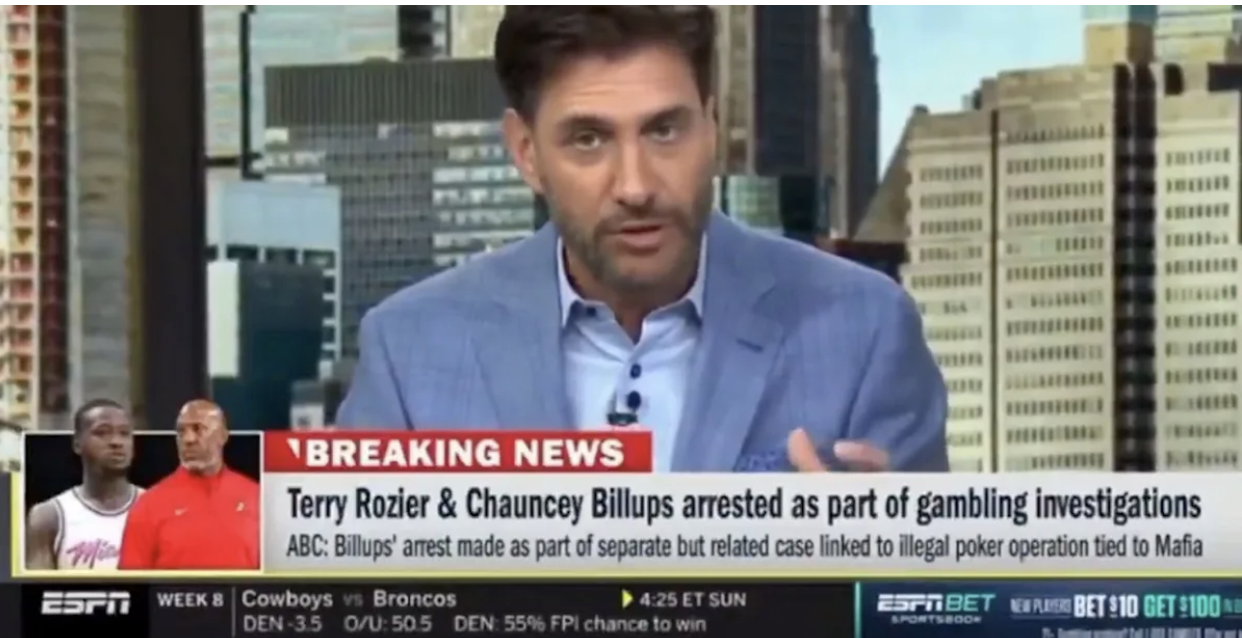
While discussing gambling investigations, ESPN still showcased live gambling odds for games and a promo for the network’s gambling site. The network took down the ad and the betting lines minutes later during the same segment. (Yahoo! Sports)
The creation and growing popularity of prediction markets are the latest indicators of a concerning future for leagues already plagued by the influence of gambling: from players falling victim to the temptation of insider trading or the fact that 52% of men aged 18-49 have an active account with an online sportsbook – a number that has continued to grow in recent years.
In a world where fandom is increasingly intertwined with the financial whirlwind of gambling, fans and leagues alike need to take a step back and think about the damage they may be causing their core audience and the integrity of their respective sports.
There is a reason why gambling has been viewed in such a negative light and has been dealt with heavy restrictions for generations. The widespread embrace of the practice by all parties provides ample opportunities for sports fans – regardless of where they live, thanks to prediction markets – to give in to their desires for risk and engage in something ever-present throughout human history.
Furthermore, while it appears “fun” and “a way to make games more interesting” on the outside, sports gambling is already becoming a major problem for many fans around the country, leading to financial troubles and family problems.
With prediction markets emerging as an unstoppable force on the national scale, will the damage it causes to professional sports become so ingrained that we will never be able to return to what sports looked like before?
