
Sacramento State and the MAC – A New Development in the Wild West of Conference Realignment
By Noah Massey | 10 March, 2026
Sacramento State will join the Mid-American Conference as a football-only member beginning in the 2026 season (Sacramento State)
Can unbridled determination from an administration take a football team with limited lower-division success to a respectable place among FBS programs?
Sacramento State will soon discover the answer to that question.
Unlike fellow programs that have made the same FCS to FBS transition, the Hornets have essentially forced their divisional move over the last few years. During the process, they received little interest from FBS conferences. Both the Pac-12, which was in dire need of membership, and the Mountain West showed no interest in Sacramento State, which chose annual FCS Championship contender North Dakota State as a football-only member instead. The Hornets were also rejected from joining the league as an independent by the NCAA in 2025 and appeared to have exhausted all available options to move up.
The Move
Sacramento State finally found a conference to allow them to join – the Mid-American Conference. One of the least prestigious conferences in the FBS, the MAC often flies further under the radar than other Group of 6 conferences, such as the Mountain West and American Athletic conferences. The conference largely consists of midwestern colleges with smaller athletic programs, such as Bowling Green, Central Michigan, and Kent State.
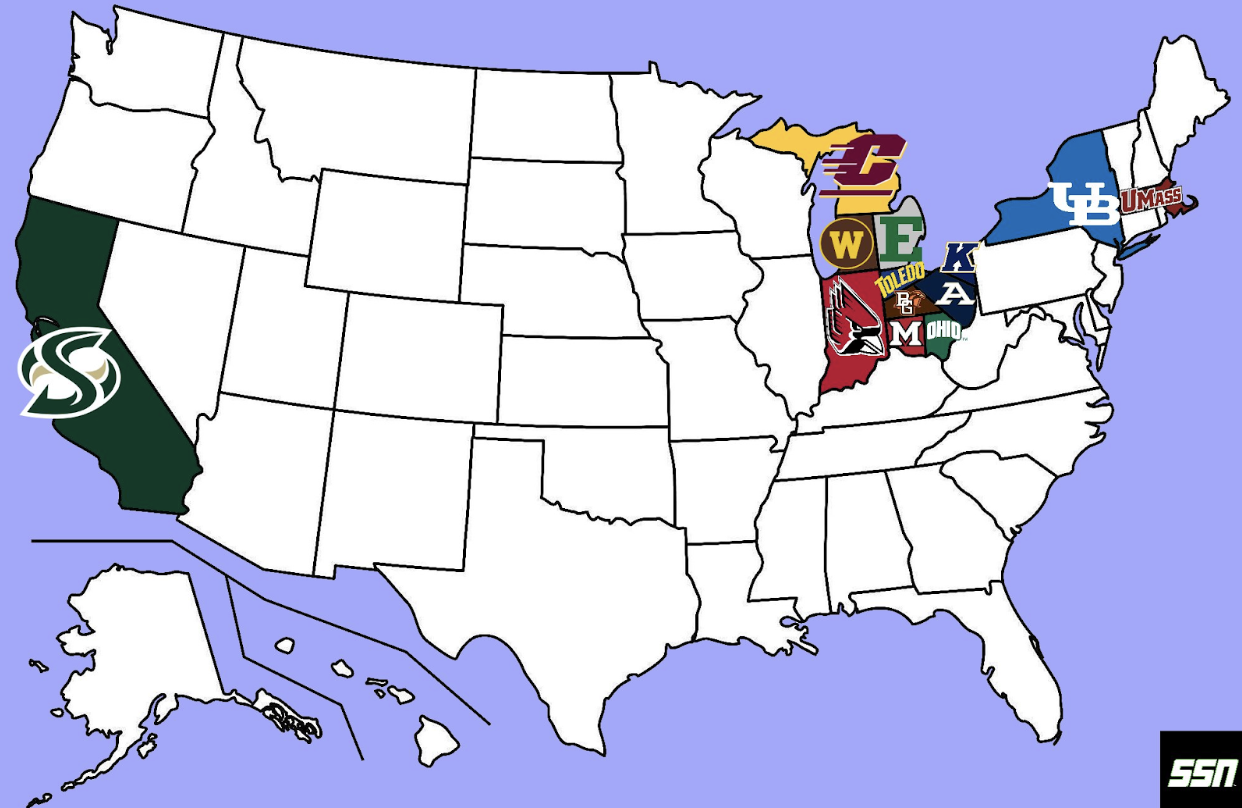
Sacramento State will be the only MAC member residing outside the Eastern Time Zone (Sidelines Sports Network)
In general, MAC schools are usually stuck outside the top-25 rankings and are best known for their occasional upsets of more prestigious programs – such as when Northern Illinois upset No. 5 Notre Dame in 2024 – and their midweek conference games, known to many as #MACtion.
Yet in their desperation to reach the FBS level, Sacramento State was willing to pay both $5 million to the NCAA and an additional $18 million to the MAC to become a football-only member. By comparison, North Dakota State had to pay $12.5 million to become a member of the more prestigious Mountain West. Sacramento State will also cover opponent travel costs and forgo all revenue distribution from the MAC during its five-year term with the conference.
Is It Still Worth It?
While the Sacramento State athletic department is largely subsidized by the university, the expenses were justified by the university due to the projected economic impact of the move and the claim that none of the costs would be borne by student fees or the school’s general fund, but would be funded by private donations, game guarantees, and external funds. The importance of this cannot be understated, as the university has been enduring financial struggles recently and has had to make cuts around its campus ranging from university operations to course offerings in an attempt to reduce a deficit of over $30 million.
However, the evidence supporting this justification appears shaky at best, with the economic impact projections being quite lofty and might struggle to carry over once the novelty of the FBS wears off. The school claimed that the athletic economic impact would increase to a total of $975 million during the five-year duration of the agreement.
Russell Wright, the CEO of Collegiate Consulting – the group that carried out the study on the university’s behalf – said the projected economic impact of $975 million was not in line with the study they provided, casting further doubt regarding the actual benefit the elevation of the program might have.
Can the Team Compete?
This issue becomes even more concerning when it’s debatable whether or not the team is even ready to face FBS opposition. This offseason, the program hired Alonzo Carter – their fourth head coach in four years – after their previous coach left the program to become the offensive coordinator at Colorado.
Sacramento State has struggled to recreate its successful 2022 season, when it went 12-1 and lost in the third round of the FCS playoffs. That offseason, the Hornets lost their head coach and have gone 18-19 since then, only reaching the FCS playoffs once.
Last season, they finished 7-5 despite featuring the 65th-ranked transfer portal class in the nation. No other FCS team ranked in the top 100. This season, they ranked 115th in the portal – where they also lost many of their top players from the 2025 team – and 132nd in high school recruiting, placing them below nearly all FBS teams in personnel additions.
Furthermore, the announcement of their move to the MAC was announced on February 16th, one month after the winter transfer portal closed. With the spring portal officially removed by the NCAA, the Hornets will have no way to strengthen their roster before the 2026 season, where they will need to prove they belong in the FBS.
To develop the football culture that Sacramento State aims to create, the Hornets will need to create a culture of winning and success quickly, or else the FBS experiment might prove to be a much-regretted decision by the university’s administration.
Risk vs. Reward
Needless to say, Sacramento State is taking a big risk with this move. While Sacramento State’s president, J. Luke Wood, said the move is “putting the university on the map” and will help the school market itself to both in-state and out-of-state students, this will largely depend on the ability of the team and program to create fan interest.
This might prove to be more difficult than imagined, as the Hornets are trading games against local rivals with FCS playoff ramifications for games against obscure faraway programs with little on the line – Sacramento State won’t be able to play a bowl game for its first two years, and teams from the MAC have never made an appearance in the College Football Playoff.
This problem will only be heightened if the Hornets struggle on the field. While only seven FBS teams averaged less than 10,000 attendees per game last season, five of them came from the MAC, and nearly all of them finished towards the bottom of the division.
While Sacramento State averaged over 15,000 attendees per game last season and has averaged over 13,000 in each of its last four seasons – including 2023, when it went 3-9 – before the magical 2022 season, the program was consistently averaging less than 10,000 spectators per game, even in 2021 when it made the FCS playoffs. Only Sacramento State’s rivalry game against UC Davis (attendance: 12,315) and its FCS playoff game against South Dakota State (attendance: 10,031) eclipsed the 10,000 mark that season.
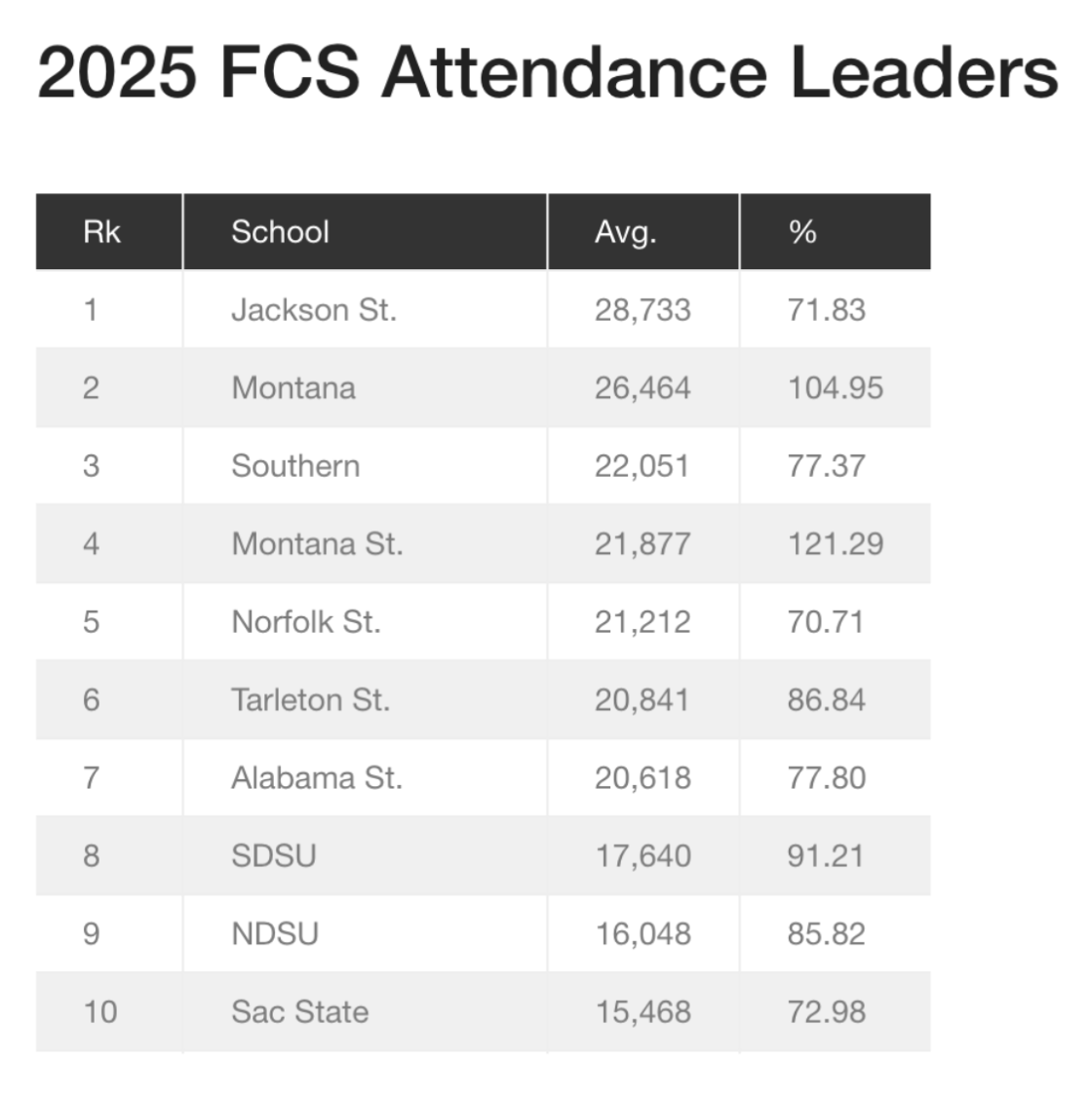
Top-10 2025 FCS Attendance figures, Sacramento State placed 10th despite missing the FCS playoffs for the second consecutive season (Hero Sports)
While the program’s attendance momentum is strong as it enters the FBS, the growth has partially resulted from a string of successful seasons at the FCS level. Competing at the FBS level is an entirely different scenario which the program is arguably not prepared for, as shown by the quality of their current squad, instability at head coach, an aging stadium with a capacity of only 21,195 (though plans for a new one are in the works) and a school already suffering from financial struggles, which will continue to worsen if the state continues to cut the budget of the California State University system.
The move will likely spur support from boosters in the form of donations and NIL, a development that has already been shown in the past. When Sacramento State was hoping to move to the dissolving Pac-12, a committee called the “Sac-12” formed and pledged $50 million in commitments if the school joined the conference. While the MAC is not the Pac-12, the school might receive crucial donor support to help it establish itself in the top flight of college football.
One of the school’s other primary talking points is leveraging its 20th-ranked national TV market. While this is often a major talking point in professional sports, and the Hornets will have a monopoly on top-flight football in the Sacramento-Stockton-Modesto market area, this upside could prove to be a moot point if the school can’t win over the area’s residents or provide an appealing product.
While the market is large, the Hornets will still have ample competition just a short distance away for all football viewers. The NFL’s San Francisco 49ers, California, Stanford, and Nevada lie just outside the Sacramento-Stockton-Modesto market area and are all established at their respective levels.
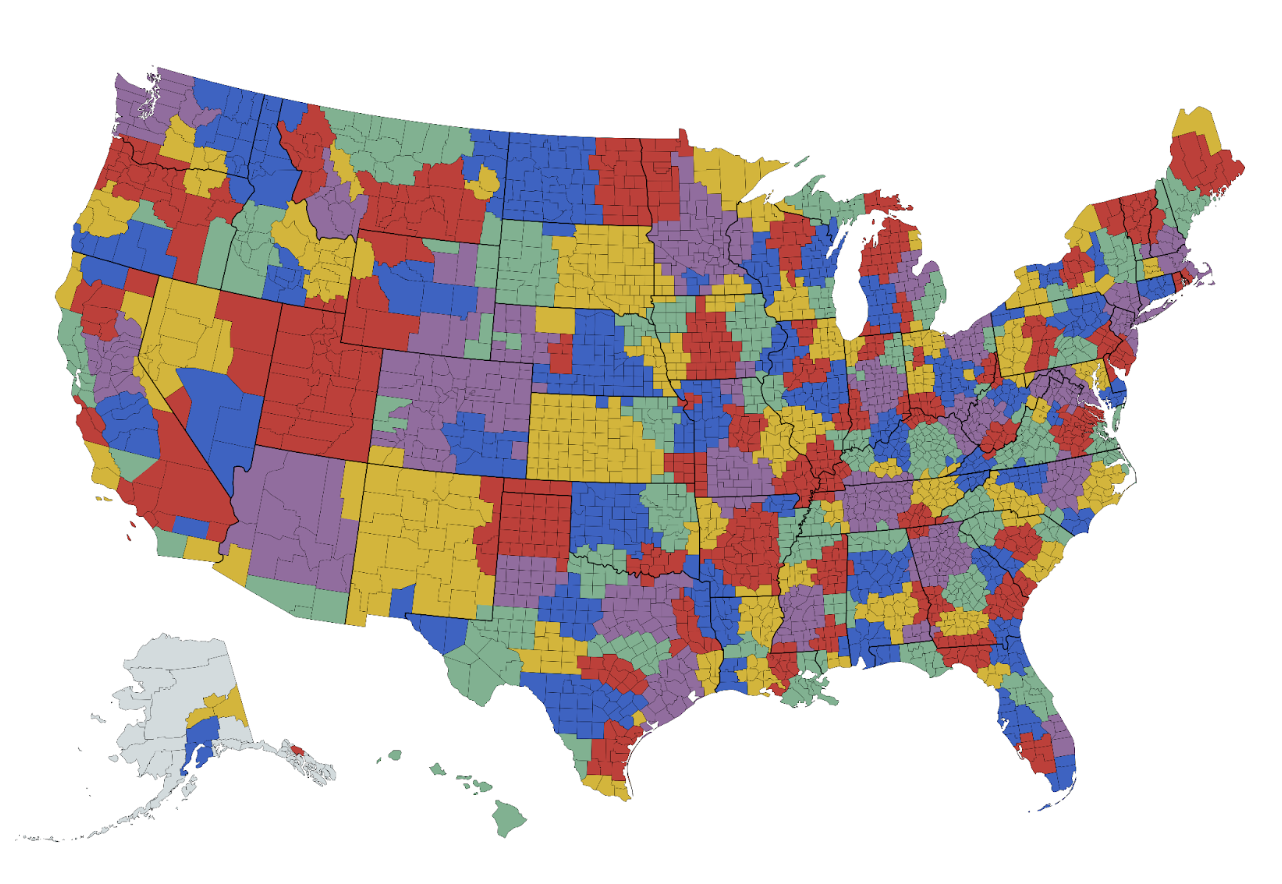
The 210 Designated Market Areas of the United States. The Sacramento-Stockton-Modesto market is the purple section of Northern California (Brilliant Maps)
Furthermore, while having a large TV market can lead to financial success at the NFL level, this is less true at the collegiate level. The closest team to New York City is Rutgers, which has an athletic department that is currently knee-deep in debt. The closest team to Chicago is Northwestern, which consistently ranks towards the bottom of the Big Ten in attendance. The 19th biggest TV market – right ahead of Sacramento-Stockton-Modesto – is Cleveland. The closest two schools to Cleveland are MAC conference members Akron and Kent State, who had two of the worst attendance figures in the nation last year.
While Wood’s gamble is understandable – just look at the positive effects Indiana football’s recent success has had on the university – it is no guarantee and could end up as a tremendous mistake for a university already enduring other struggles. Furthermore, Sacramento’s desire to do almost anything to reach the FBS level gave tremendous leverage to the MAC, which was able to utilize its position to extract a tremendous amount of cash for a relatively short-term deal.
If the venture is successful, the move could set a precedent for the future of transitions into the FBS, with other FCS teams perhaps employing a similar strategy to make a move to the FBS possible. However, the tremendous fee that the Hornets paid to join the division might prove to eclipse what other programs are able/willing to pay, possibly setting an unfavorable precedent for future moves as conferences may adjust their joining fees to align with newfound expectations.
