
Beyond the Ballpark: Logistics Behind College Baseball’s Rise in Popularity
By EJ Thomsen | 2 March, 2026
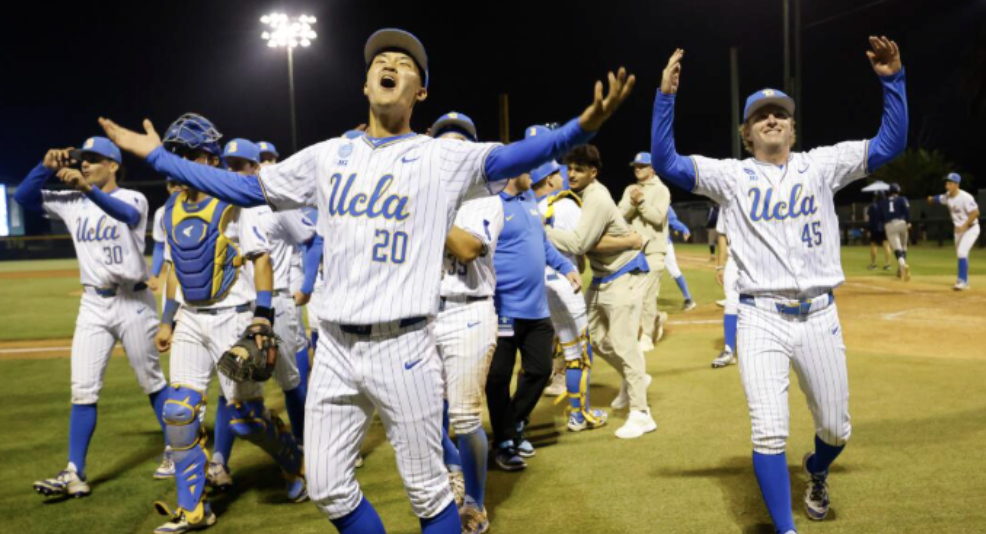
UCLA celebrates after beating UC Irvine to advance to the super regionals. UCLA ultimately ended up as a top-4 team in the 2025 CWS (Los Angeles Times).
Introduction
On a warm afternoon in Omaha, Nebraska, the sun shines bright amongst some of the best collegiate athletes. The stadium, fully sold out, roars as the last batter grounds into a six-three double play to give the LSU Tigers their eighth World Series title, beating the underdogs, Coastal Carolina. In addition to the thousands of fans in attendance, an estimated 1.65 million viewers from across the nation tuned in to enjoy “America’s game.” What was once considered to be a regional, niche collegiate sport has discretely been transforming into a new rapidly growing commercial enterprise. From 2015 to 2025, college baseball has become a national entertainment asset, instead of the previously secondary revenue generator in the eyes of college athletic departments. This quick turnaround has been fueled by a multitude of factors: increased specialized training, player incentives such as NIL, new conference media deals, and all around increased social media engagement across all platforms. The rise of college baseball is an example for not just collegiate sports, but for all businesses, on how market incentives and media evolution can reshape an industry.
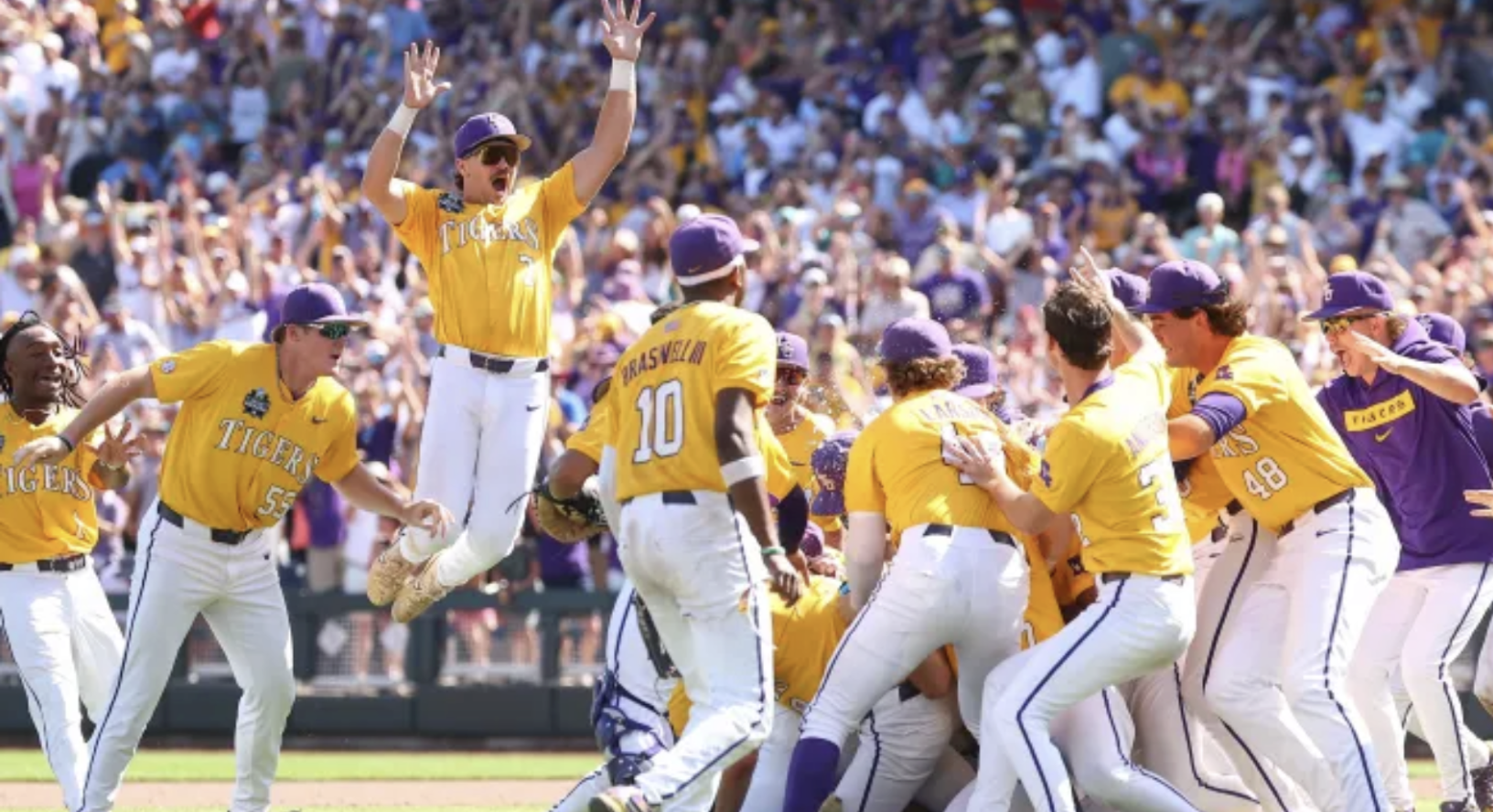
LSU beats Coastal Carolina to secure their eighth College World Series title (The Sporting News).
The 2015 College Baseball Landscape
Just like with the music industry, cultural memes, and all the great movies Hollywood used to produce, college baseball looked like a completely different beast eleven years ago. Even though professional baseball is widely consumed nationally, college baseball remained in a strong, yet regional, position in the NCAA hierarchy. Powerhouse conferences like the SEC, BIG 12, and ACC have always had a consistent loyal fan base, yet baseball was still overshadowed by football and basketball in both revenue generation and media attention. Attendance stayed pretty consistent for the Southeast Region, with schools like LSU and Arkansas averaging around 8,000 attendees per game. Yet across other regions, many Division 1 programs struggled to get past even 500 attendees a game since they had limited national television coverage and an over reliance on regional sports networks. When it came time for the College World Series, held in Omaha, it showed how important national coverage was and what top tier baseball can bring to the table. As in 2015, the CWS reeled in approximately 1.1 million viewers from all around the country.
From a revenue perspective, the 2015 college landscape had a very modest business model. Some of the main primary income streams came from ticket sales, localized sponsorships, and concessions. Broadcasting was almost non-existent, as media rights deals were included within larger conference contracts dominated by football and basketball valuations, meaning that games would have to compete for a broadcasting window with other teams in the same conference. For example, if Stanford played UCLA and Cal played USC on the same day, at the same time, each team would have to compete to be televised on the PAC 12 Network channel. These conference channels were usually not included in basic cable bundles, so if you wanted to watch your alma mater play a couple games a year from the comfort of your own home, you would have to pay a premium price to do so. Streaming and digital monetization like social media were still emerging, so athletic departments could not yet use these as a form of income or for fan engagement. Teams would use social media as an information hub, telling their fans the team’s schedule, what the final score of the game was, or any other important information. This is in stark contrast to today’s media sphere, where teams can make hype edits, post up-to-date game situations, or do their own little interviews so fans can better understand the human side of their favorite athletes. Players also could not capitalize off social media and digital monetization, as NCAA amateurism rules made it illegal for players to gain any monetary value from Name, Image and Likeness, marking the college baseball industry as institutionally driven instead of player driven.
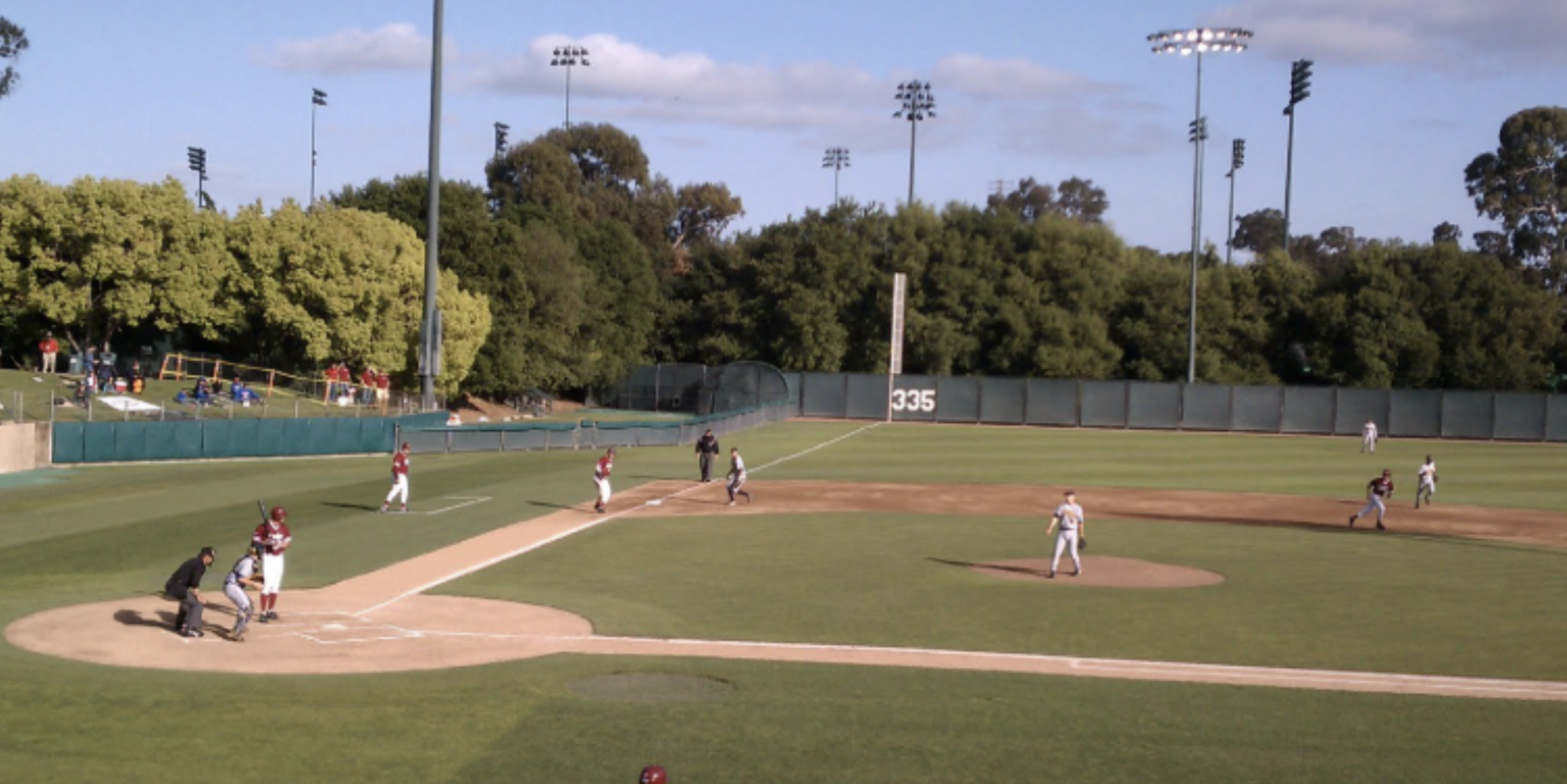
Stanford has barely any seats for attendees, forcing fans to camp out on the foul lines as their average attendance in 2015 was 1,600 per game (Caught Looking Blog).
Ten Years Later
A decade into the future, college baseball has done a complete 180 degree turn. The true acceleration of college baseball’s popularity can be attributed to multiple different major factors, but together they have reshaped the media landscape and economic incentives for players. First, starting in 2021, ESPN had been gradually gaining more and more streaming rights for college baseball games for their streaming platform, ESPN+. As of last year, ESPN+ covered 4,000 games across twenty one conferences, with close to 3,900 being ESPN+ exclusive. In 2024, the NCAA and ESPN renewed their “NCAA Championship Deal” which amounted to $920 million for the next eight years. Although a lot of the money, 57% of the deal, is supposed to be for Women's March Madness, baseball has cemented itself as the second leading growth pillar. As with newly introduced baseball-specific ad revenue, ESPN has reported that college baseball has seen an 11% year-over-year growth. Along with this, conference networks have also taken it upon themselves to expand, having their own streaming platforms solve the problem previously had between competing game times. The sheer volume of the games being shown during baseball season has turned this industry from one that was struggling for national airtime to now being available year-round.
Secondly, the introduction of NIL has completely transformed not only college baseball, but all collegiate sports. Players can now sign endorsement deals, be incentivized by getting paid thousands if not millions of dollars, agree to social media partnerships, and even local business deals. Directly, players can see the payoff of their hard work on the field by getting the recognition they deserve. Indirectly, this has created a culture not only in college but also in high school for specialized training. Prospects are going above and beyond to work on their craft, as many top high school players spend extra money and time to find specific coaches to help for a specific reason. There are hitting, catching, pitching, and glove work coaches trying to put their students just a little bit ahead of their competition. With athletes being able to make money, the incentive to become better is becoming an investment that you can see returns now. It means not having to go through all the minor leagues just in order to get a big league check. For example, parents might pay an extra $1,000 to $5,000 for travel ball expenses, hitting lessons and to go to a “Perfect Game” showcase. If their son ends up at UCSB, a top-25 team in the nation in 2025, the investment is already paid off as tuition is covered by a scholarship, a monthly stipend eventually supersedes the money invested to get him there, and the possible social media partnership and endorsement opportunities are all included. This increase in highly skilled high school athletes and JUCO players has created a bottleneck funnel, resulting in only the best of the best receiving playing time, and ultimately creating the most exciting college baseball games possible. Take Paul Skenes for example, where he started at Air Force and transferred to LSU, grabbing the spotlight as his fastball sat at a ludicrous 98 mph and set the SEC single-season record for most strikeouts at 209. Additionally, improvements to facilities alongside the professional level development has incentivized more and more players to stay in college instead of the grueling process of moving up and down the minor leagues, as the average MLB player spends three to four years there and nearly 50% of drafted players are released in their second year. All in all, NIL has made the college landscape more competitive, resulting in a more entertaining game to watch.
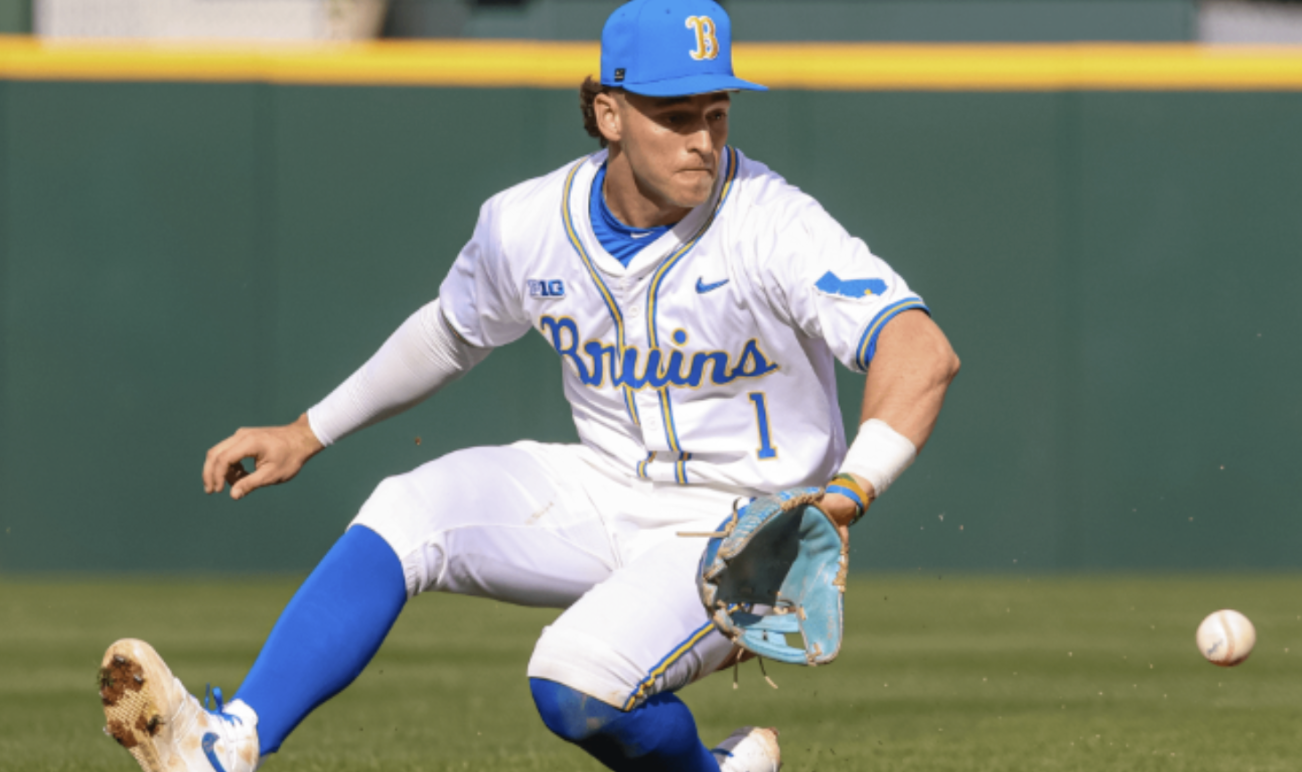
Roch Cholowsky is the #1 draft prospect in 2026, winning eight awards in the 2025 season, and benefits greatly from new NIL standards (USA Baseball).
Lastly, colleges have changed the way that they approach their stadiums. Originally, colleges focused on increasing the capacity, wanting as many people in the door as possible. Now, athletic departments have started to focus on fan experience, valuing how the average revenue per user would increase over time rather than just how to get the most money out of one game. Fields that once only had the bare necessities have been renovated to give off a more professional game experience. Mississippi State has invested $68 million into new lofts in left field, where in 2015 people would have had to bring out their own seats to enjoy the game. Tennessee invested $105 million into more seats and premium suites on the second and third floor. LSU has reallocated the foul territory to make premium boxes that sell for $9,400 per season ($2,350 per seat). Even small changes, like more food other than hot dogs and nachos being offered at concession stands, or ninety-three colleges attaining their alcohol license to sell at games, make the fan experience tenfold.
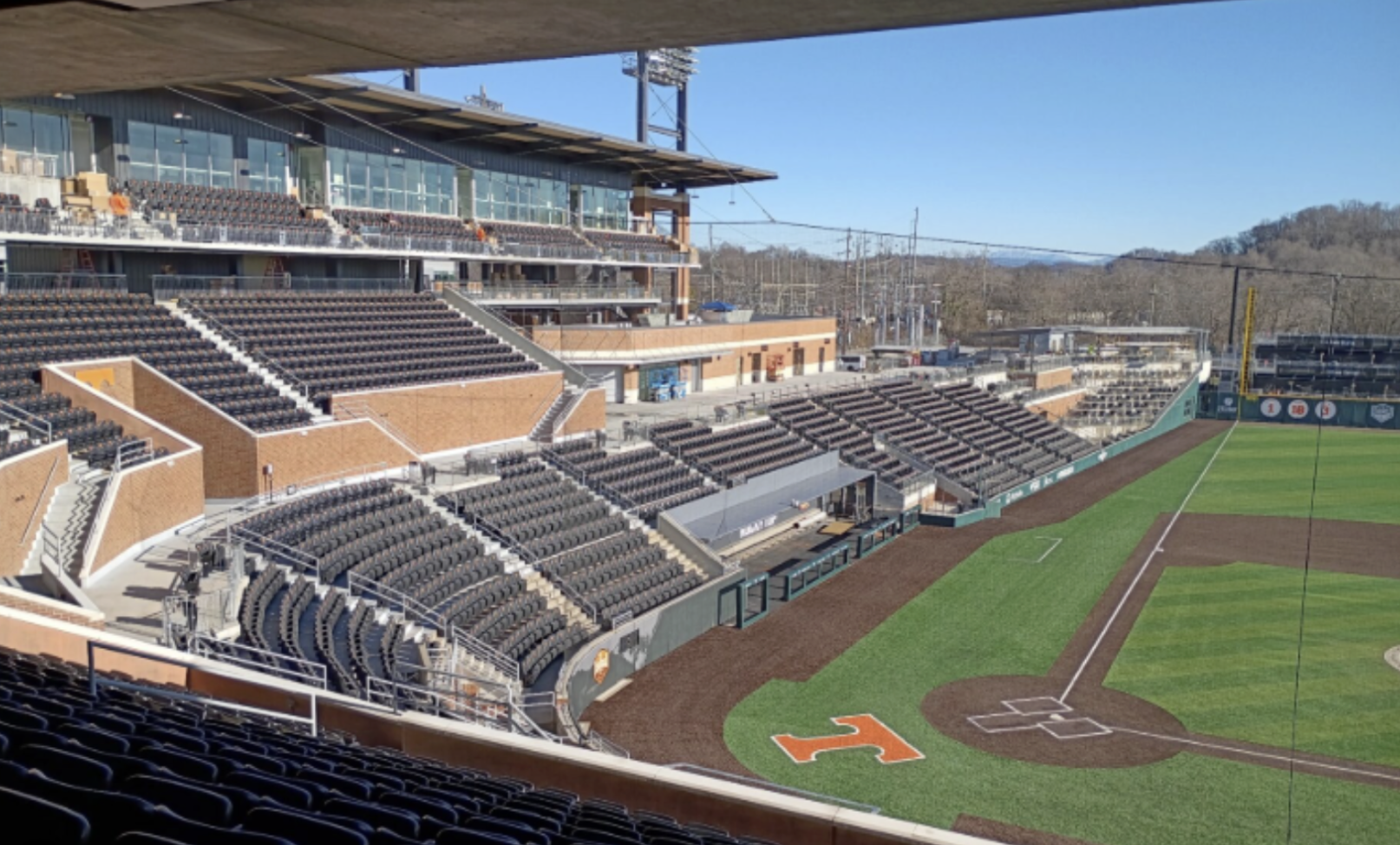
Tennessee's new stadium is creating around 3,500 more seats by adding another two levels of standard seats as well as luxury boxes, creating more revenue opportunities (Baseball Prospect Journal).
Keeping the Rally Alive
If universities and the NCAA as a whole want to continue to see increased levels of success, there are a couple things to keep in mind and some goals that they should try to achieve. One is that they should try and replicate the College World Series/NCAA regionals, but on a smaller level and earlier in the year. This could look like having tournaments at region neutral MLB stadiums with surrounding colleges. For example, a southern California tournament including UCLA, UCSB, Long Beach, Fullerton, USC, and UC Irvine that is played at either Dodger Stadium or Angel Stadium would bring people from all around southern California to not only support their own team, but to also get exposed to the talent of other teams. Since these would be played earlier in the season, fans will also be able to have a connection to players for the remainder of the season. Another thing to keep in mind is that the House v. NCAA settlement vetoed the rule that only 12 players on a 35-man roster will be allowed to be put on scholarship. Colleges need to stay true to their word and hand out more scholarships, as this will result in more player retention. Players will opt to stay in college as they will be able to live for free and receive NIL money, instead of hastily jumping into the rat race of the minor leagues. More player retention means better development, which means better talent on the field, which means a more exciting game, ultimately resulting in a higher amount of fan engagement. Finally, as baseball is very much data driven, and new technology comes out yearly to produce even more data, this becomes a breeding ground for sports betting, specifically player props. Since baseball plays so many more games than most other sports, 56 games compared to 30 for basketball, the data on a player is more reliable since the amount of games played is so much higher. If the NCAA makes a deal with a notable sports betting site, this can massively increase the amount of money being brought in each year, as Goldman Sachs estimates that the sports betting industry will reach close to $30 billion by 2030. Yes, this does have ethical concerns surrounding betting on amateur players, but if the NCAA’s and universities’ goals are purely for profit this is definitely an avenue they should consider.
Exit Velocity of Growth
From 2015-2025, college baseball has transformed from a regional staple to being on its way to becoming a national powerhouse with expanding economic potential. An increase in streaming deals, direct and indirect NIL factors, and new infrastructure has fundamentally reshaped both the demand, fans and sponsors, and the supply, player incentives. The rise of popularity in college baseball illustrates how performance investment, regulation changes, and media innovation can unlock more fan engagement. As the landscape continues to evolve, college baseball will also need to continue to evolve, by utilizing strategic alignment amongst technology, talent, and monetization to ensure this new growth does not fall back into the traditionally constrained industry.
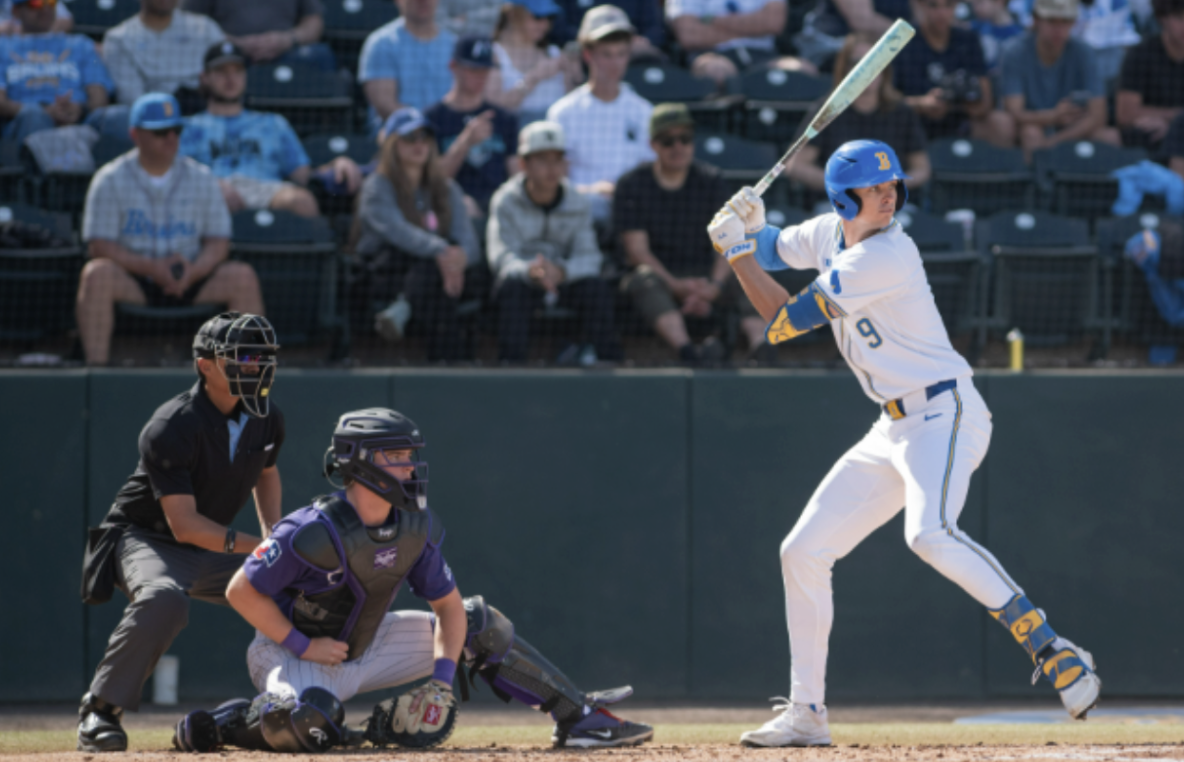
Will Gasparino homered for the second time of the day, setting the tone that the 2026 UCLA Bruins are coming to win it all this year (Daily Bruin).
