
The $18 Billion Sunday: Local Strain and Global Reach of Super Bowl LX
By EJ Thomsen | 27 January, 2026
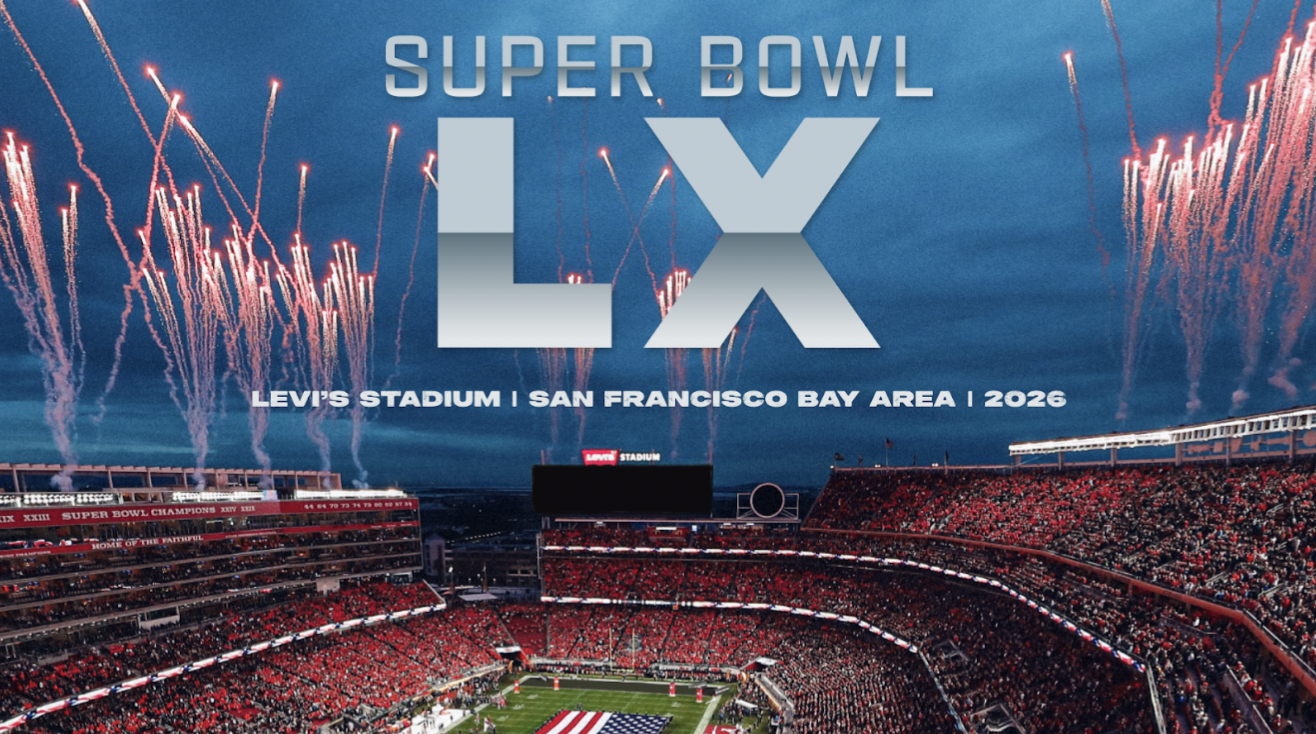
Super Bowl LX is being hosted at Levi’s Stadium, making the Bay Area an economic hub for Super Bowl Week. (Levi’s Stadium)
The NFL’s National Holiday
February is always a bittersweet moment for all football fans, as although the season is coming to an end, the biggest sports game in the world gets played. The Super Bowl is enjoyed by over 165 million worldwide fans each year, with the NFL expanding its viewership steadily each year with highly anticipated games, lively and admired halftime performers, and delivering an in-person experience like no other. This year, the Super Bowl will once again be held in Santa Clara, right in the heart of the beautiful Bay Area. Not only does this affect the San Francisco Bay Area with the thousands of fans pouring in and the millions of viewers focusing in on the region in the following weeks, but also the entirety of the United States economy, as small town restaurants, bars, and stores, as well as big companies, get ready for the single most economically driven sports event. These businesses and companies are looking to get whatever piece of the 18.6 billion dollar pie that there is to be offered. Examining Super Bowl LX through both a micro and macro perspective reveals how a single sporting event can simultaneously operate as a localized market shock as well as a worldwide cultural force.
Economic Touchdowns for Host City
Year after year, cities compete for a chance to host the Super Bowl in hopes of massive economic upside, as it affects everyone in the city top down. Cops work overtime, restaurants fill up by the hundreds, public transportation is at full capacity, and local businesses are getting extra fans to come try their services. Many host committees estimate that the host city will dish out $300 - $500 million dollars in spending. This is not the first time that the San Francisco Bay Area has taken such a challenge as they previously hosted Super Bowl L in 2016, where Broncos’ Peyton Manning added one last ring to his legacy as one of the most accomplished quarterbacks of all time, as he defeated the Cam Newton-led Carolina Panthers, 24-10, and look to capitalize on the city attention and economic propensity as it once did a decade ago.
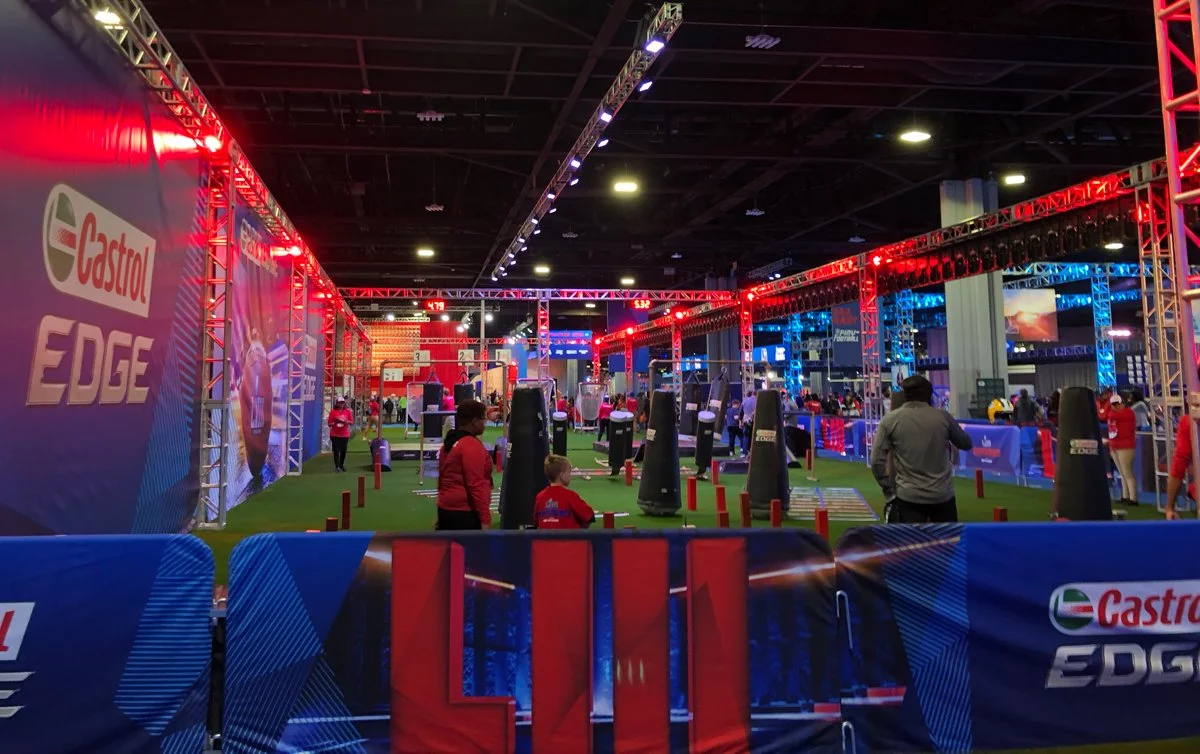
The Super Bowl Experience lets you test your skills with a multitude of courses and challenges, making the fan experience direct instead of from afar. (Atlanta Magazine)
One of the most visible microeconomic effects that Super Bowl LX will have is a surge in tourism and visitor spending. Even though the game is being held in Santa Clara, approximately 40 miles away, the Bay Area Host Committee stated that San Francisco is projected to capture approximately 70% (Matthews Market Insider) of the total regional economic impact mainly due to one important reason. Starting a week in advance, February 3rd, “The Super Bowl Experience” previously drew fans from all over northern California and across the nation to come to San Francisco and put their skills to the test with obstacle courses, 7v7s games, and even a 40-yard dash to see how they compete with the NFL’s brightest stars. In order to have an event at such a magnitude, the city of San Francisco has been planning for months to execute this to perfection. The venues that “The Super Bowl Experience” will be held at are the Moscone Center, where the main events will take place, Yerba Buena Gardens for the Fan Zone, and The Pearl and Hibernia will be used for exclusive culture hubs focusing on delivering a high-end culinary experience. City leaders and law enforcement have to be in sync while executing the plan, as extra security is needed to provide a safe environment for fans to have the best experience possible. This also comes with major streets, Howard and 4th street, to be closed for multiple days, necessitating the need for police to direct traffic to the best of their ability in one of the busiest cities in America. Transportation services, such as Bay Area Rapid Transit (BART), Uber, Waymo, and even the San Francisco Airport (SFO), will see spikes of over 100,000-150,000 out-of-market visitors, with the peak day projected to be the Monday after the game, with nearly 80,000 departing visitors. With this influx of new visitors from outside the Bay Area, and even some families from within, hotels are estimating that over 400,000 total hotel rooms will be booked all across San Francisco, San Jose, and Santa Clara. Local restaurants, such as Sotto Mare in Little Italy and Z&Y in Chinatown, allow people to become immersed in the rich melting pot that is the Bay Area. It would seem that it is a no-brainer to want to be the host city for the Super Bowl, yet there is a secret dark side that the local economies encounter.
Local Prosperity or Public Strain?
Take the previously mentioned local restaurants for example. In 2016, many local restaurants reported a “ghost town” effect on their regular customers. Since there are so many tourists walking around “The City,” especially in downtown, many local residents decided to avoid busy streets and forego their daily coffee or authentic lunch, in order to stay away from all of the commuter chaos. For example, “The Boulevard,” located on Embarcadero Street, stated that the 2016 Super Bowl week was the worst business week they have seen since 9/11, as main streets and heavy traffic deterred their regulars from coming in. For these local restaurants, they are just filling in the empty spots left by regulars with visitors, instead of actually increasing their revenue. Such as, if a restaurant gets ten local customers every day of the year, and they all choose not to go during Super Bowl week, yet the restaurant gets five daily visitor customers during Super Bowl Week, this week will obviously be the least profitable. This is just a small example of how the illusion of economic benefits from hosting the Super Bowl falls short of its proposed fiscal excellence.
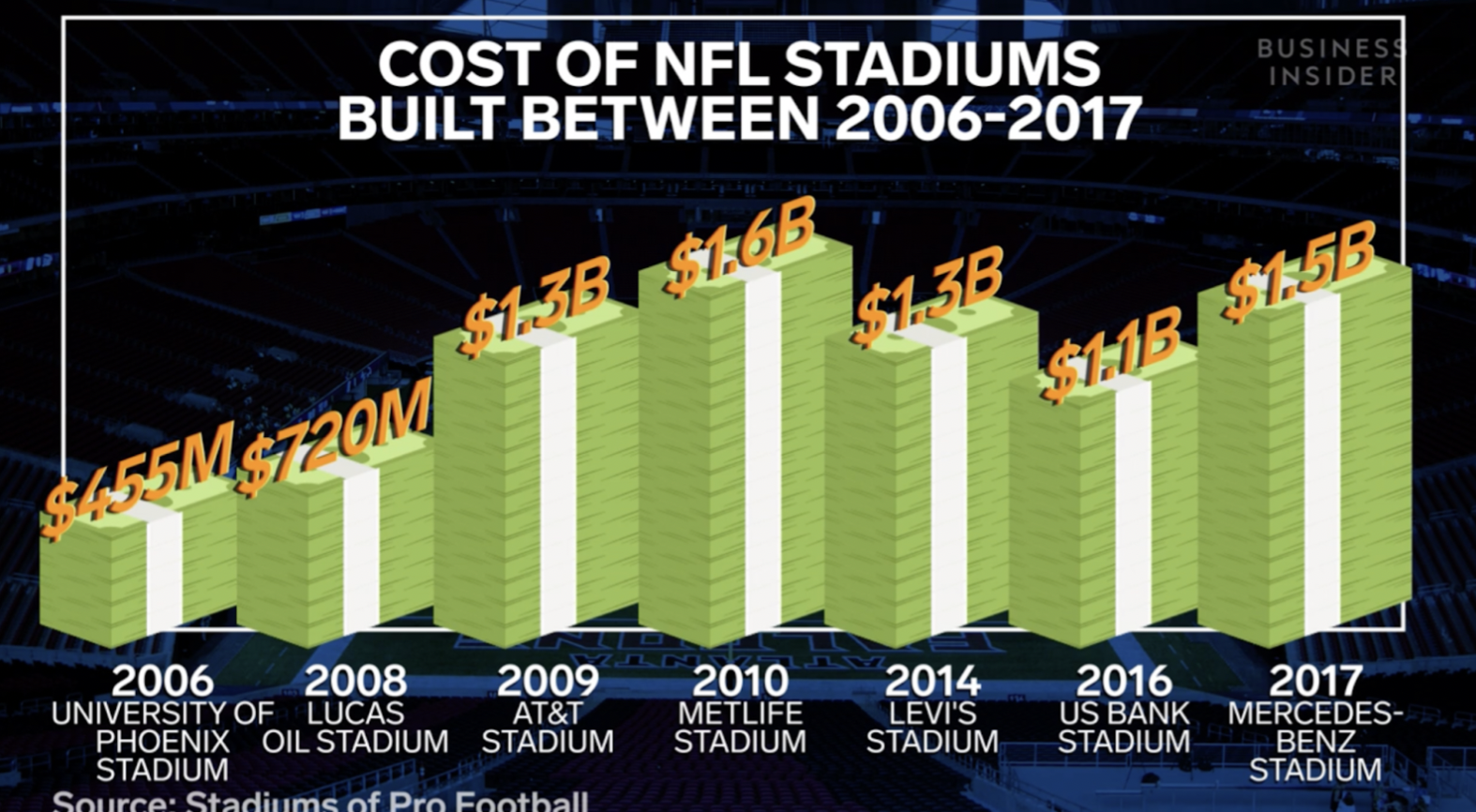
Graphic showcasing how much money is being invested into new stadiums to ensure they have the requirements to bid for being the host city. (Business Insider)
First, most host cities have to invest in a new, state of the art stadium that not only delivers on a wonderful spectacle to admire, but also with a focus on an immersive fan experience. New and improved jumbotrons, loudspeakers, new seating, and logistical fan stores placed around the stadium are all needed in order to host the Super Bowl. On average, taxpayers provide $250 million dollars in order to build a new stadium, with Levi’s Stadium costing $1.3 billion dollars to build. This is not only the owners’ and investors' money at stake, but also the residents who are relying on their taxpayer money to result in a return on their investment. It also does not help that the 153-page “Bid Book” outlined that the NFL would have an exemption on paying city, state, and local taxes while also requiring millions of dollars in requirements for a city to bid for the Super Bowl. It also outlines that the NFL is entitled to 100% of merchandise and ticket revenue. As a result, the NFL gets to pocket most of the revenue generated during the Super Bowl and share it with the other thirty-two teams instead of sharing the revenue with the host city. San Francisco already saw this first hand, as in 2016, they were hit with a $4.6 million public services bill and expenses totaling around $9.6 million, while only bringing in $11.6 million in revenue generated. The net surplus of around $2 million was mainly given to large corporations, such as hotels and stores, instead of boosting local businesses and the workforce. Yet, even with all of these negative aspects of hosting a Super Bowl, many cities still bid for them because of the national recognition it brings to the city, as well as an increase in morale during the week.
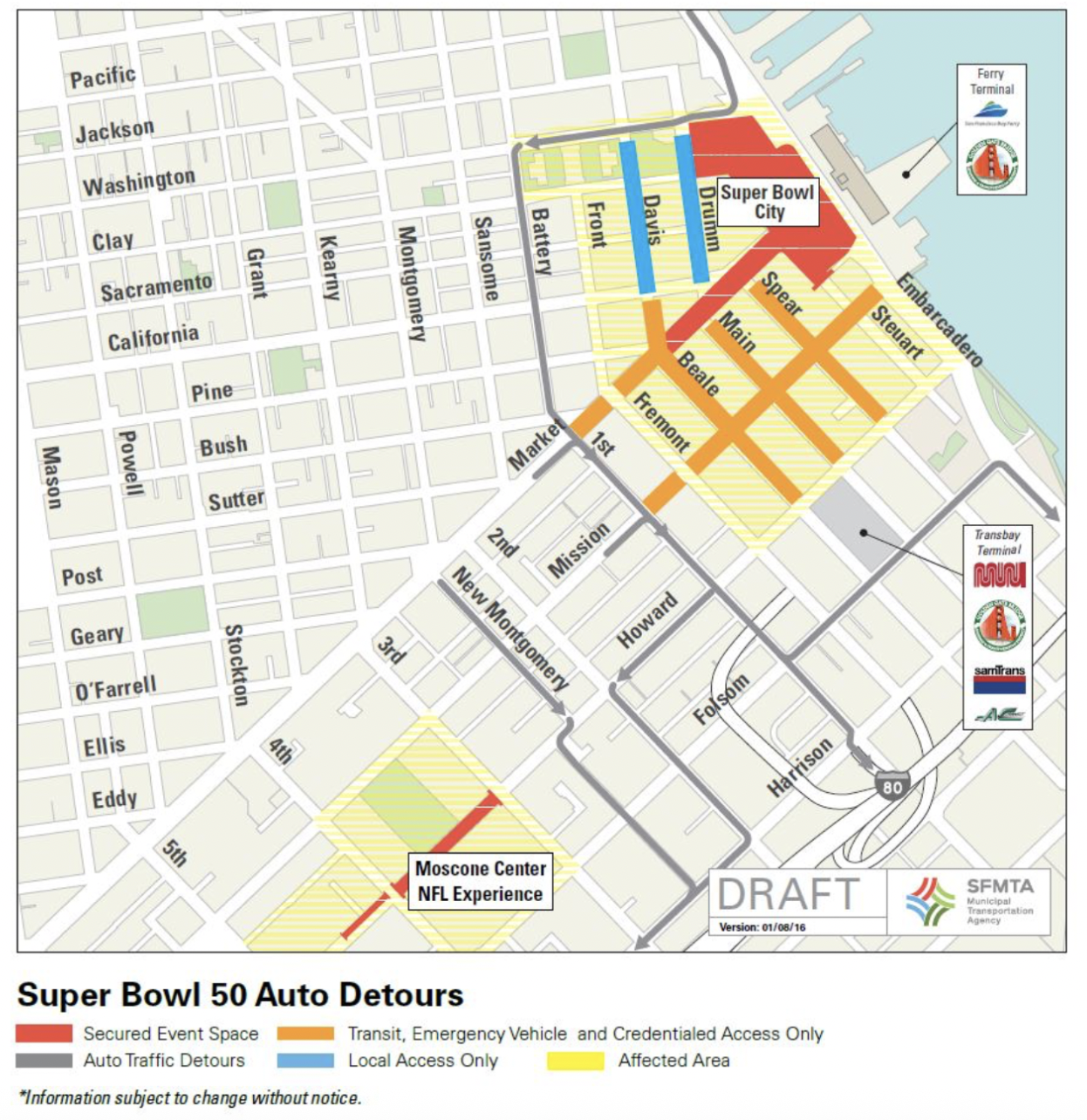
Map of San Francisco’s 2016 Super Bowl Experience, highlighting major streets being shut down and discouraging local residents to interact with businesses they usually would have. (SFMTA)
The Super Bowl as a National and Global Force
Beyond the localized impacts of the Super Bowl, on a national level, the Super Bowl acts as a driver for consumer spending, such as wholesale food consumption and T.V. improvements, massive media revenue, and corporate investment. Many companies try to capitalize on the event by investing into a thirty second advertisement that costs around $8 million. For example, the famous online marketplace Temu made the investment of two ads costing a total of around $14 million in 2023 and increased its investment to around $21 million in ads during 2024. This resulted in a 45% increase in downloads and a 20% surge in daily active users, resulting in a gross merchandise value of an estimated $1 billion. While it is definitely a high risk, the high reward is definitely there to be had. Cable networks also make a substantial amount of revenue as well, with this year’s cable host, NBC projected to earn $600 million in a single day of broadcasting. The incentive for companies and corporate investors to either have their product shown on a Super Bowl ad, as well as push to be the host network, is maximized each year as the NFL’s global reach expands into European and Latin American markets.
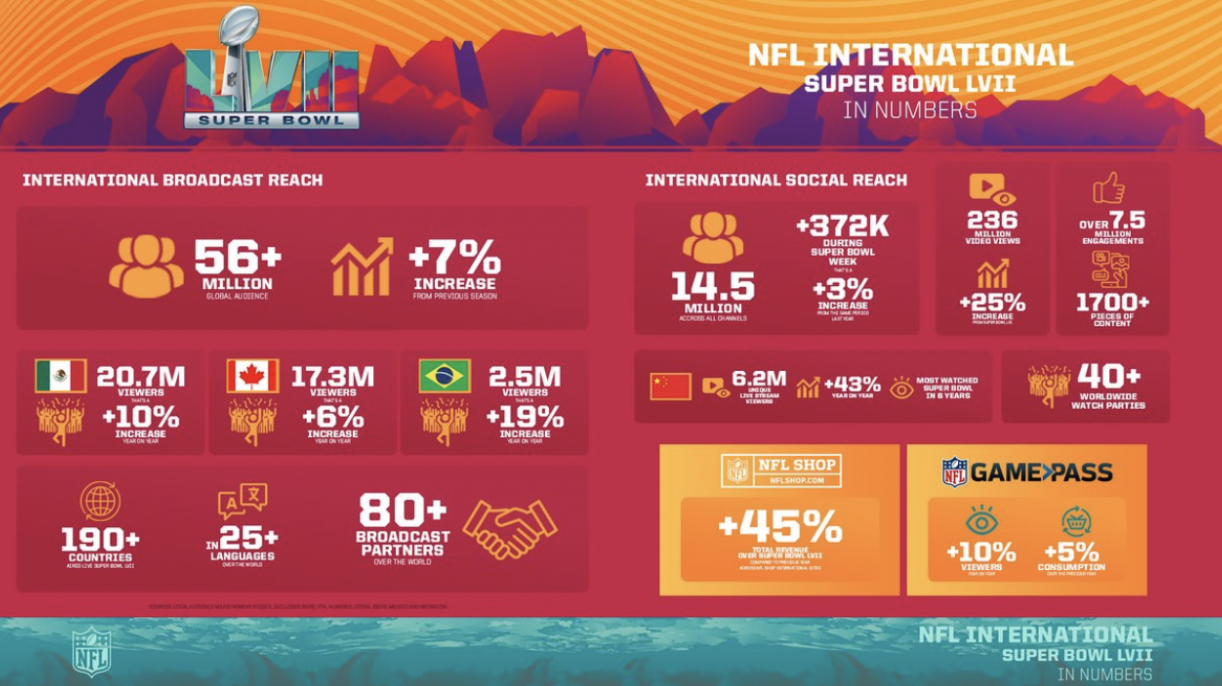
Statistics of Global Broadcasting reach for Super Bowl LVII, where the Chiefs won their third Super Bowl. (NFL Global Markets Program)
On a global scale, due to the tenfold increase in wholefood consumption and rising interest in American football, the economics become less about ticket sales and fan experience, and more about brand recognition and trade deals. For example, historically, our southern neighbors, Mexico, import approximately 120,000 tons of avocados in the weeks leading up to the game, totaling a trade value that exceeds $300 million dollars. Up north, Canada, provides up to 100 million cases of aluminum cans of beer and soda, providing a massive amount of goods for people taking the day off to relax with a cold beer. Broadcasting is also a huge driver of strong brand awareness, as the NFL live streams the games in 180 countries, bringing in eyes from all over the world to experience one of the most celebrated days in the United States. Even though this broadcasting brings in around $10 billion, this is not the NFL’s main goal. Their desire to broaden their reach into the outside market is continuously reinforced, as in 2025 they hosted seven games outside of the United States in places where they believed they could create some long-lasting fan bases, specifically in Brazil and major European countries like England and Germany. If the NFL can convince the people of these countries to identify with NFL teams and foster a love for American football, then the NFL will increase their consistent viewership and even have the chance to create the first expansion team outside of the United States.
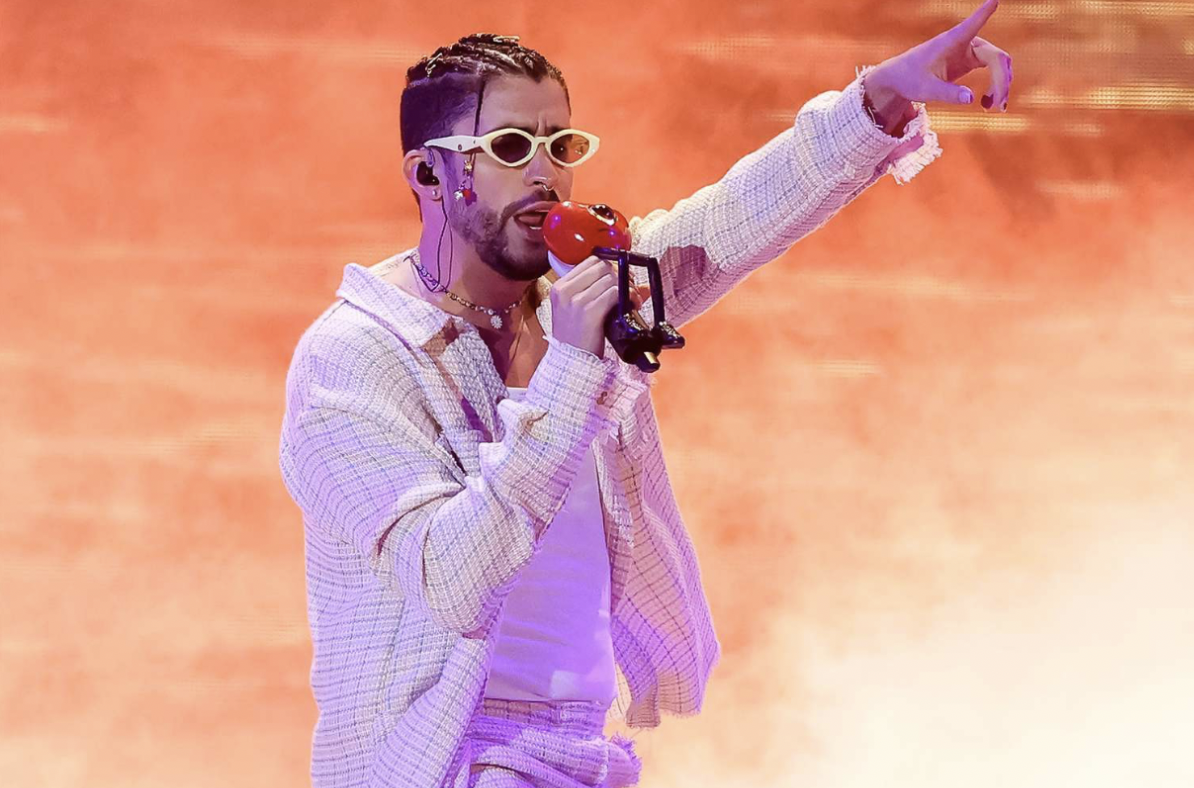
Bad Bunny is performing during the Halftime Show, reinforcing the NFL's goal of expanding global outreach. (People.com)
The choice to have Bad Bunny, a native Puerto Rican, reinforces this global outreach even further. Bad Bunny has 113 songs on the Billboard top 100, charted number one with his hit song “I Like It,” as well as accumulating 200 billion streams across all platforms, and is Spotify’s most streamed male artist in history. The NFL recognizes the influence he has across the world, as he is one of the only Latin Artists to consistently make music in Spanish while also consistently charting on the Billboard charts, fortifying their determination to connect with fans outside of the English speaking United States, only furthering and getting one step closer to truly breaking into the international market at a noticeable scale.

Drake Maye, the Patriots quarterback, is set to play in his first Super Bowl in only his second year in the league. (Times of India)
When the Confetti Falls
Taken together, the social and economic effects of the Super Bowl illustrate the dual nature of huge events, as both an opportunity for national recognition yet burdens for the host communities. Santa Clara and the surrounding Bay Area do experience some short-term gain through temporary employment, increased tourism, and elevated business revenues. Yet these are accompanied by substantial public costs, uneven distribution of economic rewards, and infrastructural strain as local governments have to withstand the transportation pressures and community disruption leading to concerns regarding the long-term impacts of hosting the Super Bowl. However, on a national and worldwide scale, the Super Bowl’s significance is much broader than just fan experience, as it mobilizes consumer spending and advertising revenue, while also impacting global trade networks and expanding the NFL’s brand as a whole. Even though many fiscal hardships come from hosting the Super Bowl, the event's influence to command international markets and global visibility reinforces why the Super Bowl will remain one of, if not the most, influential events of the modern time.
