
The End of the Cinderella?
By Aaron Propst | 8 April, 2026
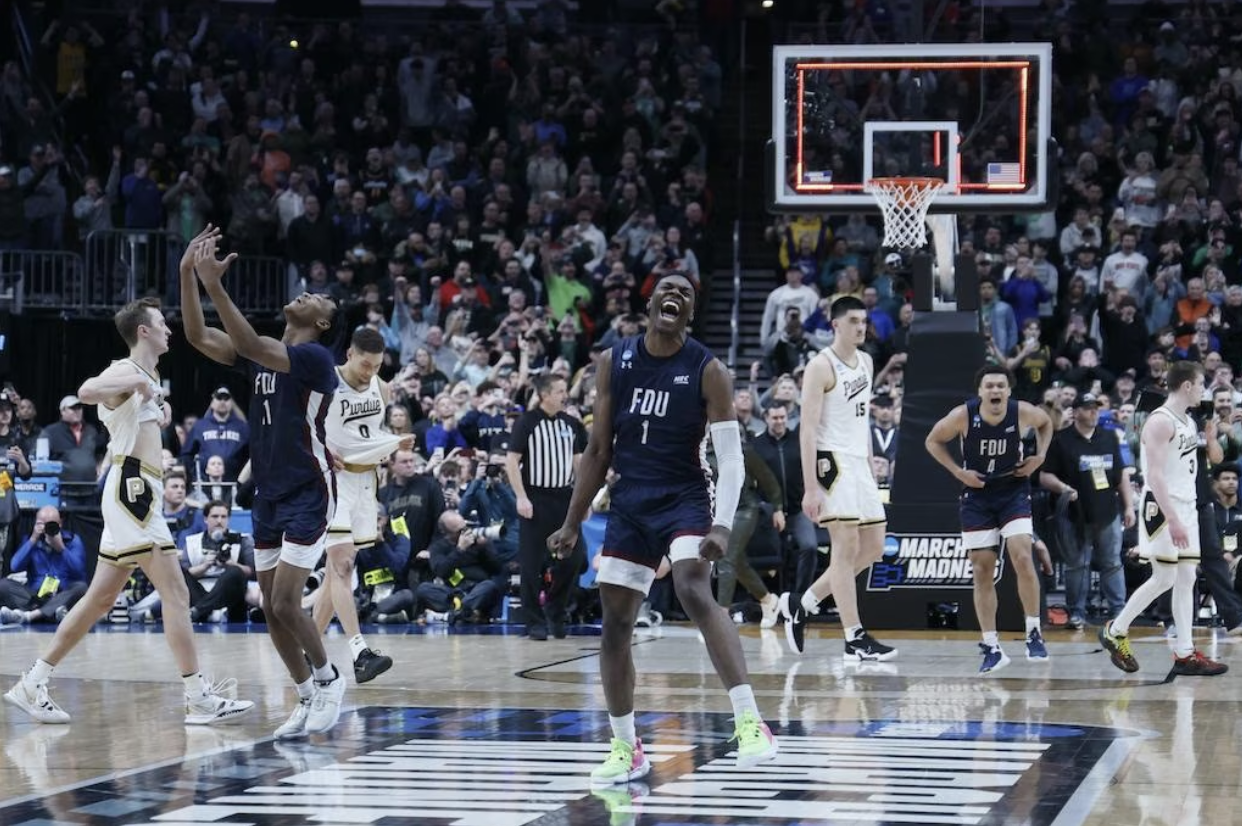
16 seed Fairleigh Dickinson celebrating after beating the one seed Purdue in the first round of the 2023 NCAA tournament. (NCAA.com)
Cinderella — the story of a young princess who, despite the odds stacked against her, rises from hardship to claim a coveted prize throughout the kingdom: the love of the prince.
In sports, odds do not always determine the outcome. What should happen is not always what does happen. That unpredictability is part of the beauty of sports. And nowhere does that idea live more vividly than in the magic of the NCAA Division I Men's Basketball Tournament — better known as March Madness.
Sixty-eight college basketball teams enter the tournament. More than a thousand college athletes leave their campuses behind and step onto the national stage, wearing the name of their university across their chest. For them, the opportunity is simple but powerful: represent their school, their teammates, and have the years of work that led to this moment come to fruition on the basketball court.
Every game comes down to forty minutes.
Forty minutes where anything can happen. Forty minutes where rankings, recruiting stars, and conference prestige begin to fade. The blue bloods and the underdogs step onto the same court, with the same ball, and the same goal. All that matters is execution — who can find a way to put the ball in the basket and give themselves the edge over their opponent. If a team is lucky enough to survive, the whole cycle starts all over again in the next round. This process repeats until a single champion remains.
And sometimes, just like Cinderella, the team no one expected to even stand a chance finds a way to rise above everyone else. In those moments, the tournament becomes more than just basketball. It becomes a story of possibility. Those stories serve as proof that when the clock starts, the odds no longer control the outcome.
The Cinderellas of the Past
George Mason (2006)
In 2006, No. 11 seed George Mason Patriots men's basketball redefined what a Cinderella run could be. Coming out of the Colonial Athletic Association, the Patriots strung together one of the most improbable paths in tournament history, knocking off Michigan State, defending champion North Carolina and ultimately No. 1 overall seed UConn in an 86–84 overtime thriller. “We never took any opponent for granted, no matter who, and that’s why we were good in the tournament and why big schools fail,” said Tony Skinn, guard and current head coach of the Patriots. “When that competitiveness isn’t reciprocated, then you have a ballgame.”
Loyola Chicago (2018)
More than a decade later, No. 11 seed Loyola Chicago Ramblers men's basketball captured the nation with a run built on precision and poise. The Ramblers advanced to the Final Four by winning three games by a combined four points. This started in the round of 64 with a last-second victory over Miami as Donte Ingram sunk a top of the key three as time expired. The next round was a similar fate for the opposing team, as a mid range shot from MVC Player of the Year Clayton Custer smacked the front of the rim, bounced in the air, and eventually dropped to secure another last second upset, this time over Tennessee. The week felt long in anticipation, as the Sweet Sixteen matchup saw them defeat Nevada by a singular point as well, cementing the team as one of fate. Led by a disciplined defense and efficient offense, Loyola Chicago paired its on-court success with the emotional presence of team chaplain Sister Jean, who became the face of the tournament. Despite the Ramblers falling short in the Final Four, the run blended drama with consistency, showing that execution in the biggest moments can carry an underdog to the sport’s biggest stage. “You keep that head high walking through here,” said Loyola Chicago head coach Porter Moser to Senior Ben Richardson. “You changed the direction of this entire program.”
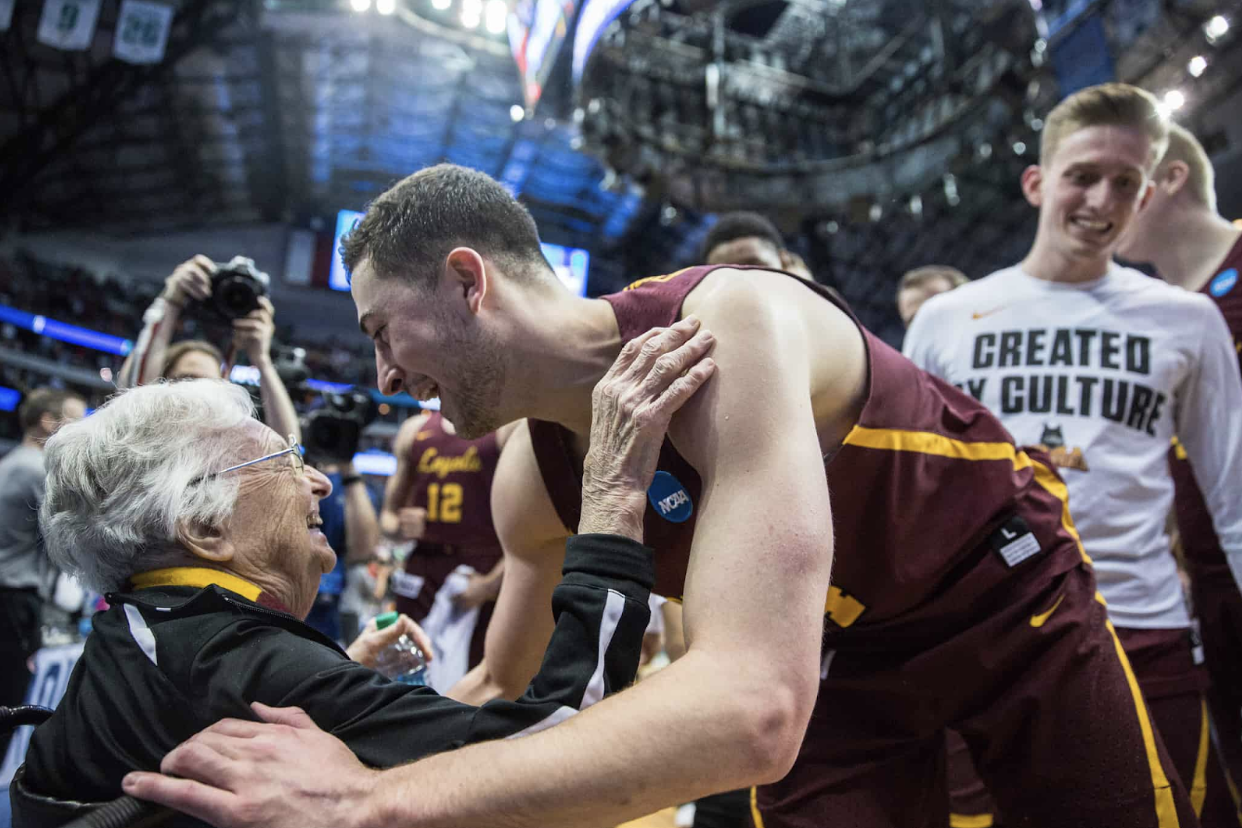
The Loyola Chicago players embrace Sister Jean following their first round upset against Miami. (Keapproth)
Saint Peter’s (2022)
In 2022, No. 15 seed Saint Peter's Peacocks men's basketball delivered one of the most unlikely runs the tournament has ever seen. Representing the MAAC, the Peacocks went to hot hand Doug Edert again and again down the stretch, finding a way to upset No. 2 seed Kentucky in overtime. "There's no pressure at all, honestly there's no pressure at all," Edert said. "We're inspiring people every day, that’s what we’re doing and with hard work you can achieve anything." A mid-major clash saw them matched up with Murray State in the round of 32, where much of the same persisted and the No. 15 seed continued dancing. Despite the majority of their starters not leaving the court, they still were able to stun Purdue in the Sweet Sixteen to become the first No. 15 seed in history to reach the Elite Eight. Unlike traditional Cinderellas, Saint Peter’s did not rely on miracle finishes. They controlled games with defense and composure against higher-ranked opponents. Their run pushed the limits of what was thought possible in March Madness, proving that even the lowest seeds can break through on the national stage.
The Introduction of NIL (Name, Image, and Likeness)
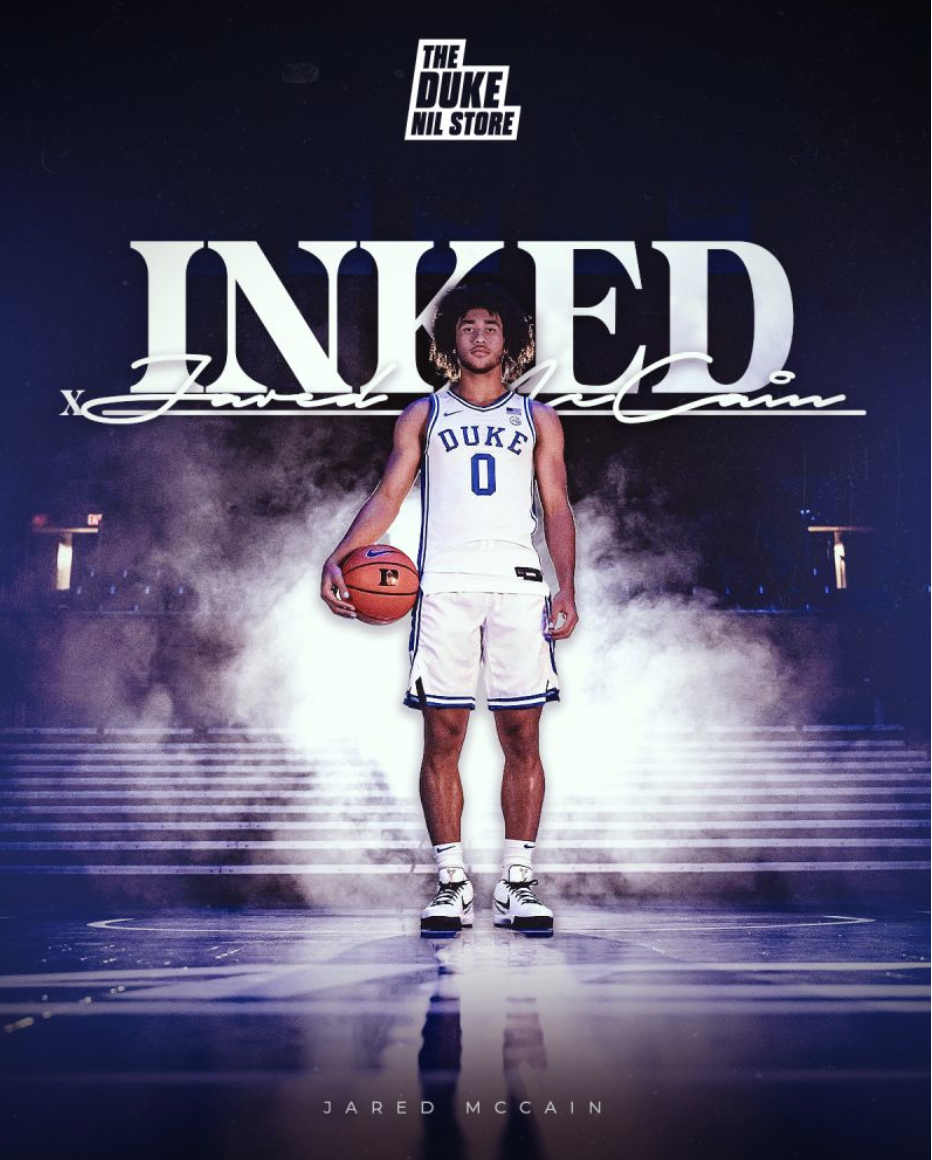
Top NIL earner Jared McCain appears in promotional material for an NIL partnership through The Duke NIL Store. (The Duke NIL Store)
The introduction of Name, Image, and Likeness (NIL) rights marked one of the most significant changes in the history of college athletics. For decades, the National Collegiate Athletic Association (NCAA) enforced strict amateurism rules that prevented student-athletes from earning money tied to their athletic identity. Athletes could receive scholarships covering tuition, housing, and meals, but they were not allowed to profit from endorsements, sponsorships, autograph signings, or personal appearances.
This system remained in place even as college sports grew into a multi-billion-dollar industry. Television contracts, merchandise sales, and sponsorship deals generated massive revenue for universities and conferences. Coaches, schools, and media companies benefited financially, while the athletes producing the value were restricted from earning money themselves.
Momentum for reform began building in the late 2010s. In 2019, the state of California passed the California Fair Pay to Play Act, which allowed college athletes to profit from their own name, image, and likeness through endorsements and business opportunities. The law signaled a major shift and prompted several other states to propose similar legislation, placing pressure on the NCAA to reconsider its policies.
At the same time, the NCAA faced legal challenges over its compensation restrictions. The case of NCAA v. Alston reached the Supreme Court of the United States in 2021. The Court ruled unanimously against the NCAA, determining that some of its restrictions on athlete compensation violated antitrust law. The decision suggested that the NCAA’s traditional amateurism model could face further legal challenges if left unchanged.
Soon after, on July 1, 2021, the NCAA introduced an interim NIL policy allowing college athletes to profit from endorsements, social media promotions, camps, and personal branding. Athletes could now sign marketing deals and build businesses while still competing at the collegiate level. Universities still could not pay players directly for participation, but outside sponsorship opportunities became widely available.
The introduction of NIL quickly reshaped the landscape of college sports. Recruiting dynamics shifted, athletes gained new financial opportunities, and programs began competing not only through coaching and facilities but also through marketing potential and NIL support. These economic changes began influencing competitive balance across college athletics — particularly in the NCAA Division I Men's Basketball Tournament, where the traditional underdog stories that once defined March Madness began to face new challenges.
Many argue that the rise of NIL has unintentionally weakened one of the defining elements of March Madness: underdogs. As financial opportunities increasingly concentrate around major programs, the conditions that once allowed smaller schools to build surprise tournament runs appear to be fading. If that trend continues, NIL may not only reshape college basketball, but also diminish the unpredictability that has long made March Madness so compelling.
The result
2025 Final Four: all one seeds. Casual fans sat atop bracket challenges by simply picking the team with the lower number to win every game.
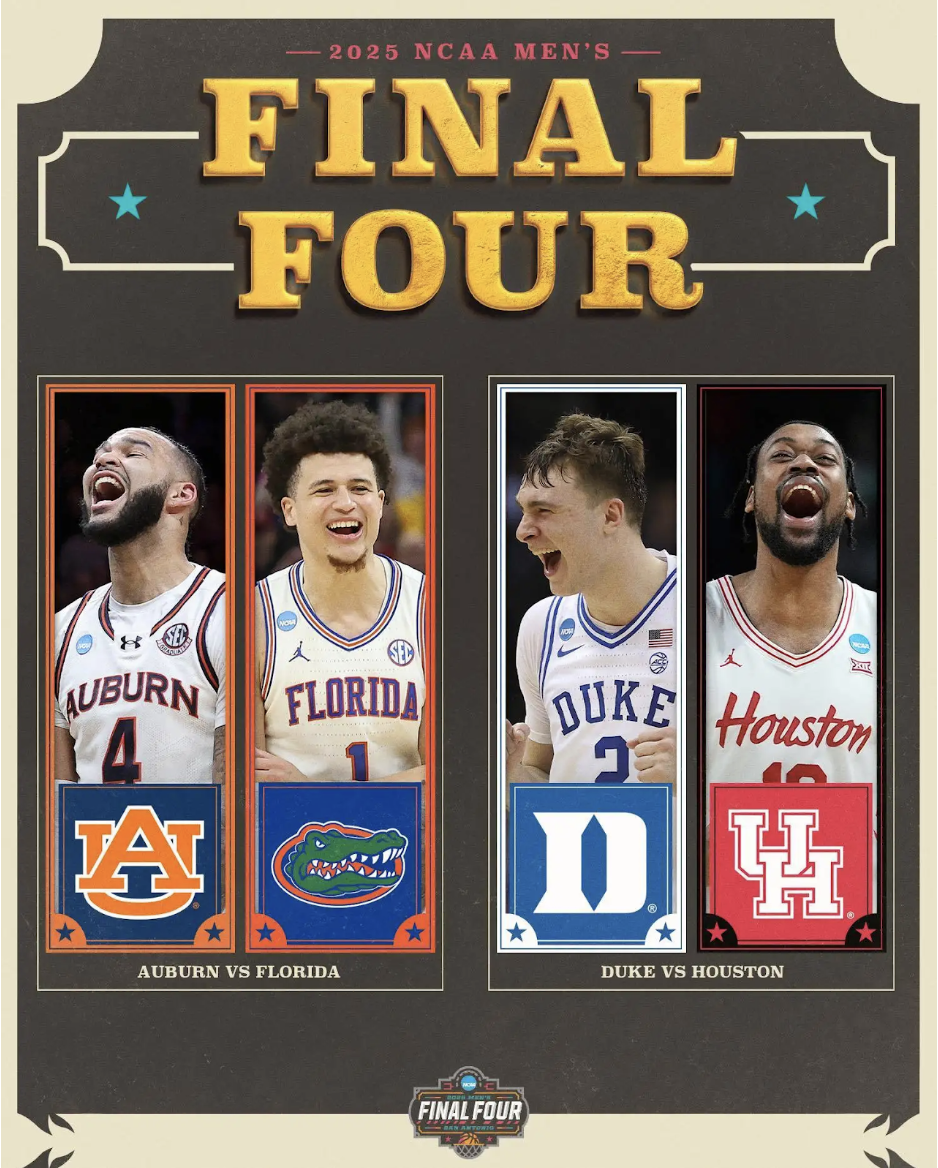
All four No. 1 seeds — Auburn Tigers men's basketball, Florida Gators men's basketball, Duke Blue Devils men's basketball and Houston Cougars men's basketball — advanced to the Final Four of the 2025 NCAA Division I Men's Basketball Tournament. (NCAA.com)
The only upset came with No. 12 seed Colorado State reaching the round of 32. This run pales in comparison to the runs mentioned above, but that was just the reality of the tournament.
Despite the chaos that typically defines the tournament, it never truly materialized. The best teams proved to be exactly that, as the nation’s top programs advanced to Indianapolis for the Final Four. While this meant fewer surprise storylines and fewer underdog teams for fans to rally behind, it ultimately produced an incredibly high level of basketball.
In 2026, the tournament followed a similar pattern. While there were more upsets throughout the bracket, none of the No. 13–16 seeds managed to win a game, and only one No. 12 seed advanced before being eliminated in the round of 32.
The championship game ultimately featured No. 1 seed Michigan against No. 2 seed UConn, a powerhouse program that had already won two of the previous three national championships.
This leaves us all asking the question:
WHY?
One of the clearest explanations for this shift lies in the rise of NIL and the modern transfer portal. For decades, Cinderella teams were built on continuity. Smaller programs recruited players who were overlooked by major schools, developed them over several seasons, and gradually built experienced rosters capable of competing with the nation’s best teams. By the time these teams reached the tournament, their players often had three or four years playing together in the same system. That chemistry allowed them to challenge — and sometimes defeat — more talented opponents.
In the NIL era, however, that development model has become far more difficult to sustain. When a player at a smaller program has a breakout season, the attention that follows is no longer limited to NBA scouts or media coverage. Larger schools, often backed by stronger NIL collectives and greater financial resources, can offer significantly more lucrative opportunities. These programs have larger fanbases, bigger sponsorship markets, and more donor funding, all of which translate into greater NIL earning potential for athletes. As a result, the best players at smaller programs frequently become transfer portal targets almost immediately.
This creates a difficult cycle for smaller programs. Developing talent has always been their competitive advantage, but now that development often benefits larger schools rather than the programs that originally recruited the players. A guard who averages twenty points per game for a mid-major school one season may receive offers from power conference programs the next offseason, along with significantly larger NIL opportunities. What once might have been the foundation for a Cinderella now becomes a launching point for a transfer.
From the perspective of the athlete, the decision is understandable. Bigger programs provide national television exposure, stronger competition, and more lucrative endorsement opportunities. Remaining at a smaller program may offer loyalty and stability, but it often cannot compete financially or developmentally with what major programs can provide. In a system where athletes are now allowed and encouraged to capitalize on their market value, many choose to pursue those opportunities.
Only two players in the most recent NBA draft were drafted out of mid major schools, both from the A-10. These players were Rasheer Fleming out of Saint Joseph’s and Max Shulga out of VCU.
Meanwhile, Walter Clayton Jr. was drafted 18th overall after leading Florida to the championship game. He started his collegiate career at Iona.
This shift is not limited to players, but reaches coaches as well. Smaller program coaching staffs are often recruited by larger schools after successful seasons or Cinderella runs. As a result, smaller programs frequently lose both their best players and the coaches who developed them, making sustainability at these schools even harder to achieve.
In this way, NIL has not eliminated the possibility of Cinderella stories entirely, but it has changed the environment in which they are created. The underdog magic that once defined the tournament is being torn apart. In today’s era of NIL opportunities and player mobility, maintaining that kind of continuity has become one of the greatest challenges for smaller programs.
Losing cinderellas would mean losing a fundamental part of what makes the college basketball tournament unique from every other sporting spectrum. We already have the super bowl, a mighty clash between top teams. We already have the world cup, which brings many different fans from different backgrounds and beliefs together in an unforgettable setting. What makes March special is that it comes with madness. Madness is necessary as a fundamental part of the month, of the sport, and of the viewing experience.
So you tell me, will the slipper ever fit again?
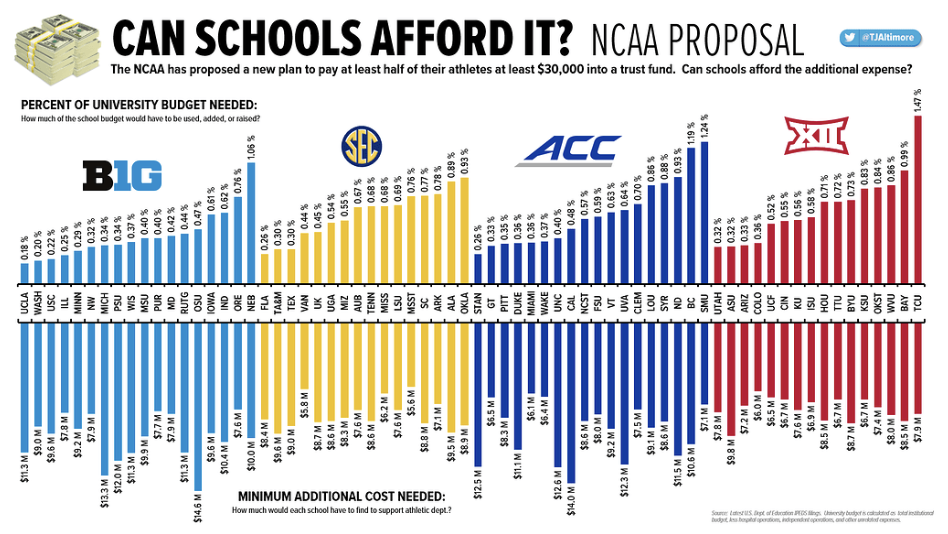
Graphic showing the estimated budget impact of the NCAA’s proposed athlete compensation plan across schools in the Big Ten Conference, Southeastern Conference, Atlantic Coast Conference and Big 12 Conference. (TJAltimore)
