
The Protect College Sports Act - Protecting Who?
By Noah Massey | 19 October 2026
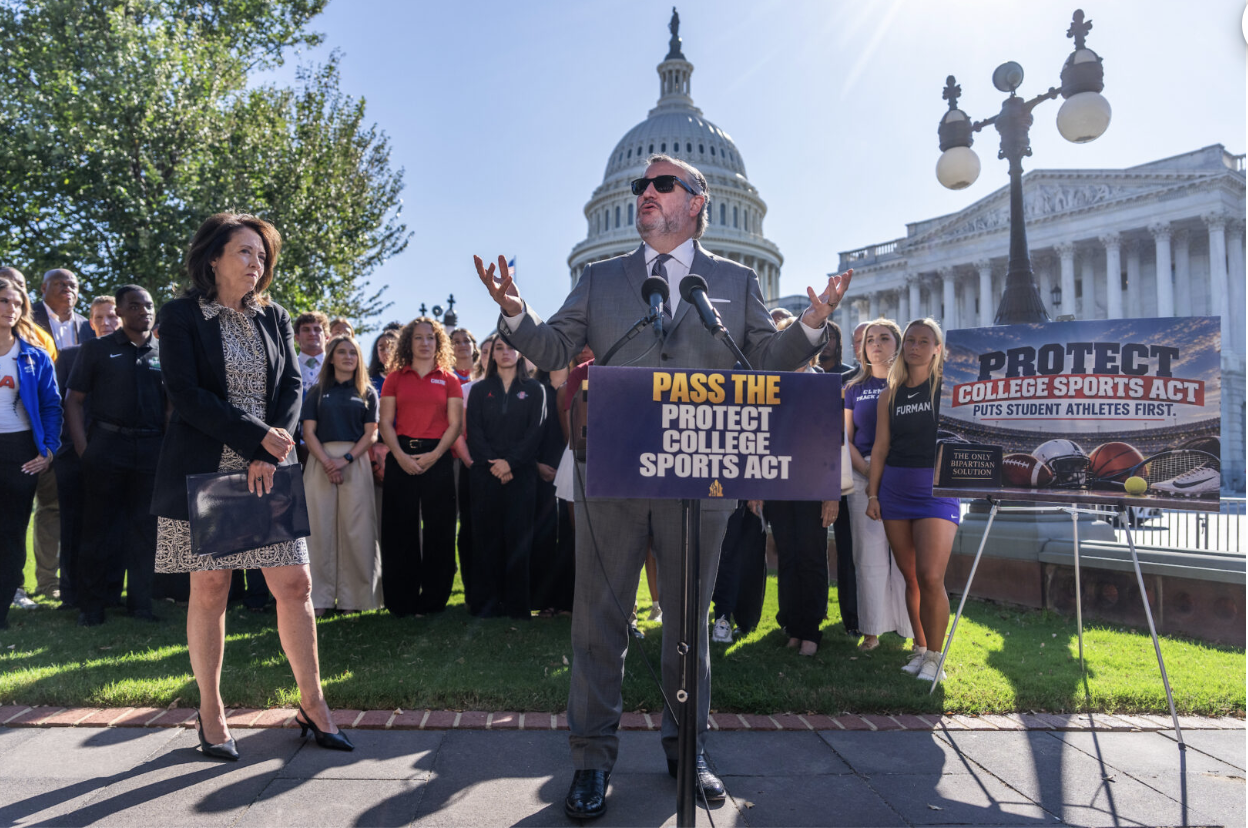
Senators Ted Cruz (R-Texas) and Maria Cantwell (D-Wash.) are the two authors of the bipartisan PCSA, which was passed in the Senate following a 77-22 vote in favor. (Roll Call)
College athletics are undeniably in the “Wild West” right now. Spending has increased every season since limited NIL compensation was introduced in 2021 and the landmark House Settlement was approved in 2025. Unrestricted player movement through the transfer portal has also enabled yearly roster makeovers since 2024.
Recently, the lack of a unified framework has created numerous legal challenges, state laws, and NCAA rule changes that have spurred the aforementioned “Wild West,” as teams are forced to adapt to ever-changing circumstances just to field competitive teams. Now, the federal government has an opportunity to step in. The Protect College Sports Act, a bipartisan bill introduced by Senators Ted Cruz and Maria Cantwell, has already passed the Senate. Though a recessed House bracing for the midterms is slowing it down, the bill would mark the first time the federal government has ever passed a unified framework to govern collegiate athletics.
The Bill
The bill states that direct payments from schools to players would increase from the yearly-adjusted figure imposed by the House Settlement of $21.58 million in 2026 to roughly $48 million, with $5 million of the total allocated towards funding women’s sports, Olympic sports, and non-revenue sports. However, this “salary cap” would be enforced under federal law as a “hard cap”, unlike the current framework, which has allowed for roster spending to far eclipse the House Settlement benchmark. Under this new framework, NIL spending would be regulated to keep compensation within a reasonable range of the market rate, rather than the current system where NIL contracts are used as an alternative method to pay players more than the current House Settlement number. A publicly available database of NIL agreements would determine the applicable range for a given NIL contract.
Furthermore, the bill would codify rules on transferring, recruitment, and eligibility that have already been the subject of numerous major court cases. These rules would place major restrictions on the transfer portal, reducing its role by allowing players to enter the portal only once and requiring them to sit out a year. The bill would also codify the eligibility clock, which begins when a player enrolls or turns 19, limiting opportunities for eligibility cases that have become a source of widespread controversy.
Lastly, the bill allows schools to pool media rights under a federal antitrust exemption, which the NCAA has sought for a long time. Though this development would have limited effect until the current long-term contracts expire, it would increase the valuation of collegiate media rights in the long term. The bill also limits future conference realignment, another issue that has plagued college sports in recent years and has created instability for many lower-level programs.
The Ramifications
Structure is needed for college sports. The “race to the bottom” is already becoming unsustainable for programs, with athletic department spending accelerating across the board despite relying on fluctuating revenue sources tied largely to program success. While the PCSA does create structure, the bill has negative ramifications for one party more than anyone else: the players themselves.
Despite the tremendous amounts of money flowing into collegiate athletics, players are in a unique position compared with their professional counterparts. Though collegiate players are no longer amateurs, they aren’t exactly professionals either. They are not employees, so they cannot collectively bargain with the NCAA. The PCSA would maintain this designation, as the bill would supersede the NCAA’s need to collectively bargain with its players.
Without the ability to collectively bargain, athletes have no real path to be treated as employees – with the additional protections and power the designation brings. Instead, the federal government is making the rules, taking power from the players and limiting their ability to receive the compensation the market determines to be fair. This is certainly one reason special interest groups have poured money into pitching the bill to college sports fans to drum up support – focusing primarily on other parts of the bill, especially the provisions that protect women’s/Olympic/non-revenue sports and limit the impact of the transfer portal.
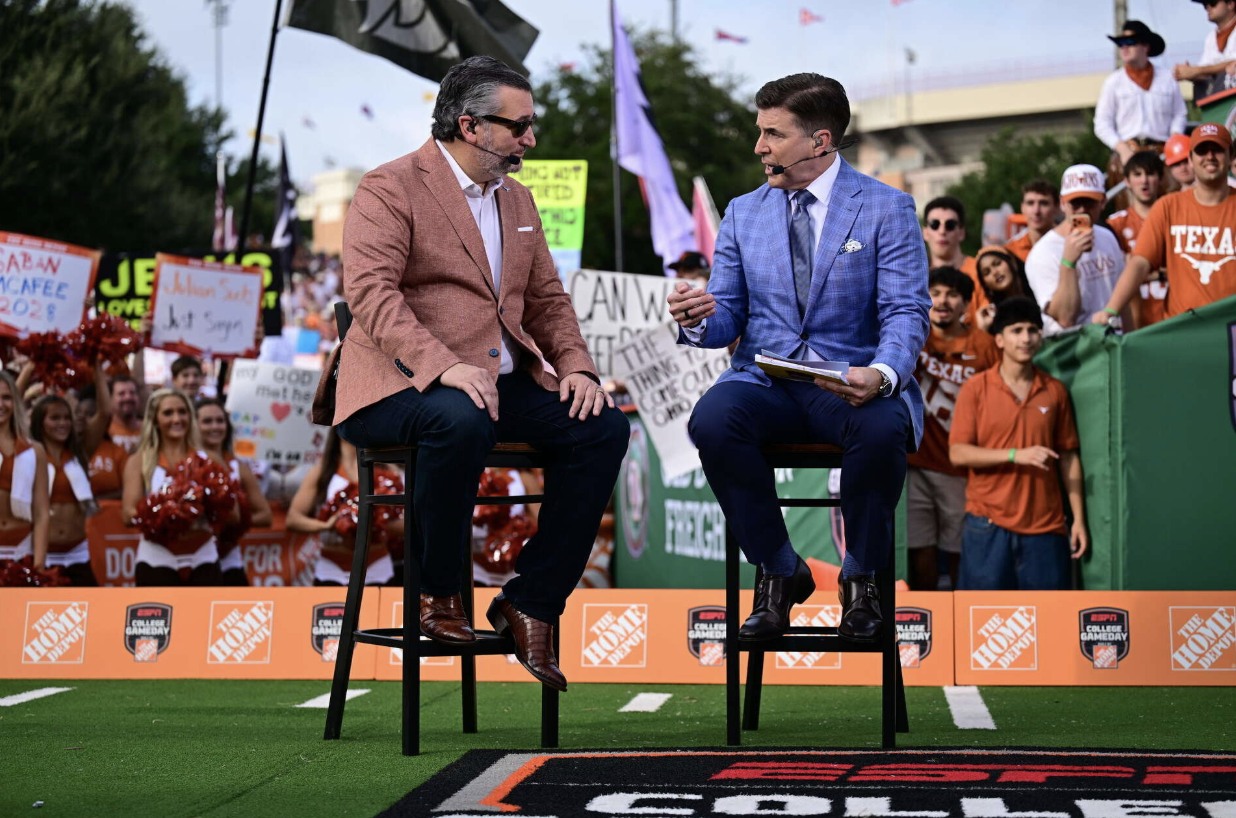
Senator Ted Cruz (R-Texas) advocates for the PCSA on ESPN’s popular pregame show, College Gameday. (Houston Chronicle)
Furthermore, the insult to the player is exacerbated by the lack of financial accountability infrastructure for other big spenders. While excessive collegiate spending is directed toward players, the bill doesn’t address other sources of major expenses. Coaching contracts, staff costs, and facility upgrades are entirely unmentioned in the bill despite their high costs.
Before legalization and widespread implementation of NIL spending, plenty of money was already pouring into collegiate athletics, much of it directed at coaches, staff, and facility/equipment upgrades. Cantwell shared a report that from 2005 to 2023, recruiting costs increased by 322%, equipment costs by 300%, and coaching salaries by 370%. Again, none of these additional costs were mentioned in the bill.
Senator Cory Booker filed an amendment to the bill capping coach compensation and limiting maximum buyouts to one year’s salary. His amendment did not pass. Top collegiate football coaches make up to $13.3 million a year, roughly 27% of the “hard cap” for all players at their respective schools under the proposed rules. Top NFL coaches make $20 million, roughly 6.6% of the $301 million player salary cap.
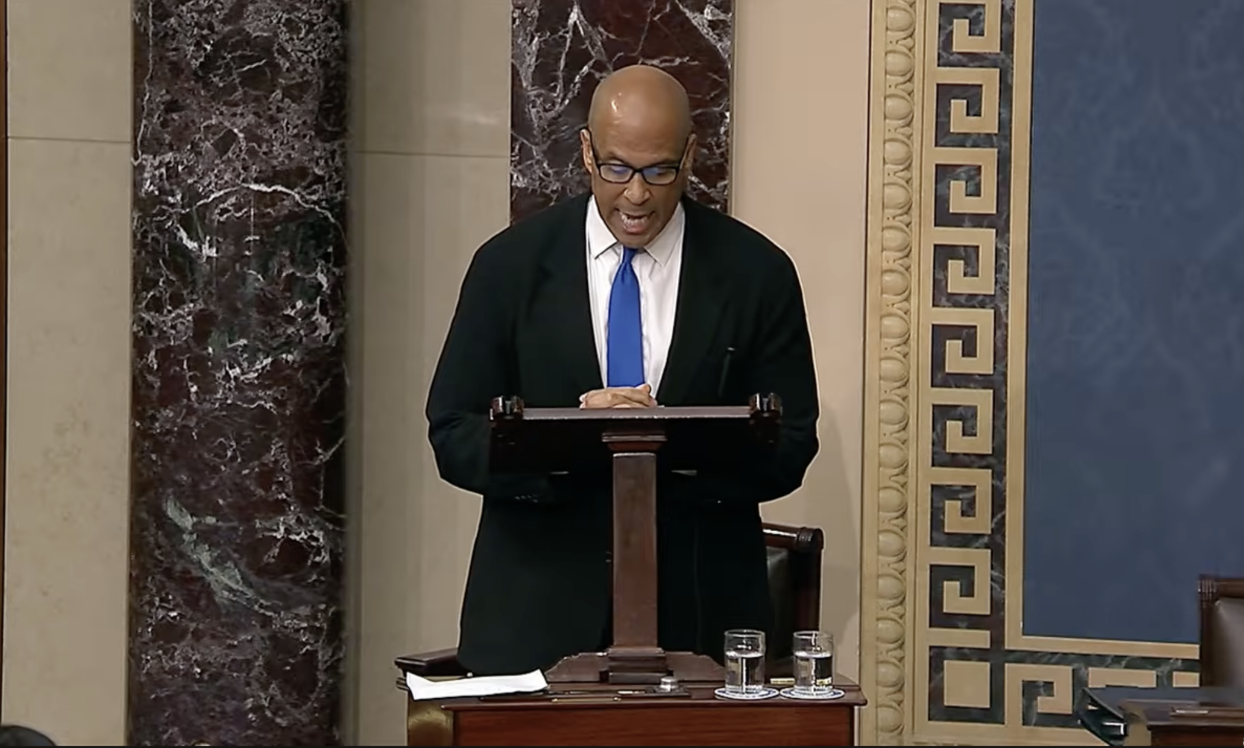
Senator Cory Booker (D-N.J.) speaks in opposition to the PCSA. Booker played tight end at Stanford University and is the only active senator who played Division I college football.
These vastly different ratios are exacerbated by the length of collegiate coaching contracts and the willingness of athletic directors to oust underperforming coaches, despite higher buyout costs than their NFL counterparts. Last season, Brian Kelly, James Franklin, and Billy Napier were all fired and received buyouts totalling $124 million.
If the Protect College Sports Act passes, nothing in it will stop this systematic spending. While spending on coaching contracts, recruiting staff, and facility/equipment upgrades will rise without restriction, player compensation will abide by the federal government’s framework. Even though the bill provides vital regulation for NCAA athletics, the politicians and interest groups made their priorities abundantly clear on who they want to protect.
Not the players, that’s for sure.
